

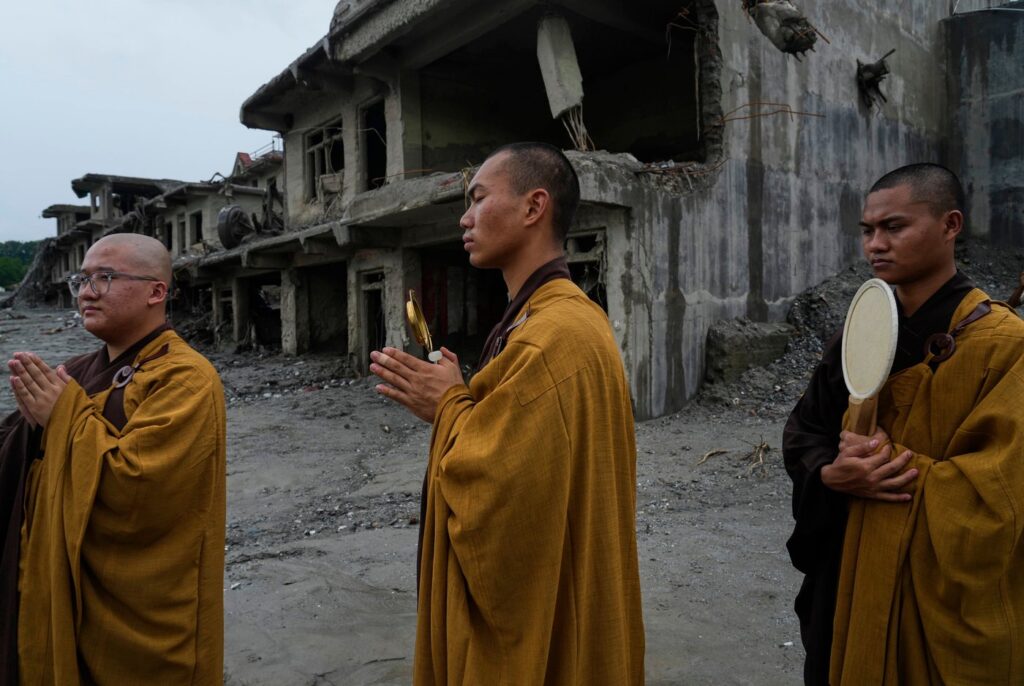
KATHMANDU, Nepal (AP) – On Monday, Nepal observed a day of mourning for the victims of the devastating floods that occurred on August 26, which claimed the lives of over 1,300 people across Nepal and Tibet. The floods also left about 5,000 individuals missing, including several foreigners, according to reports from Nepal’s disaster management agency. In a display of solidarity, flags at government offices were lowered to half-staff, and families engaged in traditional mourning rituals.
The mourning period in predominantly Hindu Nepal typically lasts for 13 days, during which close family members remain at home while relatives visit to offer condolences and support. On the final day of the mourning period, special rituals are conducted to pray for the souls of those who have passed away.
As part of the mourning ceremonies, some individuals, whose loved ones remain unaccounted for, participated in symbolic funerals. In Hindu culture, cremation is considered a vital final rite. Therefore, holding these ceremonies, even without the physical presence of the deceased, offered some families a sense of spiritual release amidst the ongoing tragedy.
In light of the situation, the government officially declared Monday a day of mourning, emphasizing the need to honor the lives lost and the ongoing search efforts for the missing. However, there were growing concerns among families and community members regarding the adequacy and speed of the rescue operations.
Protests erupted in Kathmandu as relatives gathered near the offices of key government officials, including the prime minister, demanding that search and rescue operations for the hundreds of workers trapped in the region be expedited. Many of these individuals were employed at hydropower plants and either found themselves swept away by the fierce torrents of the Bhotekhoshi River or buried beneath the debris.
Among those advocating for quicker action was Sumana Shrestha, who stood with family members holding a poster bearing the image of her husband, a 55-year-old consulting geologist who went missing the day of the flood. He had been on duty at the Trishuli hydropower plant and had assured his family he would return after his shift. Tragically, the office where he worked has been fully engulfed by rubble.
Shrestha expressed frustration over the lack of rescue attempts, stating, “We are here because we have not heard of any rescue attempt on this project, but it has been 13 days already. The only thing we have been able to do is pray to God and hope for a miracle.”
Another protester, Mahesh Prasad Shrestha, held a photograph of his brother, Niraj Shrestha, a 52-year-old engineer also located at the same site. He criticized the government for its sluggish response, noting that only a small excavator was sent via helicopter on the sixth or seventh day post-disaster. Mahesh Prasad urged authorities to utilize larger helicopters from neighboring countries like China or India to enhance their rescue capabilities.
In addition to protests, candlelight vigils were organized across various locations in Kathmandu to honor those who lost their lives in the flooding. Rescue operations have been primarily concentrated on 12 hydropower projects, with approximately 900 workers reported missing and around 500 believed to be trapped in associated tunnels. Specialized rescue teams from countries such as India, China, South Korea, and the United States were deployed to sift through the debris, dismantle damaged structures, and explore tunnels at these sites.
As of Friday, two Nepalese workers were successfully rescued from one of the plants, and a Chinese national was pulled to safety the following day. Efforts to locate the remaining missing individuals continue amid ongoing challenges and calls for a more effective and swift response from the authorities.








