

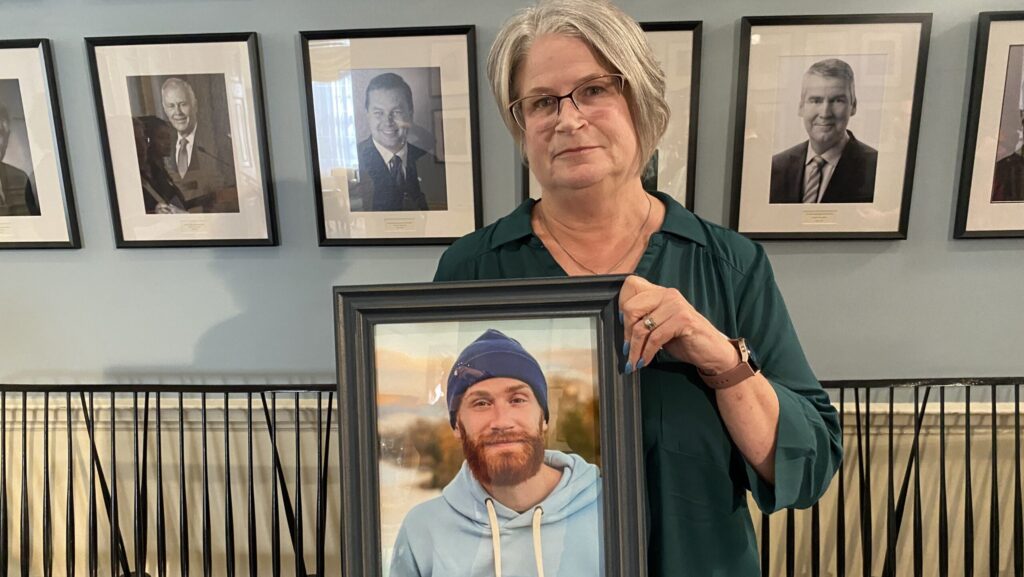
A woman from Nova Scotia, Jackie Lowe, is determined to continue the fight initiated by her late son, Bradley Lowe, for better government support for homeless individuals. Bradley died in 2023, but not before securing a significant legal victory on August 5, which affirmed that individuals living in tents qualify for enhanced support from the provincial government. Tragically, he did not live to witness the outcome of this ruling.
In response to the Court of Appeal's decision, the Nova Scotia government swiftly amended its definition of housing. This change effectively excluded tent dwellers from receiving enhanced provincial support, which Jackie Lowe describes as a cruel action. She is now advocating for the government to revert its decision and comply with the ruling that favored her son.
Jackie Lowe expressed that her son was a fierce advocate for the underprivileged, noting his empathy for others in similar situations. Speaking to reporters at a press conference organized by the Opposition New Democratic Party (NDP), she highlighted that her son's commitment to fighting for change remains alive through her efforts. The NDP has introduced three housing-related bills, including one dubbed "Bradley's Law," aimed at overturning the recent regulatory change to allow those living in tents access to enhanced assistance.
Subsequent to the ruling, the Nova Scotia government issued an order-in-council roughly three weeks later, modifying the definition of housing. This amendment replaced the term "accommodation" with "lives in a home," and revoked the previous definition of "home." Instead, it now describes a home as a self-contained unit that is rented or owned, a room in a lodging house, or a single-occupancy room in a building.
Furthermore, human rights lawyer Vince Calderhead, who continues to support the Lowe family in this ongoing struggle, pointed out that the government made additional changes to income assistance rules. These changes have rendered individuals with disabilities living in tents ineligible for a disability supplement. An order-in-council signed on September 3 stipulated that individuals with disabilities must "live in a home or board" to qualify for this supplement.
Calderhead has reached out to the Nova Scotia Human Rights Commission to investigate what he describes as a "discriminatory" action. He articulated that this legislative change sends a detrimental message about the worth of people living under precarious conditions, highlighting that vulnerable individuals are being treated as less deserving of dignity and respect.
Susan Corkum-Greek, the Minister of Opportunities and Social Development, responded by stating that the department is aiming to clarify its regulations to ensure consistent administration of the programs. Following Jackie Lowe's comments, Corkum-Greek expressed her intent to reach out and converse with Lowe to discuss how the government can better support those in need.
Jackie Lowe urged the government's representatives, including Premier Tim Houston's Progressive Conservative government, to empathize with the realities faced by individuals experiencing homelessness. She emphasized the struggles of surviving on the income assistance her son was allocated, which was only $380 per month at the time. Notably, the base income assistance rate has recently increased to $410 per month.
In light of these developments, Corkum-Greek acknowledged her desire to engage with Lowe, hinting at the potential for understanding and collaboration. She reaffirmed that discussions regarding raising income assistance rates are ongoing within her department, as they aim to address the needs of the community.
The situation surrounding the government’s decision and the continued advocacy for unhoused individuals reflects the ongoing complexities of social support systems in Nova Scotia. Jackie Lowe's fight to honor her son's legacy and the rights of the unhoused community remains a poignant issue in the province.








