

BAGHDAD (AP) – Iraq's government is urgently working to address the backlash following accusations that local Iran-backed militias attacked and shut down a critical Saudi oil pipeline. Although the umbrella group of these militias denied their involvement, the Iraqi government confirmed that the attacks originated from within its borders. Subsequently, the government vowed to investigate the incident and dismissed two senior officials tied to the matter.
The escalating situation adds pressure on Iraq to ensure that local militias do not support Iran-backed proxy groups in the region. The Iraqi administration has established a Sept. 30 deadline for nonstate groups to disarm, although many influential militias have publicly stated they will not comply.
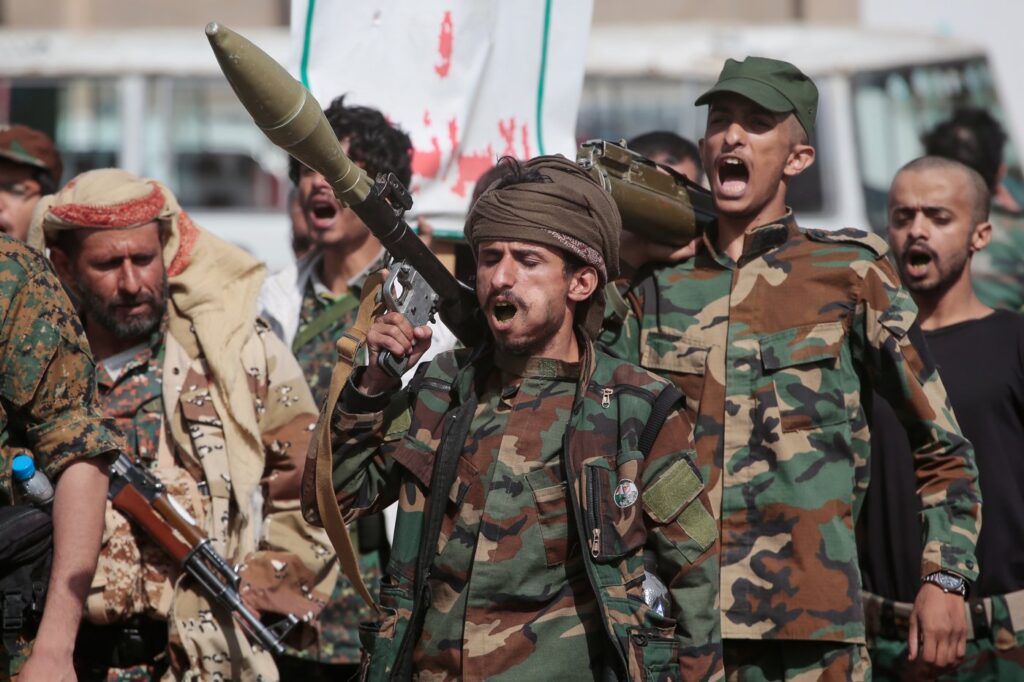
The urgency to disarm these militias is intensified by the advancing Iran-backed Houthi rebels in Yemen, where they recently captured an island in the Bab el-Mandeb Strait, a crucial shipping lane that carries approximately 12% of global trade. The Houthis' increasing control over this strait poses a risk of global oil prices spiraling further upward, exacerbated by the ongoing Iran-U.S. conflict that has already inflated oil costs. The strait has become pivotal for Saudi oil exports, especially following prior disruptions in the Strait of Hormuz.
During a press briefing in Dublin, U.S. President Donald Trump stated that Iran was "probably" responsible for the pipeline attack but aimed to alleviate concerns over the situation. He mentioned that his administration had engaged in discussions with the Houthis, without providing specific details on the timing of these talks. The administration had participated in at least one round of negotiations with the rebels in May 2025.
The Houthis, in a statement on Saturday, praised Iraqi militia groups for their ongoing military successes but strongly denied any involvement with the recent attacks on the Saudi oil pipeline. They affirmed their commitment to cooperate with the Iraqi government's investigation into the matter.
In response to the incidents, Iraqi Prime Minister Ali al-Zaidi initiated an investigation into operations in Maysan province, which shares a border with Iran, and dismissed both the provincial commander and the police chief. On Friday, Saudi Arabia had enacted a precautionary measure by shutting down the key cross-country oil pipeline after it was targeted by drones, which the kingdom blamed on movements from Iraq, while opting not to retaliate to provide Iraq an opportunity to address the issue.
The attack on the pipeline garnered widespread condemnation from several Arab nations, including Kuwait, the United Arab Emirates, Oman, and Egypt. The East-West pipeline, established during the 1980s, has been crucial for Saudi oil exports, especially given the recent disruptions in oil shipments via the Strait of Hormuz. As of early June, Saudi Arabia had significantly boosted its oil exports through the pipeline’s endpoint, surpassing 5 million barrels per day.
Iran-backed militias in Iraq have conducted operations against U.S.-linked targets in both Iraq and elsewhere since conflicts escalated after U.S. and Israeli targetings of Iran on Feb. 28. There have also been coordinated efforts with the Houthis to launch attacks against Saudi Arabia.
In a potentially linked development, Iraq announced the closure of two key border crossings with Iran to facilitate the investigation, officials confirmed on Saturday. This move could affect both passenger and commercial traffic indefinitely, with the closed crossings being Shalamcheh and Chazabeh, which are primary official gateways between the two nations.
This summer also saw retaliatory actions from Saudi Arabia and the United States against Iranian-backed militias in Iraq, following drone strikes on Saudi facilities attributed to the Houthis. With the fighting intensifying in Yemen, there are growing concerns that an essential truce could collapse, further jeopardizing the stability of the region, particularly in Yemen, where millions remain at risk amid ongoing conflicts.
The surge in violence over the past week has displaced over 46,000 individuals, as reported by the U.N. migration agency. The conflict in Yemen began in 2014 when the Houthis took control of significant portions of the country, culminating in Saudi Arabia intervening on behalf of the Yemeni government the following year.
– Jill Lawless and Darlene Superville contributed to this report.








