

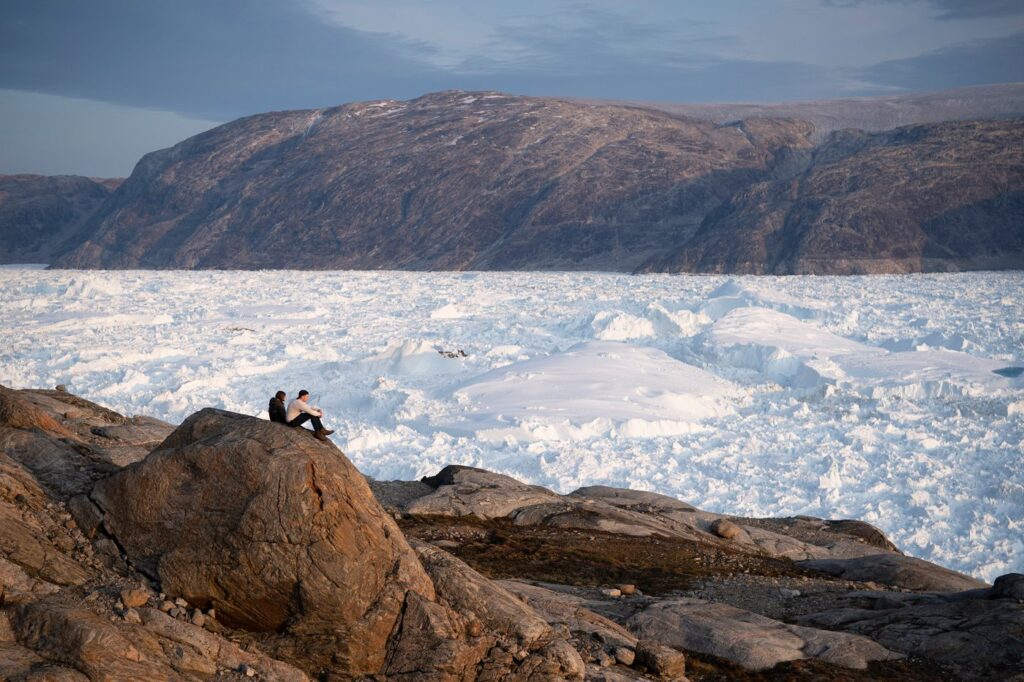
According to a significant scientific report, approximately 12.5 trillion tons (11.3 trillion metric tons) of ice from the glaciers in Greenland and Antarctica have melted since 1979. This amount of frozen water is enough to cover the continental United States with ice five feet deep. The study highlights the alarming impact of climate change on the planet's major ice sheets, as the melting is largely attributed to warmer waters eroding the ice from below rather than rising air temperatures.
Study co-author Eric Rignot, an ice scientist at the University of California, Irvine, stated, “The ice sheets are melting away fast. We are melting the polar regions, sea level is rising worldwide and will exacerbate the vulnerability of coastal regions.” The report emphasizes that nearly five-sixths of the ice melt is driven by warmer ocean waters, leading to glaciers retreating and contributing to rising sea levels.
The consequences of this ice melt are significant. The melted ice has produced nearly 3 quadrillion gallons of water (approximately 11.3 quadrillion liters), resulting in a global sea level rise of about one inch (3.1 centimeters) since 1979. While an inch may seem minor, it has substantial implications. Lead study author Ines Otosaka of Northumbria University explains that for every third of an inch (or centimeter) of sea level rise, an additional 2 to 3 million people face flooding at least once a year. For instance, the Jakobshavn glacier in Greenland is now retreating at an alarming rate of up to 164 feet (50 meters) per day.
This international collaboration of polar scientists, led by the European Space Agency, expanded its research scope to look at ice sheet melt as far back as 1979 in Antarctica and 1972 in Greenland by incorporating satellite data from NASA. The findings confirm a clear trend of accelerated ice loss over recent decades, particularly during the 2010s when melting became rapid compared to the relatively stable conditions observed in the previous decades.
Otosaka pointed out that the data shows a connection between these changes and climate change, stating, “There is a clear trend that the ice sheets are losing more mass and it has been increasing from decade to decade.” The study indicates that while the melting trends appeared to stabilize from 2020 to 2023, this was primarily due to short-term weather fluctuations rather than a reversal of the long-term trend. Otosaka noted that subsequent measurements indicate the acceleration of ice loss has resumed.
Notably, the stability of the Antarctic region was somewhat bolstered by record snowfall in East Antarctica, which countered the rapid melting occurring in the less stable West Antarctic Ice Sheet. However, scientists remain concerned about potential tipping points that could lead to abrupt ice sheet collapse scenarios. David Holland, an ice scientist at New York University, expressed his worries about the dynamic processes of ice loss, highlighting the unstable nature of these changes.
The use of 45 independent surveys and 27 different satellites ensures the reliability of the research findings. Holland, although not part of the study, expressed confidence in the results, confirming that the upward trend of ice loss is indeed real. The warnings from experts indicate the urgency of addressing the challenges posed by Antarctic mass loss, viewed as a clear yet distant threat to environmental stability.
Experts like Ted Scambos from the University of Colorado reinforce that the phenomenon poses future dangers, suggesting that society is aware of the implications but often lacks the will to act prudently in response. The culmination of these findings points to a critical juncture in understanding the long-term impact of climate change on polar ice sheets and global sea levels.








