

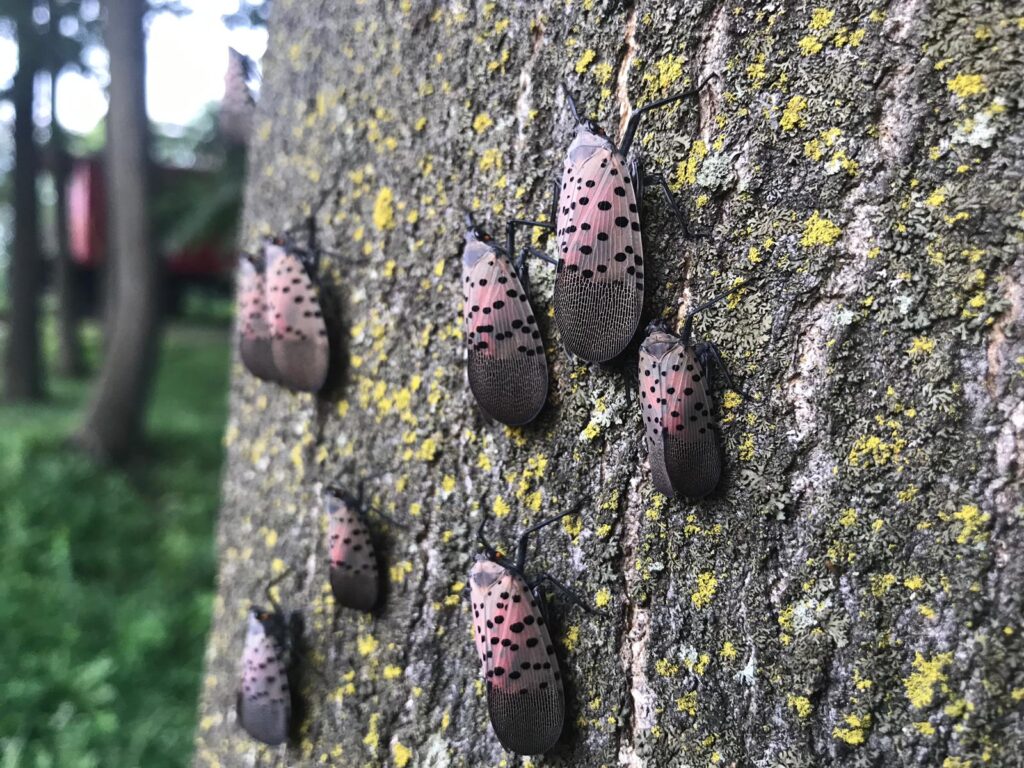
Twelve years after its initial detection in North America, the invasive pest known as the spotted lanternfly has made its first appearance in Canada. The Canadian Food Inspection Agency (CFIA) confirmed that this destructive pest was spotted in Windsor, Ontario, on September 15, 2023.
Nativeto Southeast Asia, the spotted lanternfly was first found on the continent in 2014 in Pennsylvania. This pest is notorious for its potential to damage and kill grapevines, which poses a significant threat to grape and wine industries. Beyond grapes, the spotted lanternfly can feed on the sap of over 100 different plant species, impacting various crops across the horticulture and forestry sectors, as well as residential yards and public parks. The nymphs and adults primarily target native hardwood and fruit trees. While their preferred host is the invasive tree-of-heaven (Ailanthus altissima), they are also known to feed on black walnut trees.
The Invasive Species Centre has highlighted the potential widespread economic, ecological, and social impacts that could occur if the spotted lanternfly is allowed to spread unchecked. In light of this discovery, movement restrictions have been implemented to limit the movement of regulated materials, such as plants that may be infested. The CFIA is also actively monitoring the surrounding areas to assess the scope of the infestation while taking necessary actions in accordance with its spotted lanternfly response framework.
Colin Cassin, Executive Director of the Invasive Species Centre, emphasizes that public awareness and prompt action can significantly help mitigate the spread of invasive species like the spotted lanternfly. He urges the community to report sightings as early detection greatly improves the chances of controlling invasions.
How You Can Help in Your Community
Community members can play a crucial role in preventing the spread of the spotted lanternfly by following the "spot it, snap it, catch it, report it" protocol.
Spot it
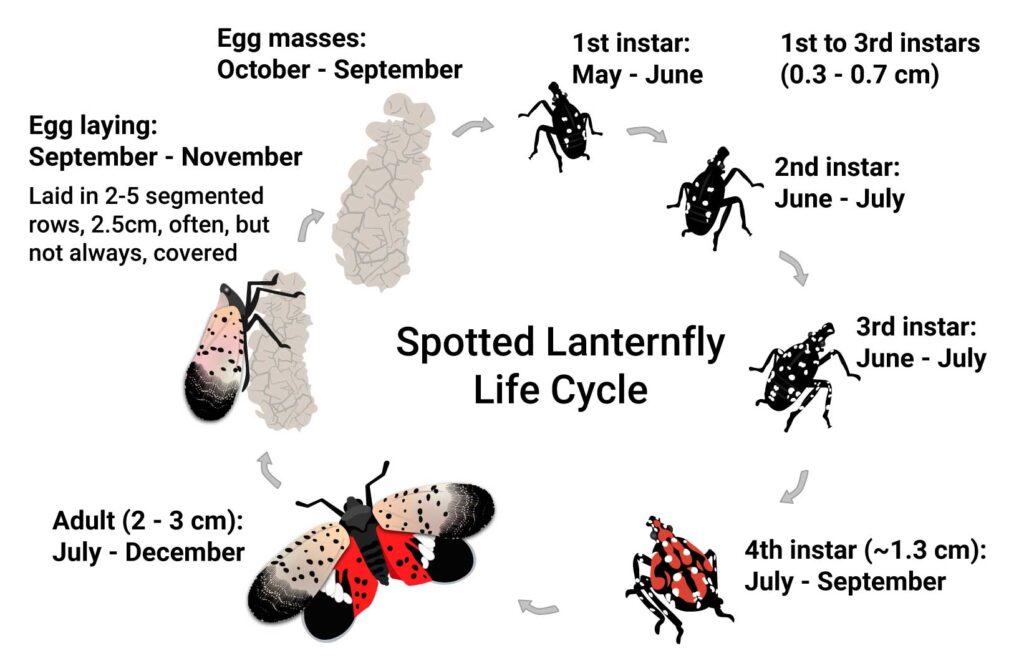
Understanding how to identify the insect in all its life stages is essential:
- The egg masses resemble grey smears of mud on trees or hard surfaces outdoors. These can typically be spotted in early September and may remain until they hatch in spring.
- Early-stage nymphs are black with white spots, while late-stage ones are red with black and white spots. They are usually found climbing plants and trees in swarms during spring and summer.
- Adult spotted lanternflies showcase pinkish-grey wings adorned with black spots. They are often seen swarming on trees, grapevines, and other plants from summer to late fall or early winter, becoming most active in September and October during their mating and egg-laying periods.
- A clear, sticky substance known as honeydew, which is insect excrement, can be found at the base of infested host trees. This byproduct can promote sooty mold growth and attract bees and wasps.
Snap it
If you suspect you have encountered a spotted lanternfly, take a photo or video of the insect or any egg masses.
Catch it
After taking documentation, capture the insect or scrape the egg masses into a sealable plastic bag or container for proper reporting.
Report it
It is crucial to report any suspected sightings of spotted lanternflies to the CFIA immediately. When reporting, provide accurate location details and any images or documentation. The CFIA is prepared to respond with necessary actions, which may include site surveys and insect collection efforts.
In addition to these steps, reducing the spread of this invasive pest is essential. When visiting areas known for spotted lanternfly infestations, check vehicles and outdoor items like camping equipment for any signs of egg masses, nymphs, or adult insects before leaving. It is advisable to run your vehicle through a high-pressure car wash if possible.
If you need firewood, the best practice is to buy and burn it locally, avoiding the transportation of firewood from one region to another.
For more information and to report sightings, click here to reach the CFIA.








