

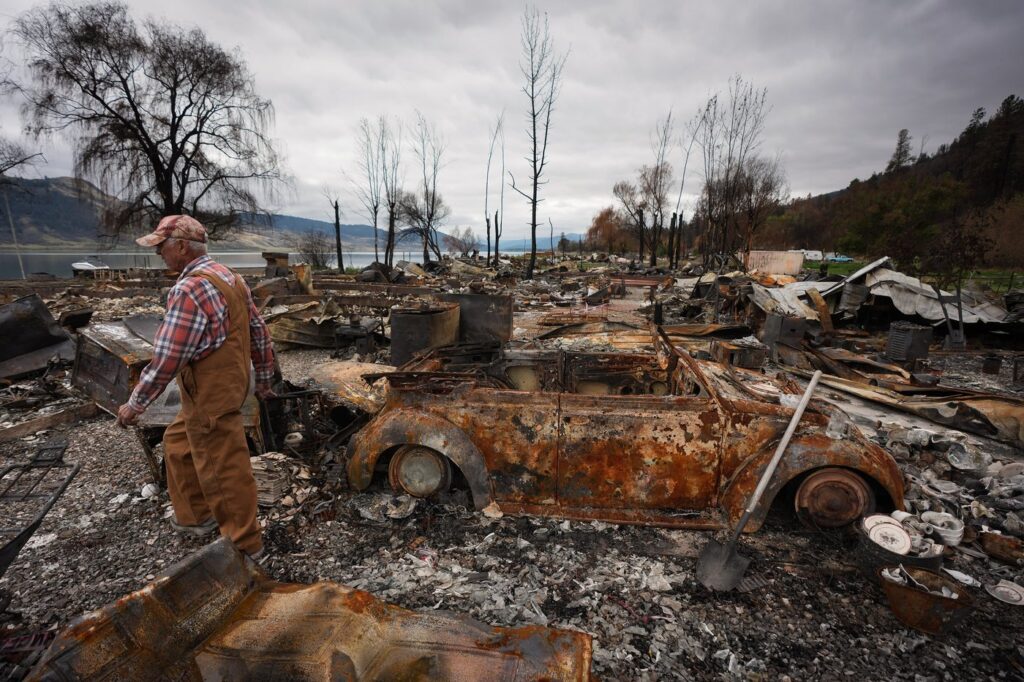
Joel Patan, an HVAC business owner, reflects on the devastation caused by the Bald Range wildfire that obliterated his home and much of his community, Faulder, located outside Summerland, British Columbia. “My life is ashes now,” he stated, emphasizing the emotional toll of losing his family’s “dream property” after moving there in December 2024. The wildfire, which ignited on August 7, mandated the evacuation of thousands of residents from the Okanagan region and has left a significant impact on the community.
During the fire, an 80-year-old woman in the nearby Meadow Valley reportedly died during the evacuation, believed to be connected to the wildfire's chaos. Patan vividly describes the urgency of their escape as they fled flames, recounting his panic when he was ordered by RCMP to evacuate after he located his cat. “When we talk about ‘we ran from a fire, we ran,’” he recalled.
As of now, the Bald Range fire is under control, though recovery faces significant hurdles for families like Patan's, who are trying to rebuild. Despite the wildfire season in B.C. burning only 1,350 square kilometers—approximately a quarter of the 20-year average—it has proven to be one of the most destructive seasons on record in terms of property loss, with over 500 homes or structures either damaged or destroyed, including approximately 150 casualties from the Bald Range fire alone.
In Faulder and Meadow Valley, 110 homes were lost to the blaze, in addition to more than 40 structures in nearby Summerland. Other areas, such as the Bradley Complex of fires near Vernon, and the Big Bar Complex outside Clinton, B.C., suffered similar devastations, with many homeowners now facing long and arduous recovery processes. In some cases, individuals were uninsured or underinsured, making rebuilding particularly challenging.
The Ministry of Emergency Management and Climate Readiness has assigned community recovery officers to these affected areas, emphasizing that recovery efforts will vary from one community to another and will be supported by provincial and federal partners, as well as non-profit organizations. Access to Faulder remains restricted, with security measures in place to prevent looting. As residents cautiously navigate their way back, they are met with landscapes of charred trees and the remnants of burnt vehicles.
Amid the rubble, Patan articulates a sense of resilience. While dealing with his insurance, he acknowledges his luck compared to those who lost everything. He is adamant about rebuilding a safe home, stating, “We’ll build a house that is good for wildfire interface… it’s just a new beginning, and we just move forward.”
Efforts to ease the burden of recovery have been initiated by local governments. Erick Thompson, from the Regional District of Okanagan Similkameen, noted the long recovery phase encompassing debris removal and remediation processes, highlighting the support their agency provides to residents—particularly those lacking insurance. The goal is to advocate for financial relief measures, such as waiving provincial sales tax for rebuilding efforts, which could alleviate some of the financial burdens faced by residents.
As the community struggles with the overwhelming reality of loss, residents from other affected areas, like Clinton, express feelings of being overlooked. Steve and Kathy Naseth, who lost their modular home, voiced frustration over the lack of attention on displacement and recovery efforts in their area. They described feelings of abandonment as they confront a lengthy rebuilding process, having lost not just their home but cherished memories and heirlooms. Kathy emphasized, “We don’t have 25 years again to build that all up again.”
In the Okanagan Indian Band reserve, residents Louis and Shorty Fred are also reeling from the loss of their home. After witnessing the charred remains of their property, they expressed their determination to rebuild on a different part of their land. They emphasized the support from their faith in navigating this life-altering experience.
As the aftermath of the fire unfolds, the stories of recovery are intertwined with stories of resilience, hope, and communal support within the affected communities. With many challenges ahead, the journey toward recovery requires not only rebuilding homes but also healing the emotional scars left behind by the fires.








