

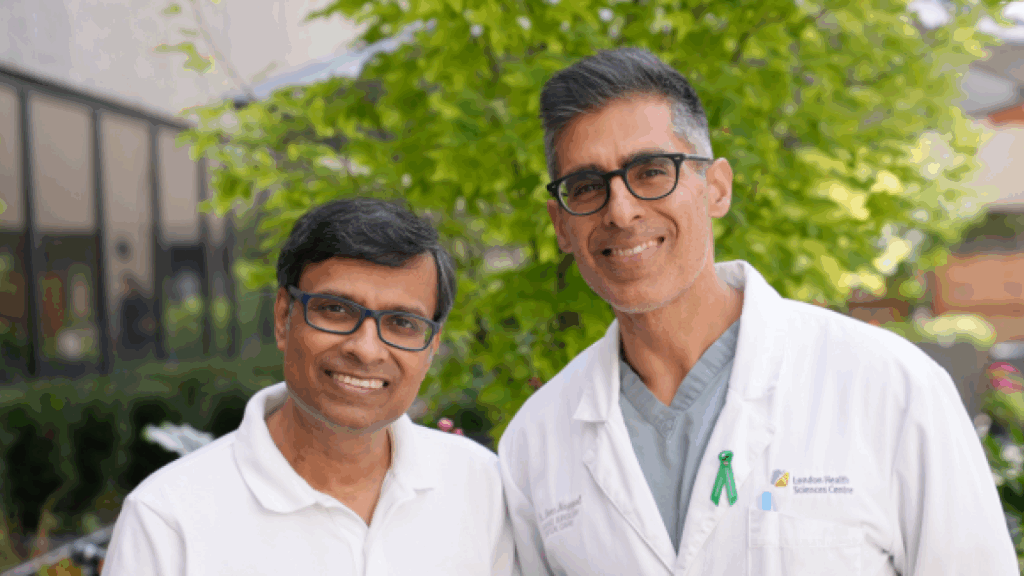
In a landmark achievement for Canadian healthcare, the cardiac team at London Health Sciences Centre (LHSC) has successfully performed a heart transplant using the innovative Transmedics Organ Care System, commonly known as the "heart in a box." This pioneering technology has the potential to revolutionize heart transplants by permitting the use of donor hearts that would otherwise not qualify for transplantation.
The Transmedics Organ Care System is specifically designed to revive donor hearts that have ceased beating due to circulatory death. Dr. Dave Nagpal, co-director of the multi-organ transplant program, elaborated on the technology, stating, “This technology allows us to take that heart with some donor blood, put it on this machine, and watch the function of the heart, so we make sure that the heart is good enough for use for our recipient.” The ability to assess the heart in real-time enhances the chances of successful transplant outcomes.
The recipient of this groundbreaking procedure was Raj Mittal, who had previously undergone a triple bypass surgery in 2025. After experiencing complications, Mittal was readmitted in January 2026 and was subsequently placed on the organ donation list. He was fortunate enough to receive his transplant just two weeks later, with the surgery taking place in February 2026.
Expressing his gratitude, Mittal shared his positive outlook post-transplant. “I am able to do some activities like walking, and as per the doctors, I’m doing physiotherapy and other things. Now I can see, like I’m able to spend time with my kids and family,” he said. His swift recovery is a testament to the potential benefits of using the "heart in a box" system.
One of the most significant advantages of the Transmedics system is its capacity to extend organ preservation time from the conventional limit of a few hours to as long as 12 hours. This advancement is particularly crucial in reducing wait times for transplant candidates. Dr. Nagpal highlighted the urgency of the situation, noting, “We unfortunately have people waiting for transplants who become too sick for a transplant or even die on a transplant waitlist. We expect this is going to increase donor heart availability by upwards of 40 percent.”
The successful implementation of this procedure is the result of extensive collaboration between LHSC, Ontario Health, and Trillium Gift of Life Network in London. Such partnerships underscore the importance of teamwork and innovation in expanding the possibilities within organ transplantation and improving patient outcomes.
The "heart in a box" technology not only offers new hope to patients like Raj Mittal but also signifies a significant step forward in the field of transplant medicine. With the promise of increased donor heart availability and reduced waiting times, this breakthrough could lead to improved survival rates and a better quality of life for countless individuals facing cardiac complications.








