

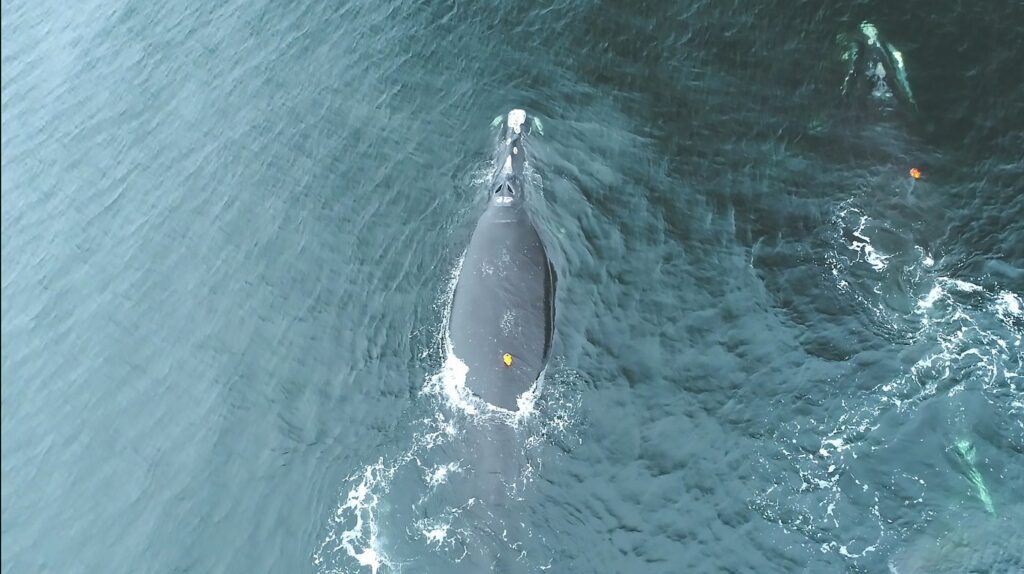
HALIFAX – Researchers have discovered that critically endangered North Atlantic right whales are increasingly feeding closer to the ocean's surface at night. This behavior raises significant concerns about their safety, as it places them at a greater risk of being struck by boats.
A recent study conducted by a research team at Dalhousie University in Halifax has documented this nighttime surface feeding in North Atlantic right whales. The findings present new evidence that could potentially be used to mitigate the risk of deadly collisions between these whales and various vessels.
The lead author of the paper, Jay Kirkham, shared that the research team tagged 23 North Atlantic right whales in the Gulf of St. Lawrence. By utilizing video footage from the tags and applying a machine-learning algorithm, the team was able to identify instances when the whales were feeding during the night.
The data collected illuminated a concerning trend: the whales are engaging in feeding behaviors at depths similar to those of large vessels. This overlap considerably heightens the risk of collisions, which are already a leading cause of mortality for the species.
Currently, the population of North Atlantic right whales is estimated to be around 384 individuals, a number that underscores the critical nature of their conservation. The primary threats to these whales include collisions with vessels and entanglements in fishing gear. Such incidents have led to a drastic decline in their numbers, making their survival a pressing concern for researchers and conservationists alike.
To address these dangers, Transport Canada and the Department of Fisheries and Oceans have established a range of protective measures aimed at safeguarding the remaining right whales. These measures include the enforcement of vessel exclusion zones, implementation of speed limits for maritime traffic in critical habitats, and seasonal fishing closures designed to reduce risks during vulnerable times for the whales.
This study highlights the urgent need for ongoing research and management efforts to ensure the safety of North Atlantic right whales. As the study's findings suggest that nighttime surface feeding elevates collision risks, there may be a necessity for adjusting current maritime traffic regulations to adapt to this newly observed behavior.
In conclusion, the increasing prevalence of nighttime surface feeding among North Atlantic right whales presents a complex challenge for their conservation. The incorporation of advanced technology, such as machine learning, into wildlife research is crucial for gaining insights into animal behavior. This knowledge may enable more effective strategies to protect this critically endangered species from the threats posed by human activity.








