

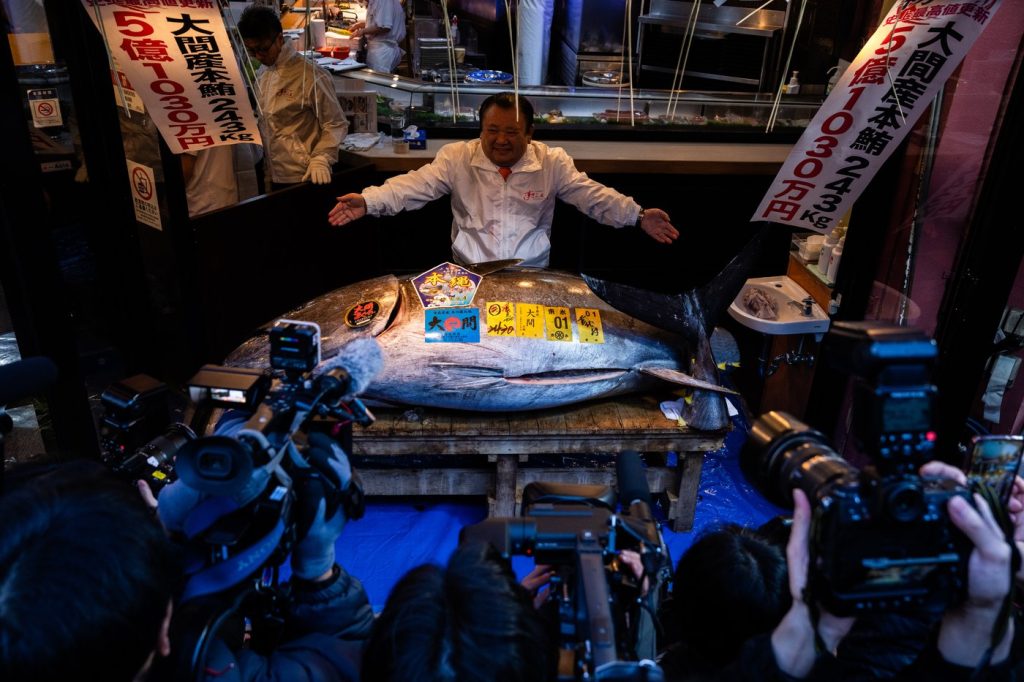
TOKYO (AP) In a stunning display of culinary investment, a 243-kilogram (535-pound) bluefin tuna has set a new record by being auctioned for an astonishing 510 million yen ($3.2 million) at Tokyo’s first fish auction of 2026. This auction took place at the Toyosu fish market, renowned for its vibrant fish trade and significant cultural importance in Japan.
The winning bid was made by Kiyomura Corporation, which operates the popular Sushi Zanmai restaurant chain. Kiyoshi Kimura, the owner of Kiyomura, successfully outbid competitors to secure this record-breaking fish, surpassing his previous record of 334 million yen ($2.1 million), which was set during the 2019 auction.
The tuna, caught off the coast of Oma in northern Japan, highlights the region's reputation for producing some of the finest bluefin tuna in the country, a delicacy revered by sushi enthusiasts worldwide. The auction itself is an annual tradition that draws attention not just for the prices fetched but also for the symbolism of the first fish sold in the new year.
As the auction progressed in the early morning hours of Monday, January 5, 2026, various wholesalers examined the stunning bluefin tuna, showcasing the intense competition among buyers. The Tuna auction at Toyosu marks the beginning of the new year with much fanfare, drawing attention from media and seafood lovers alike.
Following the auction, the prized fish was transported to a Sushi Zanmai restaurant, where it will be featured prominently, much to the gratification of patrons. The iconic image of Kiyoshi Kimura standing beside the record-setting tuna is expected to become a highlight of culinary and cultural discussions surrounding premium sushi offerings.
The excitement surrounding the auction reflects broader trends within the seafood market, where the demand for high-quality, sustainably sourced ingredients continues to rise. The record prices also raise questions regarding the sustainability of bluefin tuna fishing, as this species has been subject to overfishing pressures. Maintaining a balance between culinary traditions and sustainability remains a critical topic in discussions surrounding high-stakes auctions like this one.
The event has garnered significant media attention, emphasizing not only the extraordinary price but also the cultural significance of the auction itself. Photographs capturing the enthusiasm of wholesalers, buyers, and press alike reflect the vibrant atmosphere during this annual celebration at Toyosu fish market.
Overall, this auction serves as a poignant reminder of the intersection between culinary art, business investment, and cultural significance in Japan, as the nation continues to celebrate its seafood traditions while facing modern challenges in sustainability.








