

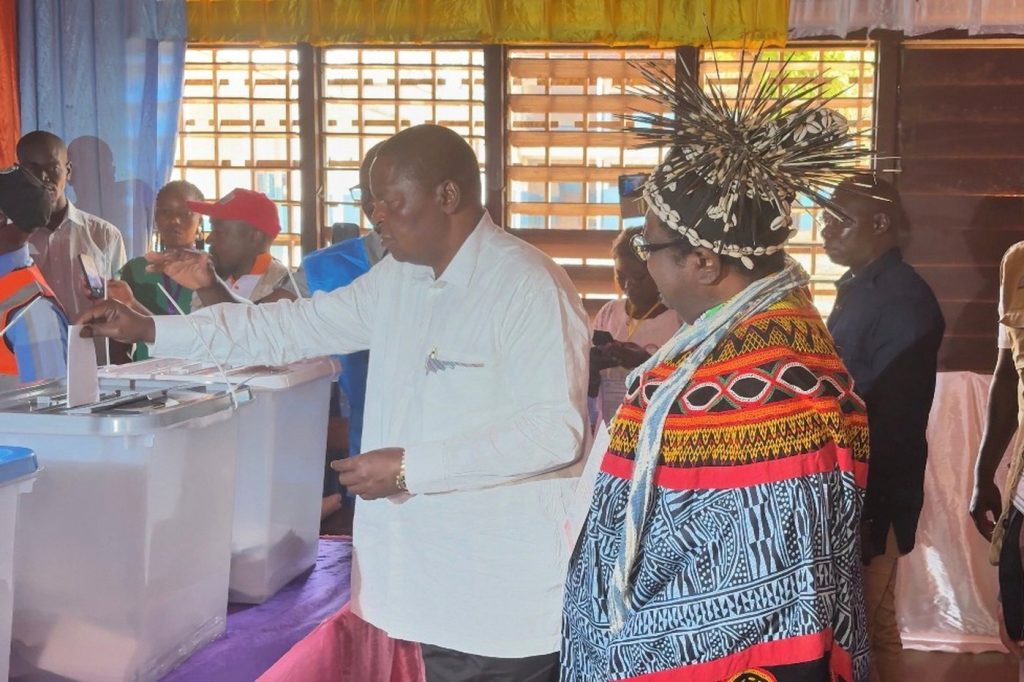
BANGUI, Central African Republic (AP) – Faustin Archange Touadéra has secured a third term as President of the Central African Republic, according to provisional results released by election authorities from last month's election. The results indicate that Touadéra garnered 76.15% of the votes, amid significant controversy surrounding the electoral process.
The major opposition coalition opted to boycott the election after a referendum removed term limits, which has raised concerns about the fairness of the political environment. Despite facing challenges from six candidates in total, the lack of participation from the main opposition group has raised questions about the legitimacy of the electoral process.
Approximately 2.4 million Central Africans were registered to vote in this unprecedented election, which allowed citizens to cast their ballots simultaneously for presidential, legislative, regional, and municipal positions. However, two opposition candidates have already contested the election results, alleging malpractice by the National Elections Authority and widespread fraud. Anicet Georges Dologuélé, the runner-up, who received 14.66% of the votes, proclaimed himself the winner on Friday, further complicating the political landscape.
Political analysts note that Touadéra has significantly consolidated power within state institutions over his tenure. The Central African Republic has faced ongoing conflict since 2013, when predominantly Muslim rebels ousted then-President François Bozizé. A peace deal reached in 2019 between the government and 14 armed groups somewhat de-escalated the situation; however, six of those groups later withdrew from the agreement, demonstrating the fragility of peace in the region.
The Russian mercenary group Wagner, which operates in the Central African Republic, has played a substantial role in providing security for Touadéra. However, tensions between Touadéra and Russia have emerged, particularly after Moscow suggested that the Wagner group be replaced with the Russian government-run African Corps. This shift has raised questions about the future of Russian involvement in Central African politics.
Rwanda also plays a pivotal role in the Central African Republic, influencing both political and security dynamics. Security concerns were a major focus for voters in the recent election, despite the conflict's relative decrease in intensity. The United Nations peacekeeping mission, MINUSCA, has been present in the country since 2014, yet it currently faces a drawdown due to financial constraints, further complicating the situation.
In summary, the electoral process in the Central African Republic has highlighted significant divisions within the political landscape. The absence of the main opposition coalition raises doubts about the election’s legitimacy, while ongoing security issues and foreign influence, particularly from Russia and Rwanda, continue to shape the nation’s political future.








