

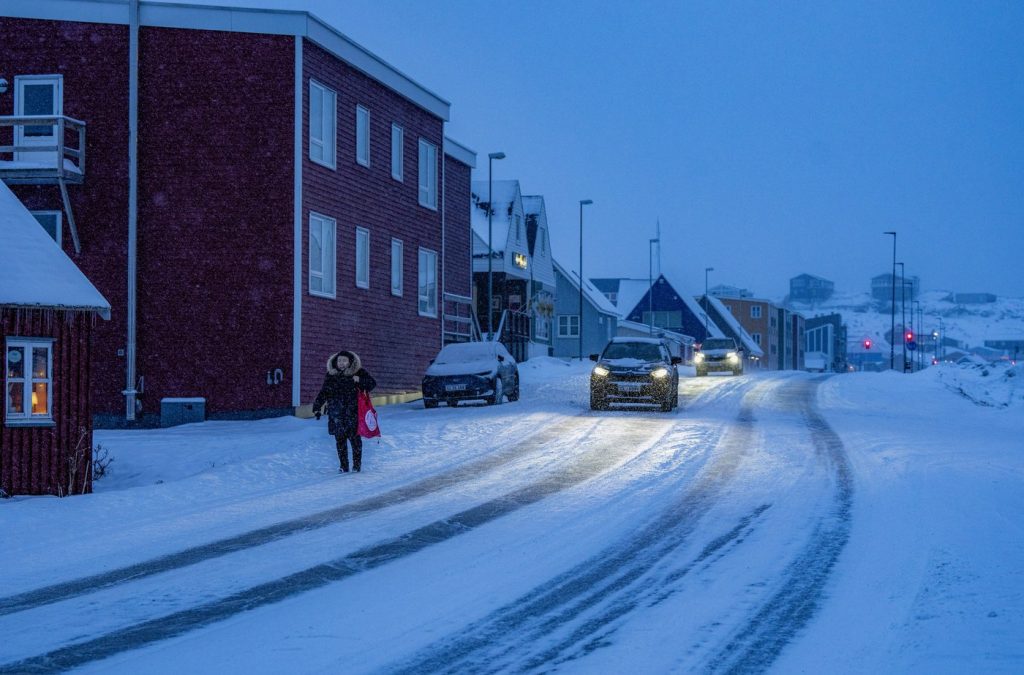
NUUK - The escalating tensions between Canada and the United States, particularly regarding Greenland, pose significant risks to the long-standing military alliance that has secured the North Atlantic nations for decades. U.S. President Donald Trump has reignited discussions about the potential annexation of Greenland, a Danish territory, coinciding with Canada's plans to establish a diplomatic mission in the area.
Greenland's Status
Greenland, a mineral-rich island predominantly situated above the Arctic Circle, is home to approximately 56,000 residents, primarily of Inuit descent. The island functions as a self-governing territory within the Kingdom of Denmark, which manages its foreign policy. Its transition to Danish territory occurred in 1814 after a historical division between Denmark and Norway. Despite Trump's repeated suggestions of purchasing or annexing Greenland, both the Danish government and Greenland's own authorities firmly oppose such notions, insisting that the future of Greenland will be determined by its people.
Strategic Importance of Greenland
Greenland's strategic significance has been evident since World War II, when the U.S. occupied the territory to prevent it from being seized by Nazi Germany. Today, it plays a crucial role in defending North America, particularly in relation to North Atlantic shipping lanes. The region is a critical monitoring zone (the GIUK Gap) for NATO as it tracks Russian naval activities in the North Atlantic, providing an outer defense line against potential threats to U.S. security. The U.S. Department of Defense operates the Pituffik Space Base in northwestern Greenland, established through the 1951 Defence of Greenland Treaty, which supports various military operations.
Experts, such as Thomas Crosbie from the Royal Danish Defence College, argue that American annexation would not enhance U.S. security, as the country already has access to the strategic advantages it seeks.
Impact of Climate Change
The Arctic, historically a zone of international cooperation, is increasingly affected by climate change, which is resulting in thinning ice and potential new shipping routes through the Northwest Passage. This scenario has re-ignited competitive interests among nations, particularly with Russia modernizing military infrastructure and China asserting itself as a "near-Arctic state." Following Russia's aggression in Ukraine, European leaders' concerns about the Arctic have intensified.
Mineral Wealth
Greenland is also rich in rare earth elements, crucial for high-tech products such as smartphones and batteries. This has garnered attention from the U.S. and other Western nations seeking to diminish China's dominance in the rare earths market. Despite the potential wealth, mining in Greenland faces challenges due to its harsh climate and stringent environmental regulations.
Canada's Diplomatic Moves
In response to these tensions and as part of a broader Arctic foreign policy strategy, Canada is set to open a consulate in Nuuk, Greenland's capital. This initiative, although planned prior to Trump's resurgence in office, comes at a crucial time in geopolitical dynamics. The consulate aims to bolster Canada's research and commercial ties in the region, with Canada also advocating for increased NATO focus on the Arctic and North Atlantic territories.
Trump's Remarks
Trump's rhetoric during his presidency has included musings about purchasing Greenland, met with dismissive responses from Danish leaders. Recently, he emphasized the importance of Greenland from a national security perspective, suggesting that Denmark cannot adequately manage the territory's strategic position. His challenging statements have raised alarms among NATO allies, with some commentators warning that a U.S. attempt to annex Greenland could lead to a fundamental reevaluation of NATO relationships.
Denmark's Defensive Posture
In the wake of Trump's heightened rhetoric, Denmark has reinforced its military presence in and around Greenland. The Danish government has committed significant funding to enhance capabilities for regional surveillance and sovereignty protection. This initiative includes acquiring new Arctic naval vessels and increased surveillance capacities, reflecting a strategic response to perceived U.S. threats to Greenland’s status.
Denmark's Joint Arctic Command, based in Nuuk, is tasked with military defense and assertion of sovereignty, complemented by elite units like the Sirius Dog Sled Patrol. Trump's commentary on Denmark's military efforts has added another layer of strain between allies, particularly as Denmark has expanded military agreements that could be revoked if U.S. ambitions toward Greenland ever escalated.
These developments underscore the complexities of Greenland’s geopolitical landscape, influenced by historical ties, strategic military considerations, and the ongoing impacts of climate change, all while highlighting the role of local governance in shaping the territory's future.








