

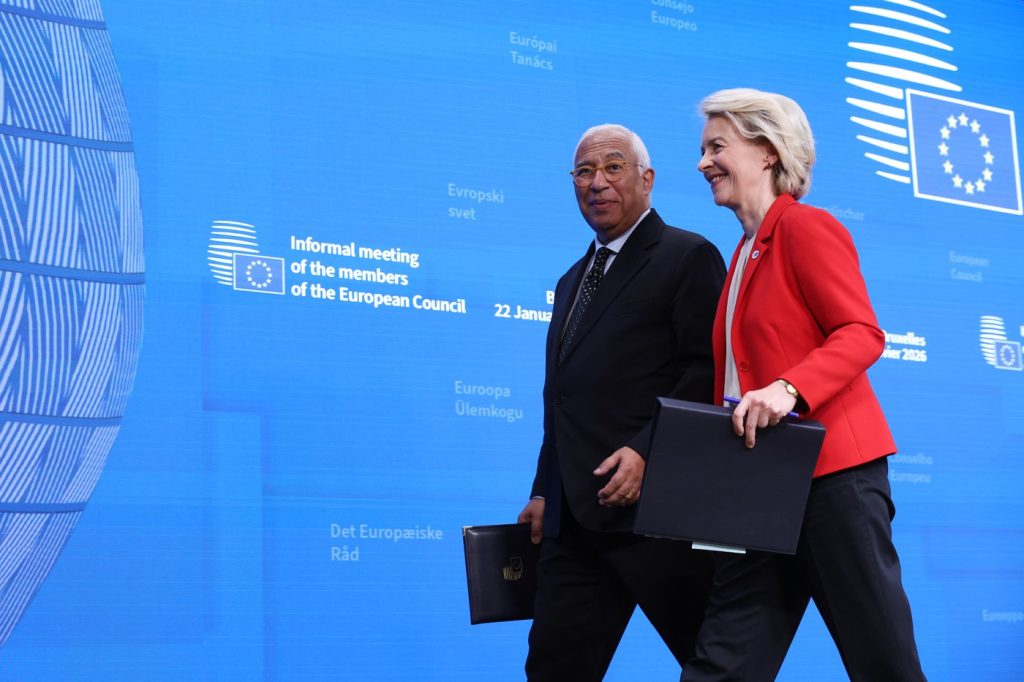
BRUSSELS (AP) – On Friday, the European Union's executive branch put forth new sanctions against Russia in response to the ongoing Ukraine war. These proposed measures include a ban on shipping services that support Russia's oil industry and additional restrictions targeting the financial services and trade sectors of the country.
European Commission President Ursula von der Leyen emphasized that ongoing negotiations to resolve the conflict should be viewed with caution. She stated, “We must be clear-eyed: Russia will only come to the table with genuine intent if it is pressured to do so.” This sentiment underscores the EU's strategy to reinforce economic pressure on Moscow.
The proposed shipping services ban, which requires the approval of EU member states, aims to significantly reduce Russia's energy revenues and complicate its ability to find buyers for its oil. This revenue is pivotal for Russia's economy, enabling President Vladimir Putin to sustain military funding without exacerbating inflation for Russian citizens or precipitating a currency crisis.
Von der Leyen noted that the EU seeks to implement this ban in coordination with the Group of Seven (G7) major economies and other international allies. She indicated that a number of ships involved in Russia's “shadow fleet,” which is responsible for transporting oil, would also be targeted under these new sanctions.
The EU's 27 national envoys are set to begin discussions on the sanctions package on Monday. So far, the bloc has enacted 19 different sanctions packages against Russia due to its military actions in Ukraine. However, reaching a consensus on the specifics of the sanctions often takes weeks. The objective is to finalize and endorse these new measures by February 23, right before the fourth anniversary of the war.
Beyond the shipping services ban, the proposed measures include provisions aimed at constraining Russia's banking sector and limiting its ability to establish alternative payment routes for its economic activities. Von der Leyen emphasized that targeting the financial system is a vital weakness for Russia, saying, “This is Russia’s weak point, and we are pressing hard on it.”
Other proposed restrictions encompass new bans on a range of goods and services, including rubber, tractors, and cybersecurity services. The plan also outlines an import ban on metals, chemicals, and key minerals that currently fall outside of existing sanctions.
The developments reflect the EU's ongoing commitment to mounting pressure on Russia as long as the conflict with Ukraine persists. The collaboration with G7 countries and international partners is indicative of a united front against Russian actions in Ukraine, reinforcing the message that such military strategies will face significant economic consequences.








