

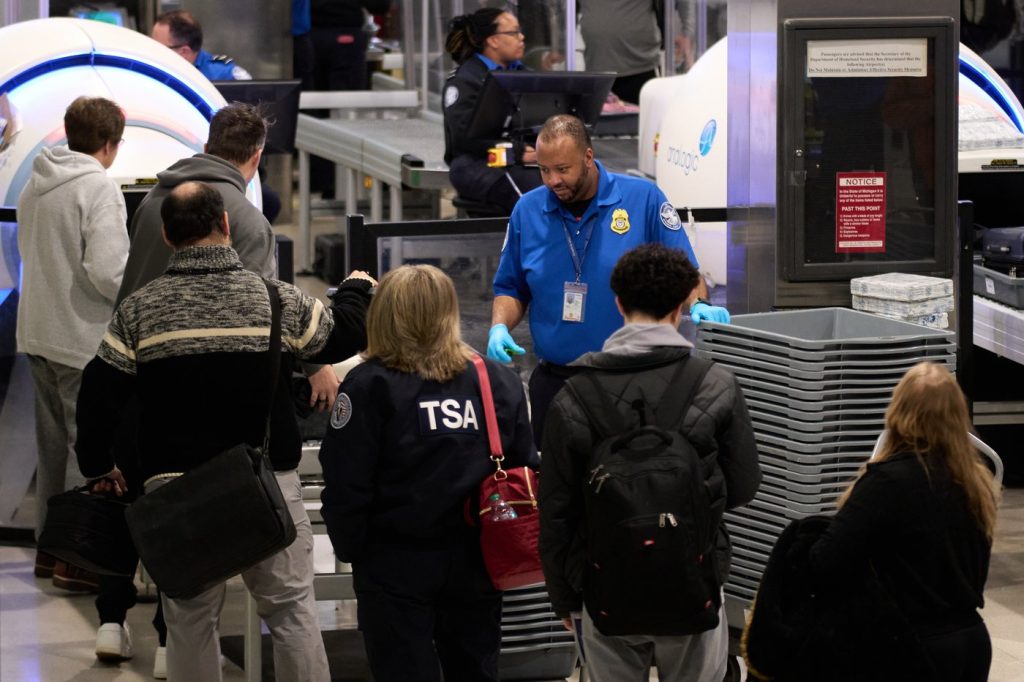
A recent shutdown of the U.S. Department of Homeland Security (DHS), which began early Saturday, has raised concerns for travelers as it affects the Transportation Security Administration (TSA), the agency responsible for screening passengers and baggage at airports nationwide. Many travelers may be recalling a previous 43-day government shutdown that triggered significant flight cancellations and extensive delays last year.
TSA officers are expected to continue their work without pay while lawmakers remain deadlocked over the annual funding for Homeland Security. During the previous shutdown that ended on November 12, TSA personnel also worked without compensation; however, aviation experts suggest that the current situation may unfold differently. Trade organizations for the U.S. travel industry and major airlines have issued warnings that the prolonged lapse in DHS funding could result in increased security lines at commercial airports across the country.
Notably, the current shutdown takes on distinct features compared to previous ones. Funding for the DHS expired at midnight, but the remaining sectors of the federal government are secured through September 30. This ensures that air traffic controllers employed by the Federal Aviation Administration (FAA) will continue to receive regular pay, thereby lowering the risk of widespread flight cancellations. According to the department’s contingency plan, approximately 95% of TSA workers are classified as essential personnel and must continue their duties. However, Democrats in both the House and Senate have indicated that funding for Homeland Security will be contingent upon the establishment of new restrictions on federal immigration operations.
Historically, disruptions in air travel during past shutdowns have tended to intensify gradually rather than occur all at once. For instance, approximately a month into last year's shutdown, the TSA temporarily closed two checkpoints at Philadelphia International Airport. That same day, the government took the unusual measure of ordering all commercial airlines to reduce their domestic flight schedules. John Rose, the chief risk officer for global travel management company Altour, expressed concerns that strains might emerge at airports more swiftly in the current shutdown, as TSA personnel are likely to remember the aftereffects of the last one.
The impact of the shutdown on travelers remains uncertain. Predicting when or where security screening delays might occur is challenging, as even a small number of unscheduled TSA absences could result in longer wait times especially at smaller airports where there may only be one security checkpoint available. Therefore, it is advisable for travelers to arrive early and factor in extra time for security checks.
Experts note that flight delays are also a possibility despite the fact that air traffic controllers are not directly affected by the DHS shutdown. Airlines might opt to delay departures to allow passengers sufficient time to clear security, and shortages of TSA officers may also complicate the timely screening of checked luggage behind the scenes. In preparation for potential inconveniences, travelers are advised to check airport websites for security line wait times, although this should be done well before the day of travel to avoid last-minute surprises.
When packing, it is essential for passengers to adhere to TSA regulations regarding prohibited items, as carrying full-size liquids or sharp objects can prolong the screening process. The TSA website outlines a comprehensive list of items that are and are not permitted in carry-on and checked luggage. At the airport, Rose highlights the importance of practicing patience and empathy toward TSA agents, who are working without pay and may be experiencing lower staffing levels while managing disgruntled travelers.
As the shutdown’s duration remains uncertain, the White House has been involved in negotiations with Democratic lawmakers, yet no consensus was reached by the week’s end prior to a scheduled 10-day congressional recess. Nonetheless, lawmakers have been informed to be ready to return if a deal is achieved to end the shutdown. Democrats have signaled a reluctance to support further funding for Homeland Security until new restrictions are put in place for federal immigration operations, prompted by recent fatalities in Minneapolis involving federal agents.
In a joint statement, U.S. Travel, Airlines for America, and the American Hotel & Lodging Association cautioned that the ongoing shutdown threatens to disrupt air travel significantly, especially with the busy spring break travel season on the horizon. They emphasized that essential TSA personnel should not be required to work without compensation, as this situation increases the chances of unscheduled absences and can ultimately lead to longer wait times and delayed flights.








