

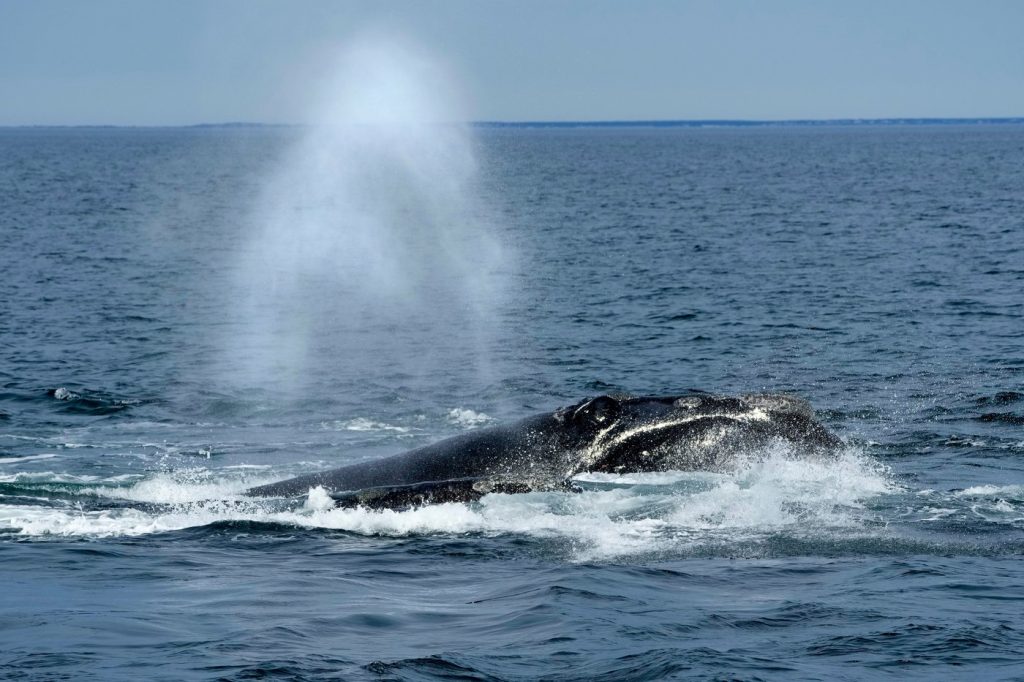
PORTLAND, Maine (AP) - The U.S. ocean regulator, the National Oceanic and Atmospheric Administration (NOAA), is planning to implement industry-friendly modifications to a longstanding rule aimed at safeguarding the increasingly endangered North Atlantic right whale. This decision has sparked significant backlash from environmentalists, particularly in light of the recent death of a young right whale.
The North Atlantic right whale is critically endangered, with a population of fewer than 400 individuals remaining, primarily residing off the East Coast of the United States. A critical component of the existing protections is a vessel speed regulation that mandates large ships to slow down at specific times of the year to mitigate the risk of collisions, which have been identified as a leading cause of mortality for these whales.
In a statement released on Thursday, NOAA indicated that it would shortly propose new regulations aimed at "modernizing" the protections for the North Atlantic right whale. The agency described the upcoming proposal as a “deregulatory-focused action” that intends to “reduce unnecessary regulatory and economic burdens while ensuring responsible conservation practices for endangered North Atlantic right whales.” However, the specifics of the proposed rule changes have not yet been detailed in the official announcements.
Environmental advocacy groups have voiced strong criticism against the move to weaken vessel speed regulations, with some pointing to the confirmation of a recently deceased 3-year-old female right whale off the coast of Virginia. The cause of death remains undetermined, but the whale's mortality at such a young age highlights the urgency for enhanced protective measures.
Jane Davenport, senior attorney at Defenders of Wildlife, commented on the situation, stating, “Another female right whale - the future of this species - has lost her life. We urgently need more right whale protections, not fewer.” She further emphasized that the apparent intention of the Trump administration to roll back vessel speed regulations could not come at a worse time for the species' conservation efforts.
Every year, North Atlantic right whales migrate from their calving areas in Florida and Georgia to feeding grounds in New England and Canada. During this migration, they face threats not only from ship collisions but also from entanglement in commercial fishing gear. Historically abundant along the East Coast, their numbers dramatically declined during the era of commercial whaling, leading to federal protection for the species over the decades.
Under the Biden administration, there were plans to broaden the slow zones along the East Coast further and to extend the vessel classes required to comply with speed restrictions. However, these proposals were withdrawn in the final days of the administration, as officials expressed that there was not sufficient time to finalize the regulations due to the overwhelming volume of public comments received.
The pushback against vessel speed regulations has been a long-standing concern among shipping companies and other marine industries. The National Marine Manufacturers Association has labeled speed restrictions as “archaic” and has advocated for technological solutions to address the conservation needs of marine life.
As NOAA moves forward with its plans to amend the rules governing vessel speed near crucial whale habitats, the balance between industrial interests and the imperative to protect endangered species remains a contentious and vital issue in marine conservation.








