

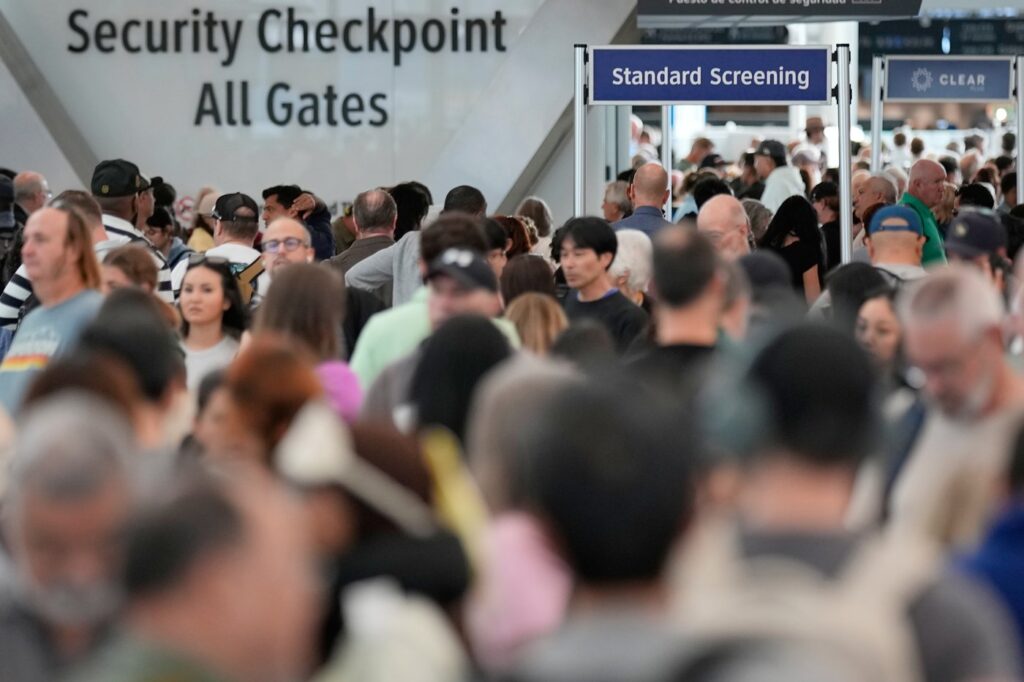
Images of long security lines at U.S. airports have triggered widespread concern among travelers, prompting many to arrive well ahead of their flight times. However, airports like John Glenn International Airport in Columbus, Ohio, are urging passengers to avoid arriving too early, as this can lead to increased congestion during peak hours.
Due to uncertainty stemming from a funding standoff in Congress that has resulted in crowded security checkpoints, the airport explained that early arrivals can exacerbate the situation. In a social media statement, the airport noted, “Arriving too early can actually create longer lines right when we open.” They emphasized that staggered arrival times are beneficial for maintaining an efficient flow at security checkpoints.
To guide travelers, John Glenn International Airport even released a recommendation stating that arriving 90 minutes before departure is sufficient. This is in stark contrast to scenarios in other regions, where the stress of long lines and potential missed flights prevails. Because of the ongoing government shutdown impacting Transportation Security Administration (TSA) staffing, some airports have reported security wait times exceeding two hours. For instance, George Bush Intercontinental Airport in Houston has become notorious for exceptionally long wait times, with reports of up to four-hour security lines.
While some airports are experiencing severe delays, many others, including John Glenn International Airport, are reporting wait times comparable to those of pre-pandemic levels. Airlines recommend that travelers check TSA wait times ahead of their flights to better gauge when to arrive at the airport. This situation has stirred associations with the “panic buying” behavior seen during the initial phases of the COVID-19 pandemic in 2020.
Shari Botwin, a clinical social worker from Philadelphia specializing in anxiety, elaborated on the psychological factors driving this behavior. “It’s human nature. You don’t have control over what’s going on at an airport,” she stated, highlighting the psychological strain that media coverage of chaotic airport conditions induces in passengers. The media frenzy around delays and security issues creates a lack of trust in reassurances that early arrival is no longer necessary.
Thus, the current travel environment is a delicate balance; while some airports report manageable wait times, disarray at others leaves travelers unsure about logistics. As more people prepare to travel, adherence to airport guidelines regarding arrival times may become increasingly crucial in ensuring a smooth travel experience.








