

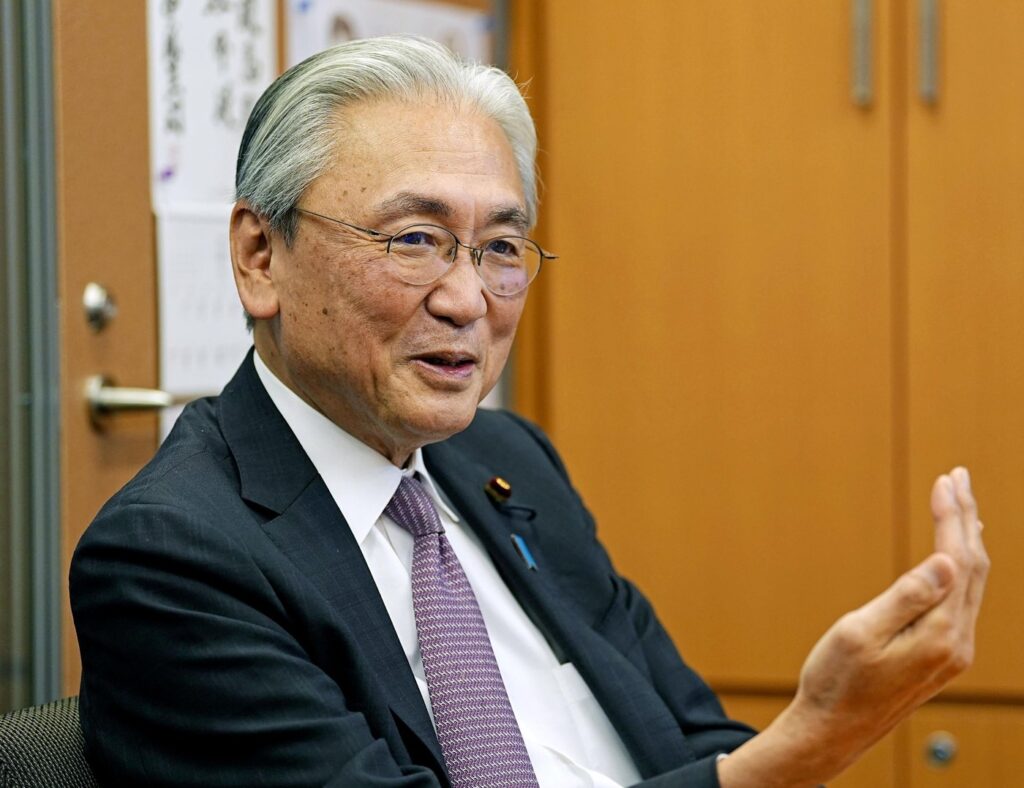
TOKYO (AP) – On Monday, China announced sanctions against Japanese lawmaker Keiji Furuya, who is closely associated with Prime Minister Sanae Takaichi. The sanctions are a result of what China described as Furuya's collusion with separatist forces in Taiwan, highlighting the increasing tensions between Tokyo and Beijing regarding the self-governed island.
China’s Foreign Ministry indicated that the sanctions would prevent Furuya from entering China, including Hong Kong and Macao. In addition, he is prohibited from engaging in activities with organizations and individuals within China, effective immediately.
Furuya leads a bipartisan Japan-Taiwan lawmakers' consultation council and has made frequent visits to Taiwan. His most recent trip included meetings in Taiwan's capital, Taipei, where he discussed matters with Taiwanese President Lai Ching-te in mid-March.
A close ally of Takaichi, Furuya was instrumental in shaping the election strategy for their governing party, the Liberal Democratic Party, which achieved victory in elections held in February. China accused Furuya of disregarding its strong opposition to his visits to Taiwan and of collaborating with forces that advocate for Taiwan's independence.
The Foreign Ministry articulated that Furuya’s actions violate the one-China principle, which asserts that Taiwan is a part of China. China claimed that Furuya's conduct significantly interferes with its internal affairs and undermines its sovereignty and territorial integrity.
In response to the sanctions, Furuya communicated that he learned about the sanctions via the Japanese Foreign Ministry. He defended his activities by stating it is "only natural" for parliamentary groups to foster exchanges between "countries" that share similar values. Furthermore, Furuya remarked that he had not visited China for decades and does not possess any personal assets there, thus he believes the sanctions will not impact him.
This development marks a continuation of escalating tensions between Beijing and Tokyo, particularly since Takaichi's comments last November, where she suggested that any hypothetical Chinese military action against Taiwan could create a "survival-threatening situation" for Japan warranting troop engagement. This stance deviated from Japan's previously ambiguous position regarding how it would react to potential Chinese coercion against Taiwan.
China regards Taiwan as an internal affair and resolutely opposes any foreign intervention associated with the island. In the past year, China has implemented various diplomatic and economic measures in reaction to foreign involvement with Taiwan. Notably, China also sanctioned a Chinese-born Japanese opposition lawmaker, Seki Hei, for supposedly "spreading fallacies" about Taiwan and other contested territories.
As tensions between the two nations continue to rise, the situation between Japan and China remains delicate, both regarding Taiwan's sovereignty and the broader regional dynamics.








