

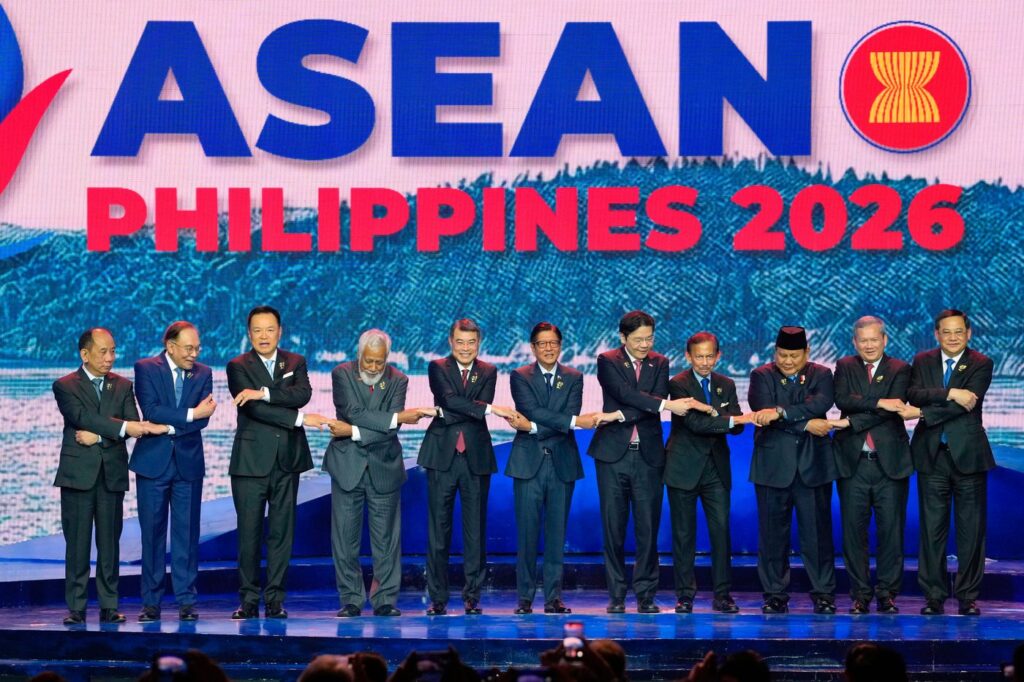
CEBU, Philippines (AP) — Southeast Asian leaders convened an annual summit in Cebu on Friday, facing pressing challenges posed by the ongoing Iran war. Leaders expressed their concerns over the implications for their populations and economies, with one minister highlighting that the conflict "should not have occurred in the first place."
The urgency of the situation compelled the Association of Southeast Asian Nations (ASEAN) to prioritize discussions aimed at developing a contingency plan. This plan is crucial for ensuring that the rapidly developing region, which largely depends on oil and gas imports from the Middle East, can secure stable fuel and food supplies amidst fluctuating global markets.
Hosted by the Philippines, President Ferdinand Marcos Jr. opted for a streamlined approach to the summit, minimizing traditional ceremonial activities in light of the significant economic challenges facing nations worldwide. A critical issue on the agenda was the safe evacuation of over a million Southeast Asian nationals residing and working in the Middle East, especially if hostilities were to escalate.
Southeast Asian citizens have already been casualties since military operations commenced on February 28, when the United States and Israel conducted strikes against Iran. Despite a ceasefire lasting for about a month, sporadic violence continues, particularly around the strategically vital Strait of Hormuz.
A draft of a joint declaration from the summit, reviewed by the Associated Press, emphasized collaboration among ASEAN's 11 member states. The declaration urged the sharing of information and coordination with international organizations to safeguard the welfare of ASEAN nationals in conflict-affected areas.
Typically measured in their rhetoric, ASEAN delegates avoided overt criticism of the ongoing conflicts. However, Thailand's Foreign Minister Sihasak Phuangketkeow conveyed a strong message, advocating for an indefinite extension of the ceasefire between the U.S. and Iran and ensuring safe maritime traffic through the Strait of Hormuz. He indicated that all ASEAN states were alarmed and expressed concerns over the unclear objectives of the war.
ASEAN's contingency plan includes several strategic initiatives. Among these are plans to ratify an agreement for coordinated emergency fuel sharing within the year, develop a regional power grid, diversify crude oil sources, promote electric vehicle adoption, and explore advanced technologies, including civilian nuclear energy.
Despite the focus on Middle Eastern issues, the leaders also addressed significant regional concerns, such as territorial disputes in the South China Sea, the civil conflict in Myanmar, and recent border tensions between Thailand and Cambodia. In a separate statement dedicated to maritime issues, the leaders committed to concluding the negotiation of an effective and substantive Code of Conduct in the South China Sea.
The negotiations for a proposed non-aggression pact between ASEAN and China have been prolonged for over a decade. Tensions have escalated recently, particularly between Chinese and Philippine maritime forces, prompting skepticism regarding ASEAN’s effectiveness, often referred to as a "talk shop." Critics argue that the annual gatherings, characterized by ceremonial group photos and traditional attire, mask deeper divisions among member states.
Among the ASEAN members involved in South China Sea territorial disputes are Brunei, Malaysia, Vietnam, and the Philippines, while the bloc also includes Cambodia, East Timor, Indonesia, Laos, Myanmar, Singapore, and Thailand.








