

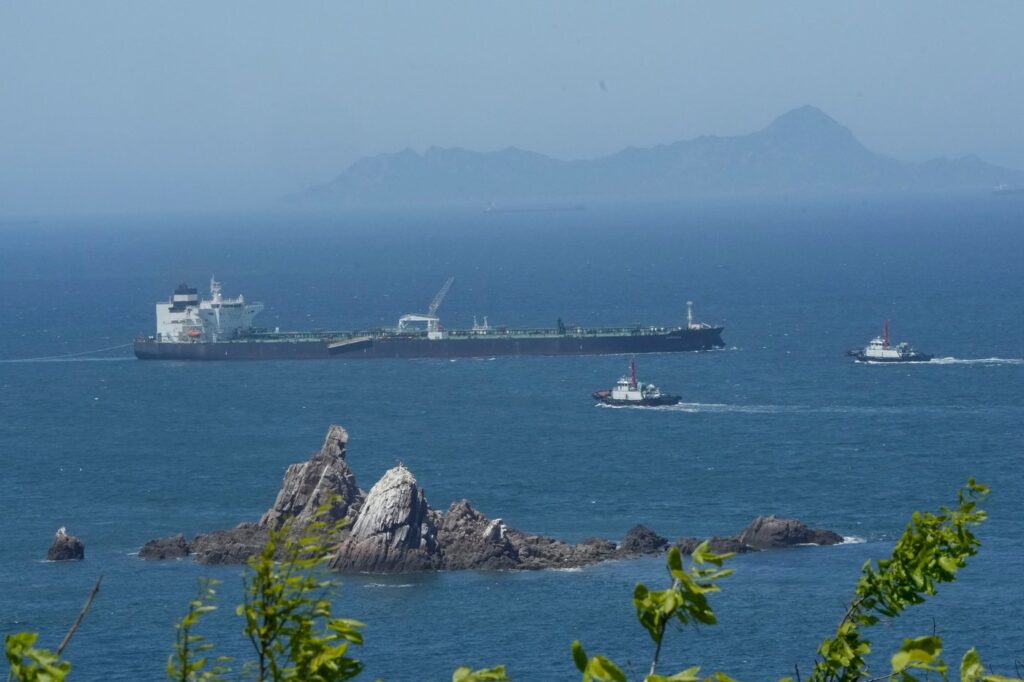
SEOSAN, South Korea (AP) — A Malta-flagged tanker named Odessa, carrying 1 million barrels of crude oil, arrived off the west coast of South Korea on Friday. The vessel had passed through the Strait of Hormuz in mid-April, as reported by a South Korean refinery.
South Korea, like many other Asian countries, is heavily reliant on crude oil imports from the Middle East. This latest shipment is reportedly equivalent to 35-50% of the nation’s daily crude oil consumption, underscoring the importance of such imports for the South Korean economy.
The ongoing conflict involving Iran and its influence over the Strait of Hormuz has raised alarms about potential economic repercussions, including a significant increase in global fuel prices. In response, the South Korean government has taken proactive measures, implementing price caps on gasoline and other petroleum products for the first time in decades. This strategy aims to mitigate soaring costs amidst fears of an impending energy crisis, which could severely impact South Korea's trade-dependent economy.
Additionally, South Korean authorities have directed refiners to revise their export strategies by diverting naphtha intended for export to domestic use. This policy move comes as the country scrambles to secure alternative oil supplies and shipping routes to stabilize its energy procurement in light of the changing geopolitical landscape.
As of Friday morning, the tanker Odessa reached waters near Seosan, a western port city in South Korea. This arrival follows a period of ceasefire negotiations between Iran and the United States. HD Hyundai Oilbank, the refinery involved, has stated that the tanker is scheduled to dock at its offshore mooring facility later on the same day to begin unloading the crude oil.
Once the crude oil is unloaded, HD Hyundai Oilbank plans to refine it into various petroleum products, including gasoline, diesel, and naphtha. The refinery boasts the capacity to process up to 690,000 barrels of crude oil daily, highlighting its significant role in the country’s oil refining sector.
It is noteworthy that in the previous year, South Korea imported over 60% of its crude oil through the Strait of Hormuz, along with 50% of its naphtha; the latter is a crucial feedstock for the petrochemical industry and used extensively in plastics manufacturing. The dependency on this strategic waterway emphasizes the vulnerabilities faced by South Korea amidst regional tensions.
This critical situation demonstrates the interconnectedness of global oil markets and the potential impact of geopolitical developments on national economies. As South Korea navigates these challenges, the recent arrival of the Odessa tanker represents a vital step in ensuring a steady supply of crude oil to support its energy requirements.








