

Among the cherished belongings of longtime history teacher Karalee Wong Nakatsuka are two nearly identical T-shirts, each carrying significant yet contrasting meanings. One T-shirt, from the Museum of the American Revolution in Philadelphia, commemorates the signing of the Declaration of Independence in 1776, celebrating the Founding Fathers' struggle for freedom from British rule. The second T-shirt, sourced from Ford's Theater in Washington, D.C., serves as a reminder of the assassination of President Abraham Lincoln, who was murdered 89 years after the signing of the Declaration. The Civil War, which was waged to end the enslavement of nearly four million African Americans, effectively concluded just five days before Lincoln's tragic death.
Both T-shirts feature the slogan "Created Equal." Nakatsuka, the daughter of Chinese immigrants, reflects on the gradual progression of the nation in extending the principles of the Declaration, notably "All men are created equal," to African Americans. This issue resonates deeply with her eighth-grade students at First Avenue Middle School in Arcadia, California, who are grappling with current events, including birthright citizenship and ICE arrests. Nakatsuka emphasizes the importance of discussing the Declaration from the outset of their studies.
As the 250th anniversary of the Declaration approaches, educators like Nakatsuka face challenges in presenting the nation's founding documents accurately, navigating a politically polarized environment. The Founding Fathers are scrutinized as slaveholders and capitalists, while proponents of patriotic education urge teachers to depict them as heroic figures. In Western Michigan, history teacher Matthew Vriesman similarly encourages his students to question who the Declaration was intended for and who it serves today, using the anniversary as a catalyst for deeper discourse.
Statistics reveal a concerning trend: only 47% of adults can accurately identify the reasons behind the original thirteen colonies' declaration of independence from Britain. A Tufts University survey found that many Gen Z students harbor troubling views on democracy, with over one-third expressing "dismissive detachment" and skepticism toward democratic governance. Yet, teachers remain committed to making the Revolutionary period and founding documents high priorities in their classrooms, despite the pressures and fears of backlash from their communities.
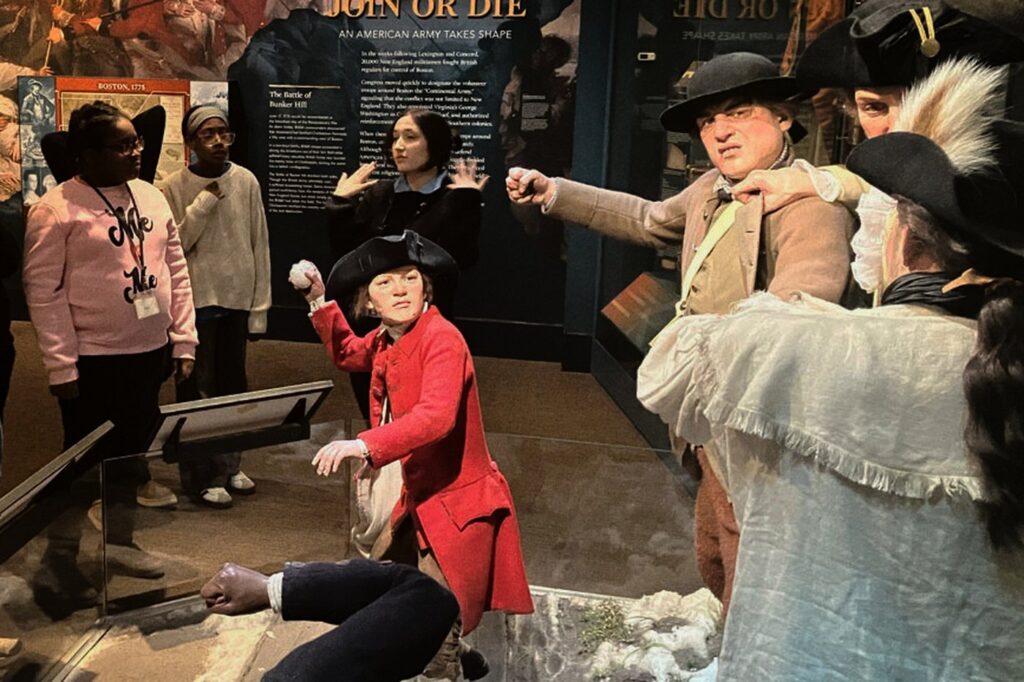
As her fifth-graders toured the Revolution Museum, teacher Samantha Dowis observed their excitement over historical artifacts, though they struggled with the details of who fought in battles like Trenton. Dowis fosters engagement by connecting historical narratives to contemporary political ideals, often addressing race and slavery when students express curiosity. This approach reflects a broader shift in education—moving from memorization of names and dates to fostering "historical empathy," allowing students to step into the lives of individuals from the past.
Teaching history now involves using relatable stories about everyday people caught in major historical events. The Museum of the American Revolution emphasizes lesser-known narratives that highlight diverse experiences during the Revolutionary War. Educators like Lauren Tarshis, author of the "I Survived" series, believe that presenting students with complex, hopeful stories about the challenges faced by individuals during these times can inspire curiosity and engagement.
As the anniversary approaches, educators face not only the challenges of engaging students but also the political climate surrounding history education. In a 2026 climate of heightened scrutiny on teaching, many instructors express concerns over backlash, leading some to modify their lesson plans. Civics education is viewed as increasingly difficult amidst fears of being judged for teaching controversial topics, yet teachers continue pushing forward with their curricula.
Despite varying attitudes toward American history, a research study indicates that educators view the U.S. as a "fundamentally good country," with 62% expressing this sentiment compared to 55% of the general adult population. As history is dissected from multiple angles, students recognize the contradictions within the founders' ideals—particularly that many espoused equality while maintaining slavery. Teachers utilize primary sources to juxtapose views of liberty and race, prompting students to confront the complexities of historical narratives.
In the face of such challenges, instructors believe it is essential to include marginalized voices in the historical narrative that illustrate the progress made toward equality and justice. Schools like Vertex Partnership Academies emphasize the notion of active participation in securing the "blessings of liberty," encouraging students to engage with the constitutional values that support democracy. The aim is not only to educate students about the past but to instill in them a sense of responsibility in shaping the future.
In conclusion, the upcoming 250th anniversary of the Declaration of Independence presents an opportunity for educators to engage students in critical reflection about America’s foundational values while navigating the complex legacies of its history. These teachers are not only addressing the educational needs of today but also preparing students for their roles in a diverse and democratic society, emphasizing the importance of inclusivity and awareness of historical contexts.








