

MONTGOMERY, Ala. (AP) — Alabama lawmakers are positioned to vote on a contentious plan aimed at altering the state's congressional primaries, potentially allowing Republican officials to adopt more favorable U.S. House maps ahead of the November midterm elections, contingent on court approval. This legislative effort is a response to a recent U.S. Supreme Court ruling that undermined Voting Rights Act protections for minorities, particularly in relation to redistricting efforts.
The proposed legislation in Alabama is one of many initiatives across Southern states seeking to capitalize on the Supreme Court's ruling. For instance, Tennessee enacted new congressional districts that significantly divided a Democratic-held, Black-majority district in Memphis. Additionally, Louisiana postponed its U.S. House primaries while lawmakers work to create new district maps, while Republicans in South Carolina have also introduced a new U.S. House map aimed at improving their electoral prospects.
The issue of redistricting is already a focal point of contention between Republicans and Democrats, both striving for an advantage as they prepare for tightly contested midterm elections that will determine control of the closely divided House of Representatives. Following former President Donald Trump’s push for Texas to redraw its congressional maps, nine states have since adopted new House districts, which Republicans believe could yield a net gain of up to 14 seats, whereas Democrats anticipate potential gains of approximately 10 seats. However, the strategic redistricting could backfire in several competitive districts.
Specifically, in Alabama, the Republican administration is seeking to argue in front of federal judges to lift a court order that mandates a second congressional district with a Black voting majority. This order led to the election of Democratic Rep. Shomari Figures in 2024. The GOP aims to replace this existing district with a map drawn in 2023, which was previously rejected by a federal court. If implemented, the new map would reduce the proportion of Black residents in Figures' district from approximately 48% to about 39% of the voting-age population. If federal courts validate Alabama's request for the new map, the legislature's plan would ignore the scheduled primary on May 19, instead organizing a new primary under the revised district lines.
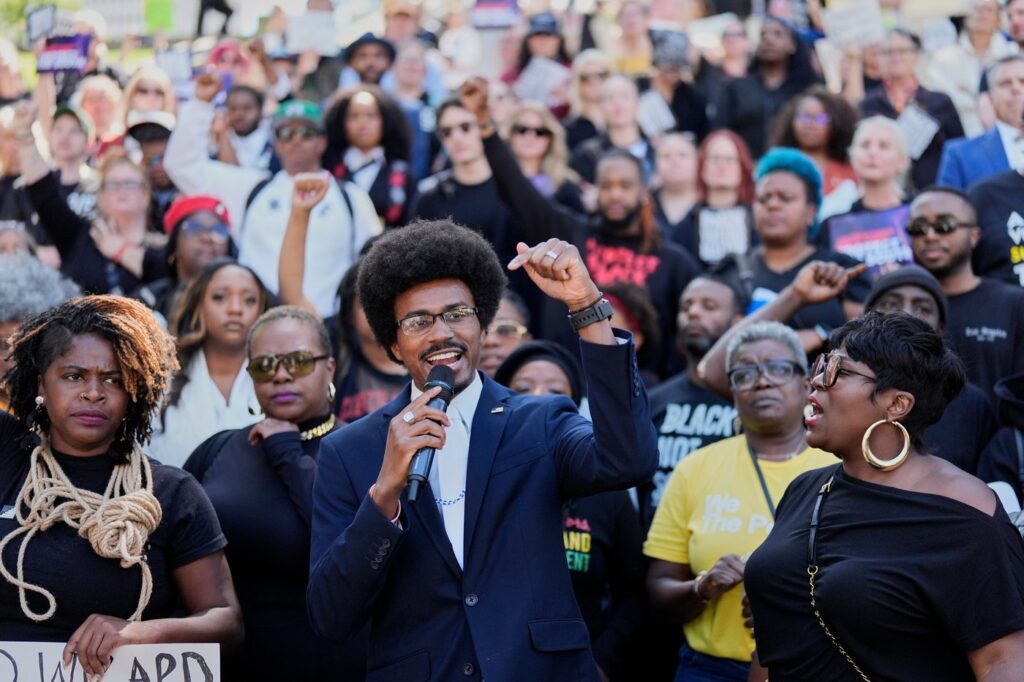
Figures has expressed his concern regarding the implications of this legislation, emphasizing that it is about the larger community's right to representation rather than his own political future. He highlighted the historical struggles of individuals fighting for civil rights and representation, making a poignant reminder of the ongoing fight against disenfranchisement, which many believe is intertwined with Alabama's segregationist past.
Meanwhile, in South Carolina, a proposed new U.S. House district map has surfaced, which could provide Republicans a more favorable opportunity to capture the only seat currently held by a Democrat, U.S. Rep. Jim Clyburn. The new proposal would dismantle Clyburn's 6th District, which has been represented by him since 1992 and is composed of nearly 50% Black voters. The map would delineate four separate districts, significantly altering the demographic makeup that contributed to Clyburn's long-standing electoral success. Moreover, the revision would fragment Democratic strongholds like Columbia, spreading its population across multiple districts.
Although the South Carolina House has approved a resolution allowing lawmakers to reconvene after their regular session ends May 14 to discuss this redistricting plan, the Senate has hesitated on making any decisions without understanding the potential impacts of the proposed maps. Concerns have been raised about possible competitiveness in newly drawn districts, which could undermine Republican candidacies in down-ballot races.
Overall, the rapid actions of Republican lawmakers in these Southern states to alter congressional maps signify a pivotal moment in the redistricting arena, reflecting the ongoing battle over representation, electoral strategy, and the rights of minority voters in the wake of the Supreme Court's recent rulings.








