

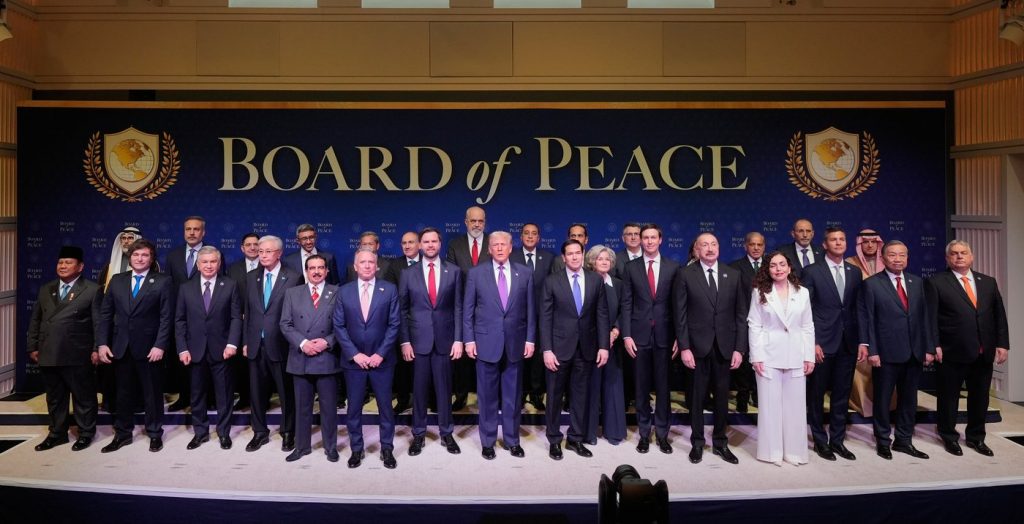
BANGKOK (AP) — The International Stabilization Force for Gaza (ISF) was unveiled with much fanfare at the inaugural meeting of U.S. President Donald Trump's Board of Peace in February. The American general chosen to lead the proposed 20,000-strong force emphasized its aim to secure “future prosperity and enduring peace” following the devastating Israel-Hamas war. However, three months later, the force remains nonexistent as none of the five countries that pledged troops have delivered any substantial contributions.
Efforts to reinforce the fragile ceasefire have stalled, predominantly due to Hamas's refusal to disarm and Israel's ongoing territorial seizures, alongside its strikes on what it terms militant targets, often resulting in civilian casualties. Furthermore, the ongoing Iran war has complicated relations, making it more challenging for Arab and Muslim leaders to collaborate openly with the United States and Israel, which many in the region perceive as aggressors. The resulting global energy crisis has also drained resources from countries in the area.
The situation took a significant turn on February 28, shortly after the U.S. and Israel attacked Iran, when Indonesia placed its commitment of 8,000 troops on indefinite hold. The initial plan involved sending 1,000 troops in April, followed by the remainder in June. Indonesia's pledge was the largest among the participating nations, which also included Morocco, Kazakhstan, Kosovo, and Albania. U.S. Maj. Gen. Jasper Jeffers was to command the force.
Indonesia's Defense Minister, Sjafrie Sjamsoeddin, stated the suspension was due to a perceived lack of commitment from a distracted Washington, mentioning that, “we have not yet received any implementation guidelines.” He indicated that the increasing intensity of the conflict between U.S. and Iranian forces has led to a decrease in focus on the Board of Peace and, consequently, the ISF.
Domestic sentiment in Indonesia also appears to influence the government's decision. The Iran war is significantly unpopular in the country, which is the most populous Muslim nation. The ongoing economic hardships due to soaring prices resulting from the conflict, coupled with skepticism surrounding the Board of Peace, further complicate the situation. Muhammad Zulfikar Rakhmat, director at Jakarta's Center for Economic and Law Studies, noted that public opinion tends to doubt the Board of Peace’s capacity to genuinely assist the people of Gaza.
Hamas and Israel have engaged in a blame game regarding the stalled ceasefire. Hamas accuses Israel of violating the ceasefire terms, hindering further implementation. In contrast, Board of Peace director Nickolay Mladenov remarked that Hamas must disarm before any meaningful progress can occur, arguing that reconstruction cannot proceed with armed groups controlling the streets. Hamas has countered by demanding that Israel withdraw from areas it has seized since the ceasefire commenced, according to an Egyptian official familiar with the negotiations.
Countries that promised troop contributions have indicated they would not deploy soldiers without a suitable deal regarding Hamas's disarmament. Kazakhstan has stated its participation would be limited to providing humanitarian aid, including medical units, while other nations like Albania and Kosovo have offered limited support, primarily regarding military reconnaissance.
Despite the setbacks, Muhammad Zulfikar Rakhmat believes it’s premature to entirely dismiss Indonesia's potential involvement in the stabilization force. Indonesian President Prabowo Subianto, a former army general aiming to elevate the country’s global stature, may seek to strengthen ties with Washington and avoid jeopardizing economic relations with the U.S. Thus, the prospect of Indonesia eventually participating in the force cannot be ruled out.








