

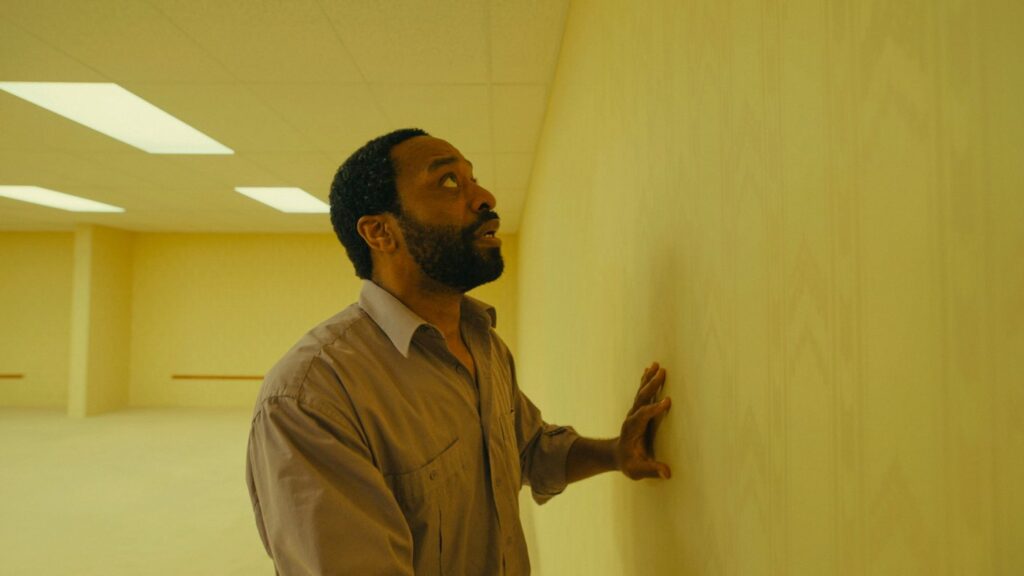
The horror film Backrooms, directed by 20-year-old Kane Parsons, taps into the unsettling essence of liminal spaces. Following trends established by other movies such as Exit 8, which was confined to the atmosphere of a subway corridor, Backrooms plunges into an underground labyrinth discovered by a furniture salesperson below his shop. The setting is characterized by oppressive yellow wallpaper and relentless fluorescent lighting.
The origins of Backrooms are rooted in internet culture, specifically a 2019 post on 4chan's creepypasta, known for its collection of urban legends. This post featured an image of seemingly endless and monotonous rooms, accompanied by a captivating description of their eerie ambiance, remarked on the “stink of old moist carpet” and the “madness of mono-yellow.” Parsons, who began his journey creating content under the name Kane Pixels, expanded on this initial concept through a popular YouTube series. His efforts ultimately led to A24 producing the feature film.
Despite its intriguing premise, the film struggles to maintain a compelling narrative. The screenplay by Will Soodik fails to effectively connect the haunting visuals of the labyrinth with a deeper storyline. The protagonist, Clark, portrayed by Chiwetel Ejiofor, runs a nearly empty furniture store named Cap'n Clark’s Ottoman Empire in a desolate 1990s strip mall. He is burdened with numerous worries, including a failing marriage, stalled architectural dreams, and an alarming array of electrical issues in his store, where the lights flicker ominously.
While investigating the circuit breaker one night, Clark inadvertently crosses the threshold into the Backrooms. The strange and sprawling chambers resemble a distorted version of boring office environments filled with peculiar objects, such as odd piles of furniture and shrunken doors, creating an atmosphere of confusion reminiscent of art installations.
Parsons infuses the narrative with a psychological edge, emphasizing Clark's interactions with his therapist, Mary Kline, played by Renate Reinsve. Mary discusses the loops and habits that define individuals in her sessions, hinting at a metaphorical connection between Clark’s psychological state and the confusing layout of the Backrooms. As Clark descends deeper into this labyrinth, the setting begins to reflect the increasingly warped dimensions of his psyche, eventually ensnaring Mary as well.
While Backrooms endeavors to create a horror film akin to Michel Gondry's Eternal Sunshine of the Spotless Mind, it ultimately fails to bridge the surreal physical space of the labyrinth with Clark’s mental struggles. Despite the thinness of its concept, both Ejiofor and Reinsve deliver performances that lend the film some depth. Ejiofor, known for his composed demeanor, explores a more unhinged aspect of his character, while Reinsve infuses her role with intelligence and nuance, marking her first foray into the horror genre.
The film’s standout element is Danny Vermette’s production design, which embodies a blend of the banal and the bizarre, helping to create an immersive experience in the uncanny world of the Backrooms. The visual metaphor extends to contemporary explorations of workplace environments, paralleling themes found in recent works like Severance and The Chair Company. However, similar to other recent horror films such as Barbarian, the unsettling nature of the film's setting leads to a sense of getting lost within its depths.
Released by A24, Backrooms hits theaters on a Friday and has been rated R for language, violent content, and bloody imagery, with a runtime of 105 minutes. Overall, it receives two stars out of four, signifying mixed reviews regarding its effectiveness as a horror film.








