

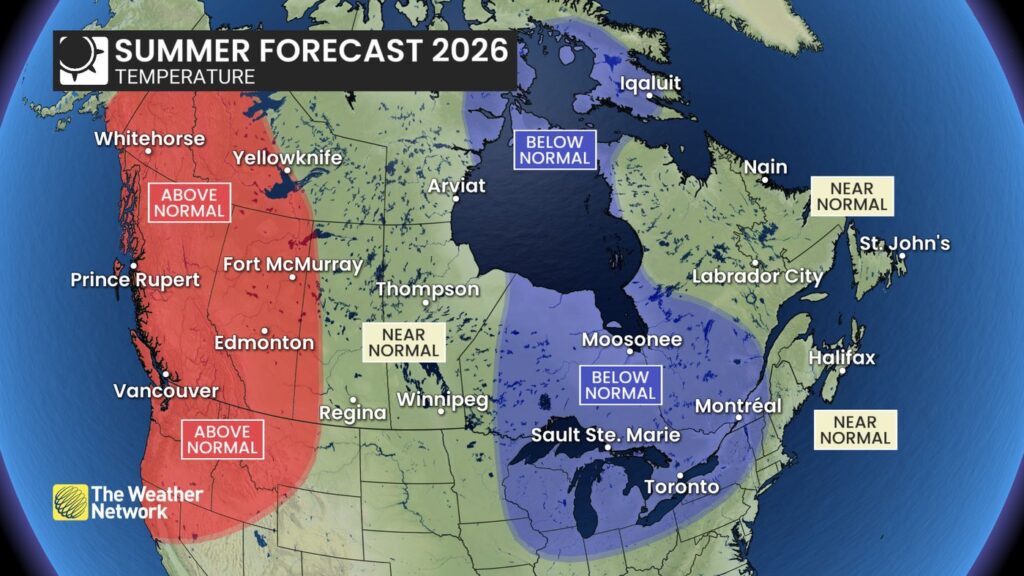
The Weather Network's senior meteorologist has indicated that Canada's upcoming summer may exhibit variability, largely influenced by the transition from La Nina to a potentially significant El Nino. The unpredictable spring weather may serve as an indication of summer, particularly affecting various regions differently. According to meteorologist Doug Gillham, while summer will certainly arrive in Central and Eastern Canada, the consistency of hot and dry weather is expected to be less certain than in prior years.
Gillham highlighted that methods to establish a consistently hot and dry pattern over Canada are complicated this season due to the fluctuating global weather dynamics. The seasonal forecast released by The Weather Network covers the months of June, July, and August, predicting warmer and drier conditions specifically in Western Canada. This situation may increase the risk of drought and wildfires. Gillham expressed concern over the threat of wildfire in Western Canada, particularly in drought-affected regions like the British Columbia Interior, as the ingredients are in place for a precarious wildfire season.
In British Columbia, warmer-than-normal temperatures are anticipated, although Gillham cautioned that the heat may not be as relentless as in recent years. He also pointed out that the warm conditions may not extend late into the season, with a typical transition to fall expected. In the Prairie provinces, the recent spring weather has yielded to summer-like heat, offering a preview of what is to come in the immediate future. However, Gillham noted that while Alberta and western Saskatchewan can expect warmer-than-normal temperatures, variability will be more pronounced in the eastern regions.
The forecast for summer precipitation remains challenging, with early season rain being critical for agricultural regions. Gillham stated that the transition to El Nino conditions could redirect the Pacific storm track further into the United States, potentially depriving southern areas of the Prairies of necessary early summer rain. As June typically marks the wettest month of the year, a drier-than-normal outlook for the first half of summer could raise concerns about drought.
Moving eastward, the warm start to the season may reach northern Ontario, but it is anticipated that by July and August, temperatures across the province will lean towards the cooler side of normal. Gillham reassured that while summer is not "canceled", the persistent hot pattern is unlikely. Instead, southern and eastern Ontario should prepare for frequent showers and thunderstorms, leading to above-normal precipitation in these areas.
A similar forecast applies to Quebec, where hot weather interspersed with refreshing conditions and increased chances of rain and thunderstorms are expected in western and southern parts of the province. The Atlantic Canada region is also forecasted to experience near-normal temperatures due to a fluctuating temperature pattern. Above-normal precipitation is expected in the Maritimes, while Newfoundland and Labrador might see more typical seasonal conditions.
As for hurricane activity in the Atlantic, predictions show a less active season due to the emerging El Nino, anticipating approximately eight to 14 named storms, three to six hurricanes, and one to three major hurricanes. However, Gillham cautioned that one significant storm could still mark a season as memorable, even if overall activity is low.
In Northern Canada, particularly the Yukon and western Northwest Territories, warmer temperatures are projected, raising concerns for wildfire risk. However, temperature anomalies are expected to dissipate as one moves east, with near-normal conditions indicated for the remainder of the Northwest Territories and Nunavut. Iqaluit may even experience slightly cooler temperatures. It's important to note that what constitutes a typical Canadian summer has evolved over the decades, reflecting climate change impacts that have made average summer temperatures approximately 2.1 degrees warmer than those recorded in the mid-20th century.








