

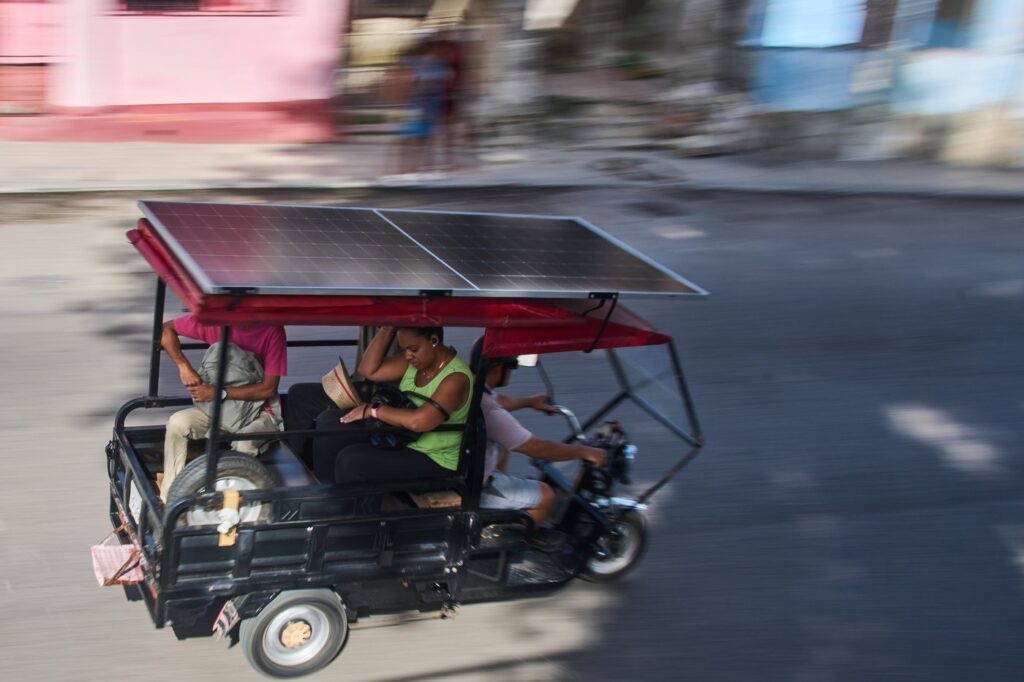
Havana, Cuba has seen a significant transformation in its transportation landscape, as iconic vintage cars have largely vanished due to a prolonged fuel crisis. In their place, electric tricycles, mostly imported from China, have emerged as the primary mode of transport for countless Cubans. These vehicles have become essential for those struggling with the ongoing energy shortages and economic hardships faced on the island.
Unlike ordinary electric tricycles, many of these vehicles have been customized with solar panels, allowing them to recharge independently of Cuba's strained power grid. This innovation has made the tricycles a practical solution for the transportation needs of the population, providing a cleaner alternative to the old gasoline-powered cars that were a common sight until recently.
Liecer de la Cruz, a 40-year-old tricycle owner, emphasized the importance of these vehicles, stating, “This is how people get around now.” Valued between $2,000 and $4,000 each, these tricycles serve various purposes, from transporting goods to covering routes previously managed by buses. Although the price is prohibitive for many Cubans, the significant number of people resorting to selling their older cars to purchase tricycles illustrates their growing necessity. Some have even received them from relatives abroad, where they can be less expensive, while small-business owners are investing their earnings in these vehicles, hoping to recover their costs through service provision.
The fuel crisis in Cuba has deepened, particularly after U.S. President Donald Trump threatened to impose tariffs on oil exports to the island, which already produces only about 40% of its fuel requirements. Consequently, the country witnessed a drastic reduction in oil deliveries, receiving only one oil tanker in March, compared to an average of eight monthly in previous years. This fuel shortage has critically impacted everyday life, exacerbating rolling blackouts, intensifying existing economic challenges, and deepening shortages of food and medicine.
Electric tricycles have adapted to the crisis, becoming indispensable for transporting goods and providing public transportation services in areas where buses have become less available. In certain parts of Havana, these tricycles have even taken over the role of garbage collection vehicles. For many, such as Berta Ferrer, a 52-year-old store clerk, taking a tricycle ride has become the only viable option for getting around. She mentions that even paying about 500 Cuban pesos (less than $1) for a ride is significant, given the average monthly salary for state workers is around $10.
Prominent Chinese brands like Zonsen and Jinpeng have flooded the streets of Cuba with their electric tricycles, which typically operate on gel or lithium batteries. Additionally, under an agreement with China, a brand called Vedca is assembled locally in Cuba. The trend of installing solar panels on these tricycles is increasing, highlighting an innovative adaptation to the ongoing energy issues. Carlos Álvarez, a 29-year-old engineer and tricycle workshop owner, noted the prevalence of these vehicles in Havana, stating, "You can't spend 10 minutes on a street without seeing countless numbers of them pass by." While the installation of solar panels can be costly at about $500, he indicated that the investment pays off quickly, helping tricycle owners mitigate the issues posed by fuel shortages and power outages.
Ricardo Quintero, another tricycle owner, utilizes his vehicle to transport produce for his family business. He expressed confidence in the electric tricycle's place in Cuba's transportation future, affirming, “I think this is here to stay.”
Amid the backdrop of a deteriorating economy and energy crises in Cuba, electric tricycles stand out as a beacon of adaptability, demonstrating the resilience of the Cuban people in facing significant challenges.








