

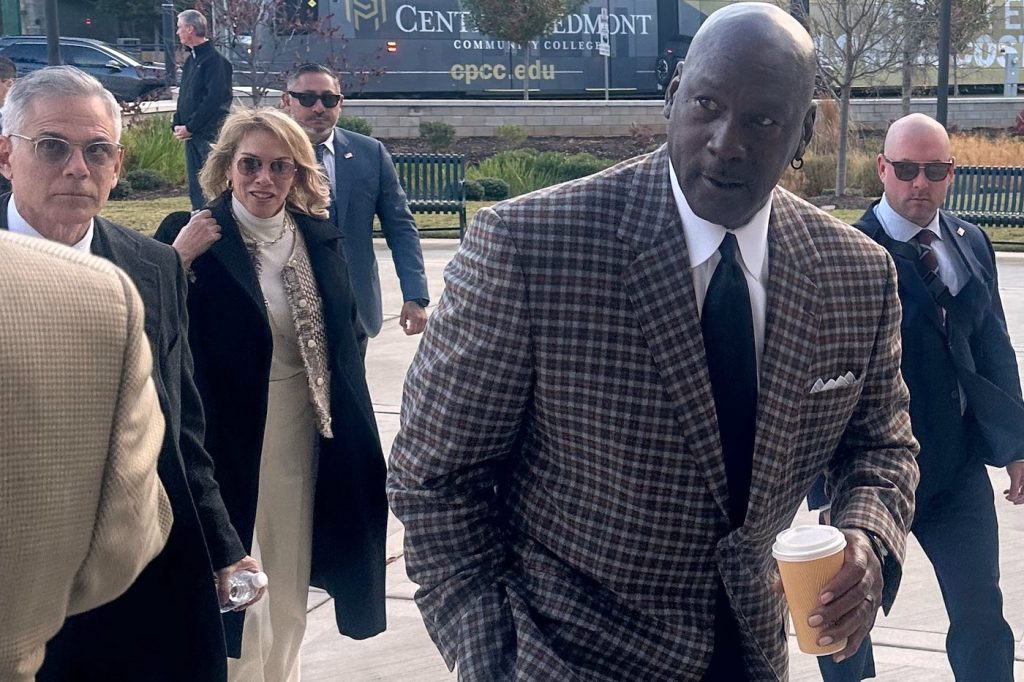
CHARLOTTE, N.C. (AP) — The highly anticipated federal antitrust trial against NASCAR commenced on Monday, attracting significant attention with the presence of basketball legend Michael Jordan. A jury consisting of six men and three women was formed to assess allegations that NASCAR operates as a monopolistic entity, forcing its teams to adhere to rules and financing structures they may not necessarily endorse. This trial marks a crucial moment in the ongoing tension between NASCAR and some of its teams.
Michael Jordan, the retired NBA Hall of Famer and co-owner of the 23XI Racing team, was integral to the case as 23XI, along with Front Row Motorsports, filed a lawsuit against NASCAR last year. The legal dispute arose after these teams opted not to renew their charter agreements, which are akin to franchise designations that dictate the revenue-sharing framework between NASCAR and its affiliated teams. This decision reflects deeper issues of dissatisfaction among some teams regarding NASCAR’s operational model and governance.
The jury selection process was notably influenced by Jordan's celebrity status. Potential jurors were dismissed from consideration based on their inability to remain impartial due to their admiration for Jordan. One juror cited his fondness for the NBA star, while another recalled having Jordan's posters on his bedroom walls during childhood. In a light-hearted moment, a juror even interacted with Jordan by pointing and winking as he exited the courtroom. Observations of Jordan's interaction with the courtroom indicated a relaxed atmosphere amid the serious subject matter.
U.S. District Judge Kenneth Bell is presiding over the trial, which is predicted to last approximately two weeks. Judge Bell asked that opening statements be completed later on Monday, setting the stage for what promises to be a significant legal battle. This case has been in the works for over a year, characterized by numerous hearings and arguments, despite calls from various NASCAR teams advocating for a settlement. Judge Bell had previously attempted mediation in October, which did not result in a resolution.
As the trial unfolds, the implications of the case reach far beyond the courtroom. The outcome could influence the regulatory environment of NASCAR and its relationship with the teams that compete in its flagship series. This trial serves as a litmus test for how NASCAR manages industry governance and addresses the concerns of teams, especially those feeling marginalized or constricted by existing practices.
In summary, the commencement of this federal antitrust trial against NASCAR, with Michael Jordan as a key figure, spotlights the longstanding tensions within the sport. 23XI Racing and Front Row Motorsports' legal battle against what they allege to be NASCAR's monopolistic practices poses significant questions about the future of team-owner relationships and the overall regulatory framework in stock car racing. As proceedings begin, all eyes will be on the court to see how this case may reshape the NASCAR landscape.








