

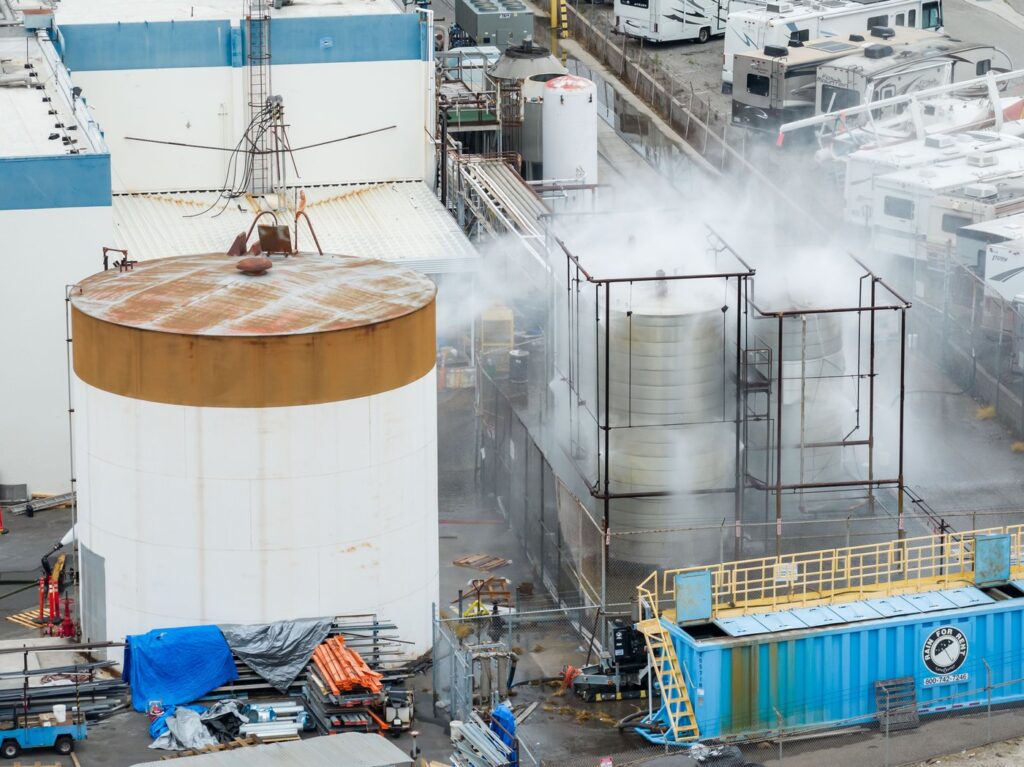
A damaged chemical tank in Southern California's Garden Grove cracked over the weekend, prompting authorities to take urgent measures to mitigate the risks of a powerful explosion. This incident led to the evacuation of approximately 50,000 residents from the area. Garden Grove, a city with a population of around 170,000, is situated about 40 miles (60 kilometers) south of downtown Los Angeles, and as of now, no injuries have been reported.
The situation escalated after the tank, which overheated on Thursday, started venting vapors. Local and state officials quickly mobilized to avert a potential disaster at the GKN Aerospace Transparency Systems facility, where the tank is located. The tank is known to hold between 6,000 to 7,000 gallons (22,700 to 26,500 liters) of methyl methacrylate, a chemical used in the production of plastic parts.
Firefighters have been working continuously to cool the tank by spraying it with water. As of Sunday, the interior temperature of the tank reached 100 degrees Fahrenheit (37.7 degrees Celsius), an increase of 10 degrees Fahrenheit (5.5 degrees Celsius) from the previous day. According to Democratic state Senator Tom Umberg, officials discovered cracks in the tank, significantly lowering the risk of a catastrophic explosion. Orange County Fire Authority Captain Wayhowe Huang noted that so far, there were no indications of highly volatile chemicals leaking from the tank.
In response to the escalating emergency, California Governor Gavin Newsom declared a state of emergency on Saturday and requested an emergency declaration from President Donald Trump to facilitate federal assistance. Firefighters' primary goal remains to lower the tank’s temperature to prevent any potential leaks or explosions. Monitoring efforts include drones that track temperature changes every ten minutes, and containment barriers are being deployed to protect storm drains and local waterways.
Purdue University engineering professor Andrew Whelton explained that as the temperature of methyl methacrylate rises, the chemical transitions from a liquid to a gas, which increases pressure inside the tank. He likened the situation to a soda can left in a hot car; without a release, the can could explode. However, the cracks may alleviate some pressure and reduce the chance of an explosion.
The firefighters remain cautious, opting not to create a hole in the tank due to the risk of ignition from sparks, which could lead to a widespread release of the chemical and flying shrapnel. Should an explosion occur, officials have emphasized the importance of air monitoring specifically for methyl methacrylate rather than general tests for volatile organic compounds, which was a concern during a previous incident in East Palestine, Ohio, in 2023.
As the emergency unfolded, aerial photos highlighted empty streets in Garden Grove, and several evacuation shelters were established. People sought refuge at a high school in neighboring La Palma, where they slept on mats, sleeping bags, and in cars. Notably, Disneyland's two theme parks in close proximity did not fall under evacuation orders, with park officials actively monitoring the developments.
Health officials from Orange County have underscored the potential health risks associated with exposure to methyl methacrylate, which can lead to serious respiratory issues, neurological problems, and irritation to the skin, eyes, and throat. Residents have expressed concern over the potential impact on property values due to the ongoing situation. On Saturday, a class-action federal lawsuit was filed against GKN Aerospace Transparency Systems, arguing that local property values will be adversely affected, regardless of the outcome of the ongoing crisis.
While GKN Aerospace has not publicly addressed the lawsuit, the company has apologized to affected residents and businesses, stating that it is "working around the clock to mitigate the risk of a leak." Previously, in 2025, GKN Aerospace paid over $900,000 to settle violations related to recordkeeping and emissions, highlighting a history of compliance issues at the facility.








