

SURIN, Thailand (AP) — Fighting has escalated along the Thai-Cambodian border, resulting in the displacement of hundreds of thousands of Thai villagers since Monday. The once-vibrant communities in the vicinity of the border have turned silent, with the only sound being the distant echoes of gunfire and explosions resonating through the fields.
Despite the ongoing violence, a small number of individuals have chosen to remain in their villages. In Buriram province, approximately 6 miles (10 kilometers) from the border, Somjai Kraiprakon gathered with about 20 neighbors near a roadside house, serving as Village Security Volunteers. Their role has become crucial as many locals fled, and fewer security personnel are present to ensure safety.
This recent surge in violence has disrupted a ceasefire that U.S. President Donald Trump had previously helped broker. This ceasefire had momentarily halted clashes in July, which stemmed from long-standing territorial disputes between the two nations. Unfortunately, reports indicate that at least two dozen people have lost their lives in the renewed fighting.
In the village, daily life has significantly changed. At a house used for meetings, cooking, and sleeping, Somjai and her fellow volunteers face the backdrop of constant explosions. While she remains vigilant, when the sound of blasts becomes too close, she quickly retreats to a makeshift bunker constructed from concrete drainage pipes, dirt, sandbags, and old tires.
Somjai became a volunteer following the initial unrest in July, completing a three-day training course in patrol techniques and firearm handling. The army has acknowledged the vital role of these volunteers, stating that they bolster public safety by conducting patrols, establishing checkpoints, and guarding the properties left behind by evacuated residents.
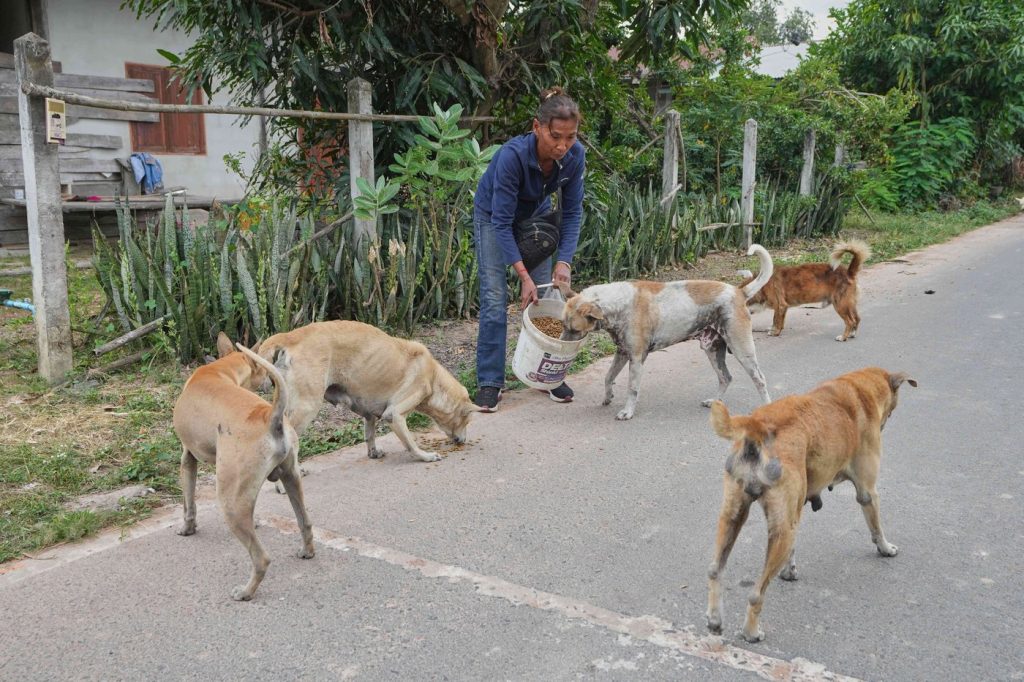
Somjai's main focus, however, is not just ensuring security; she also tends to approximately 70 dogs abandoned by villagers who have evacuated. “This is my priority,” she said, emphasizing her comfort in caring for the animals and explaining how she initially used her own funds to feed them before receiving donations to support her efforts.
In a nearby village, chief Praden Prajuabsook sits with about a dozen members of his security team, clad in navy blue uniforms. Their responsibilities extend beyond guarding homes; they are also tasked with ensuring that the pets and livestock left behind are fed. During the day, they travel from house to house, providing food for pigs, chickens, and dogs left alone by their owners.
Praden noted that their watch is continuous, relying solely on volunteers without any compensation. “We do it with our own will, for the brothers and sisters in our village,” he affirmed, expressing his commitment to keeping the village safe even in such perilous times.
Although situated close to the frontline of conflict, both Somjai and Praden convey a sense of determination and courage. “We want our people to be safe,” Praden said, voicing their collective resolution to protect their homes and community.
As the situation along the border remains volatile, the efforts of these local volunteers highlight a compelling narrative of resilience and community spirit in the face of adversity.








