

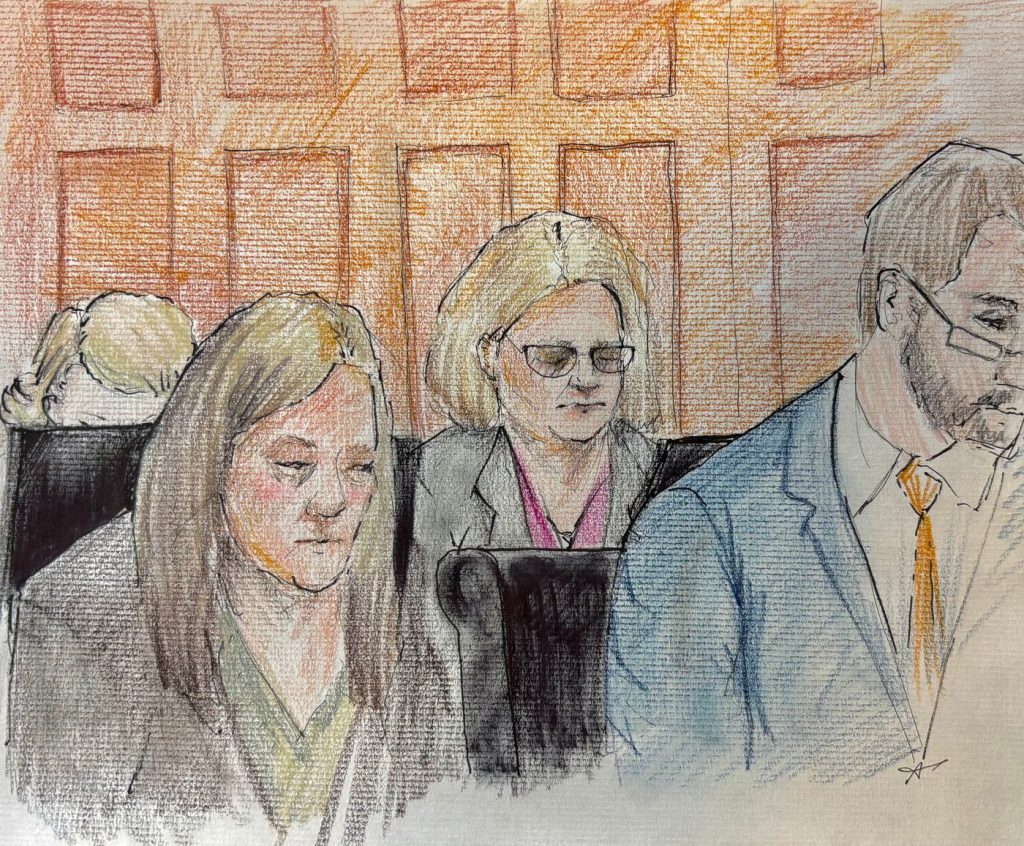
MADISON, Wis. (AP) - Federal prosecutors began presenting their case against Milwaukee County Circuit Judge Hannah Dugan on Monday, facing allegations of helping a Mexican immigrant evade federal authorities. The trial, which includes obstruction and concealment charges, is set to commence with opening statements followed by testimony from the government's initial witnesses.
Prosecutors anticipate that their case will extend through at least Thursday, with around two dozen witnesses expected to testify. Dugan's defense attorneys have not disclosed the duration of their case, leaving the timeline for jury deliberations uncertain. If convicted on both counts, Dugan could face up to six years in prison.
This trial emerges amid President Donald Trump's broader immigration enforcement efforts, with the administration referring to Dugan as an "activist judge." Republican U.S. Representative Tom Tiffany, a staunch Trump supporter and candidate for Wisconsin governor in the upcoming year, has publicly called for her arrest via social media.
Democrats contend that Trump aims to set an example with Dugan to undermine judicial resistance against his administration's immigration policies. Dugan reportedly expressed concerns for her safety, noting that she and her family had received threatening flyers at their residence earlier in the spring.
According to an affidavit from the FBI, authorities were aware this spring that 31-year-old Eduardo Flores-Ruiz had re-entered the U.S. after being previously deported. He faced battery charges in Milwaukee, and a court hearing was scheduled with Dugan on April 18. On the day of the hearing, federal agents arrived at the courthouse to arrest him, but Dugan's courtroom deputy advised them to wait until after the hearing.
Upon discovering that federal agents were waiting outside her courtroom, Dugan reportedly confronted them and instructed them to consult with the chief judge. She then led Flores-Ruiz out through a back door, allowing him to evade arrest. The agents eventually apprehended Flores-Ruiz following a foot chase outside the courthouse.
Following the incident, Flores-Ruiz was deported in November after pleading no contest to the battery charge and serving time. Prosecutors charged Dugan with obstruction and concealing an individual to prevent arrest on April 24, leading to her suspension from the Milwaukee County bench shortly thereafter.
Dugan attempted to have the charges dismissed, arguing she was acting within her judicial capacity and claimed immunity from prosecution. However, U.S. District Judge Lynn Adelman denied her request, asserting that no established immunity exists for judges against criminal prosecution.
In her defense, Dugan claimed adherence to courthouse protocols related to immigration arrests and denied any intent to obstruct federal agents. Her legal filings highlight that Milwaukee County Chief Judge Carl Ashley had issued a draft policy a week before Flores-Ruiz's arrest, which prohibited immigration officers from enforcing administrative warrants in nonpublic areas and mandated that court personnel refer agents to a supervisor.
This trial represents a significant moment in the ongoing conversation about immigration law enforcement and judicial authority, within the larger context of national immigration debates. Dugan's case highlights the tensions between state judicial processes and federal immigration enforcement efforts.








