

SYDNEY (AP) — On Monday, Australian Prime Minister Anthony Albanese announced proposals for tougher national gun laws in the wake of a devastating mass shooting during a Hanukkah celebration at Bondi Beach, Sydney, which resulted in the deaths of at least 15 individuals. The tragic event escalated into one of Australia's deadliest shootings in nearly three decades, raising immediate concerns about existing gun control measures in the country.
Albanese's proposed restrictions include limitations on the number of firearms that licensed gun owners can possess. This announcement came after authorities discovered that the elder of the two gunmen, who were a father and son duo, had legally acquired six firearms. Albanese emphasized the need for immediate action, stating, "The government is prepared to take whatever action is necessary... Licenses should not be in perpetuity." This remark pointed towards the increasing recognition that people's circumstances can change over time, potentially leading to radicalization.
In the aftermath of the shooting on Sunday, at least 38 people were hospitalized due to injuries sustained during the attack, which left a 10-year-old girl, a rabbi, and a Holocaust survivor among the deceased. Albanese labeled the massacre an act of antisemitic terrorism that deeply affected the nation, pledging to initiate reforms aimed at preventing such violence in the future. He planned to present his gun law proposals to a national cabinet meeting including state leaders, noting that some measures would require state legislation to be enacted.
Australia's gun laws underwent significant revisions following the horrific 1996 Port Arthur massacre, where a lone gunman killed 35 people. Despite the strict regulations, the recent Bondi Beach shooting has ignited a national conversation about the adequacy of current gun control measures and the safety of the Jewish community amid rising antisemitism.
Jewish leaders and survivors of the massacre have voiced their outrage, questioning the government's response to increasing antisemitism. Lawrence Stand, who witnessed the shooting unfold and rushed to the scene, stated, "There’s been a heap of inaction," expressing discontent with the government's failures to prevent the attack. Alex Ryvchin, spokesperson for the Australian Council of Executive Jewry, echoed this sentiment, stating that the government's primary duty should be the protection of its citizens, and a thorough investigation into the circumstances leading to the incident was imperative.
Information about the shooters remains limited, with police confirming that they were a father and son. The deceased father, aged 50, possessed a legal gun license permitting him to own the six firearms found at his home, and was a member of a gun club. His son, 24, who was injured during the incident, could potentially face criminal charges as investigations continue. The victims, whose ages ranged from 10 to 87, include Rabbi Eli Schlanger, an assistant rabbi at Chabad of Bondi and one of the event's organizers, along with several other community members.
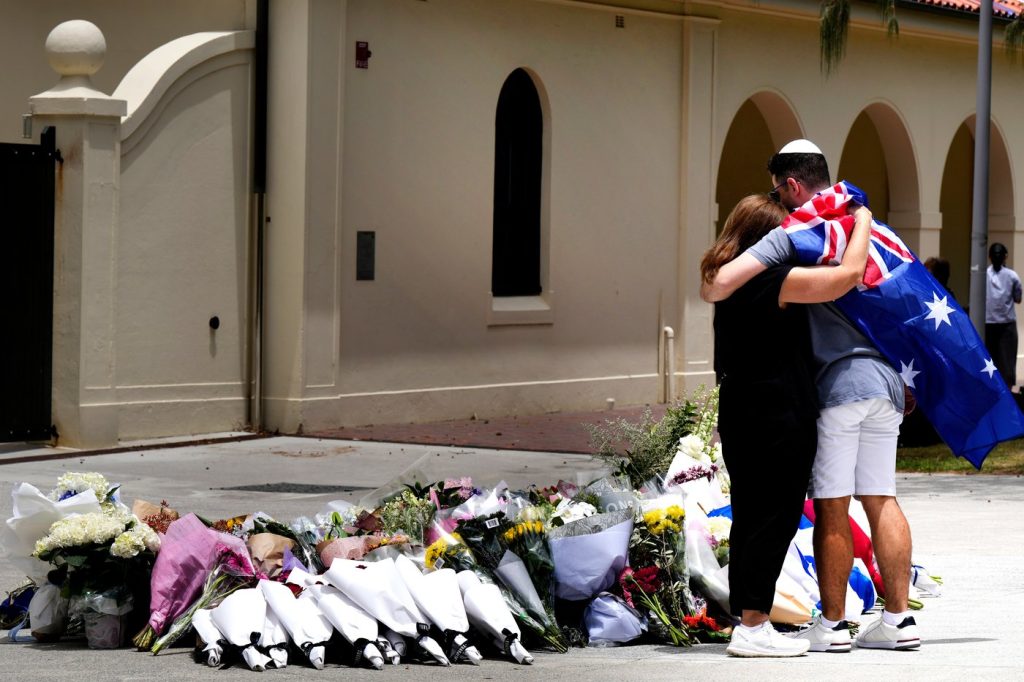
The violent outburst occurred during the "Chanukah by the Sea" event, which celebrated the Jewish festival with food, family activities, and community engagement. In the days following the attack, local residents have gathered at Bondi Beach to pay their respects, leaving flowers and memorials to honor the victims. Notably, a man named Ahmed al Ahmed gained recognition for his bravery in disarming one of the shooters during the chaos, despite being shot himself.
The tragedy comes against a backdrop of escalating antisemitic crimes across Australia, which has a Jewish population of approximately 117,000. In recent months, there have been numerous antisemitic incidents in major cities like Sydney and Melbourne, leading to increased governmental measures aimed at addressing rising hate crimes. Albanese reiterated his commitment to fostering a sense of national unity to combat antisemitism, asserting that there is "no place in Australia for antisemitism." This commitment is part of a broader strategy initiated after Hamas's attack on Israel in October 2023, aiming to strengthen protections for Jewish communities.
In summary, the incident has prompted a significant reevaluation of both gun laws and measures to combat antisemitism in Australia as leaders and community members grapple with the realities of such violence in their society.








