

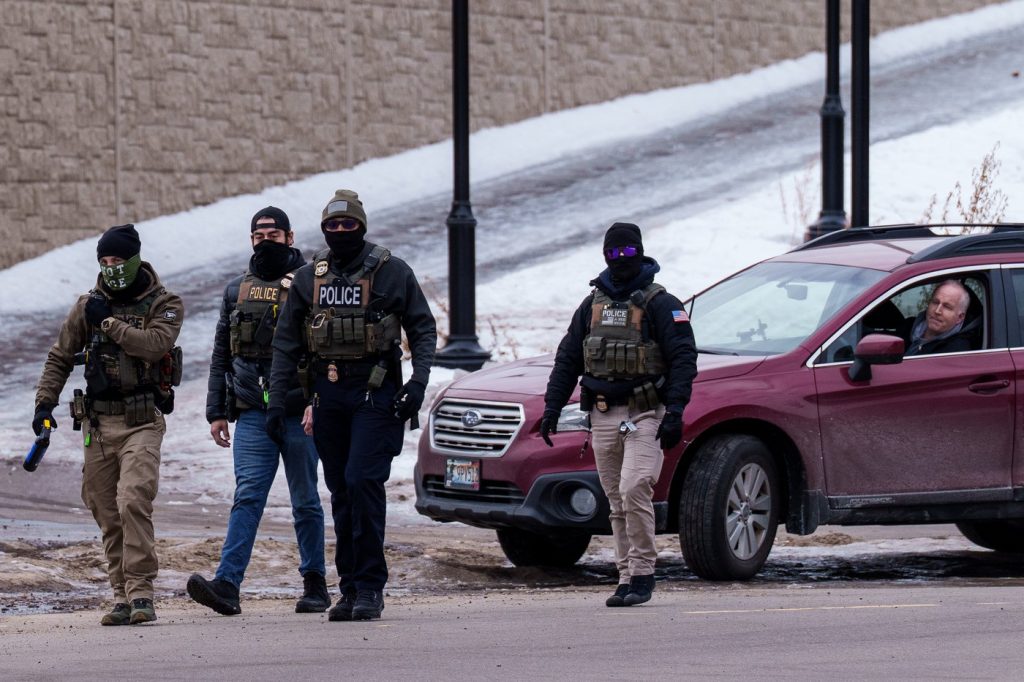
MINNEAPOLIS, Minn. — A Liberian man named Garrison Gibson is back in custody in Minnesota after a judge ordered his release, which came in response to a federal agents' unlawful arrest involving the use of force. U.S. District Judge Jeffrey Bryan ruled that the agents, who had used a battering ram to break down Gibson's door, acted without a judicial warrant during his arrest last weekend.
Gibson, 37, was initially arrested in a video-captured incident that raised significant concerns about law enforcement practices. After the judge's ruling, attorney Marc Prokosch stated that Gibson was re-detained when he went for a scheduled check-in at an immigration office. "The original officer said, 'This looks good, I’ll be right back,' and then there was a lot of chaos," Prokosch described. "About five officers came out and then they said, 'We're going to be taking him back into custody.'" This sudden shift caught Prokosch by surprise, prompting him to question the legality of the situation.
Gibson's case is part of a larger pattern of immigration enforcement in the area, with over 2,500 arrests reported during an ongoing crackdown by the Department of Homeland Security in Minneapolis and St. Paul. This operation has intensified and become increasingly confrontational, particularly following the fatal shooting of Renee Good on January 7. Gibson has been living in the U.S. under an order of supervision related to a past drug conviction that was later dismissed. He originally fled the Liberian civil war as a child and has legally remained in the country with the requirement to meet regularly with authorities.
In light of recent arrests, tribal leaders and Native American rights organizations are urging individuals carrying tribal IDs to keep them accessible. Reports have surfaced across the U.S. of Native Americans being stopped or detained by U.S. Immigration and Customs Enforcement (ICE) officials, leading tribal leaders to call for affected individuals to report these incidents. Ben Barnes, chief of the Shawnee Tribe in Oklahoma and chair of the United Indian Nations of Oklahoma, expressed that these occurrences are "deeply concerning."
In response to rising tensions, organizers in Minneapolis have set up booths to aid individuals in obtaining tribal IDs. The community response highlights ongoing efforts to protect the rights and safety of Native Americans amid heightened immigration enforcement activities.
Alongside these developments, law enforcement in the region has been active in addressing criminal incidents connected to the protests, including the reported theft of property from an FBI vehicle in Minneapolis. FBI Director Kash Patel noted that at least one arrest had been made regarding the incident, where weapons and body armor were stolen after windows of government vehicles were broken by unknown individuals.
Amid these tensions, President Donald Trump has threatened to invoke the Insurrection Act of 1807, which would authorize the deployment of federal troops to suppress protests linked to the immigration sweeps. Minnesota’s attorney general has voiced intentions to file a lawsuit should the president take such actions, further complicating the landscape of law enforcement and civil rights in the state.








