

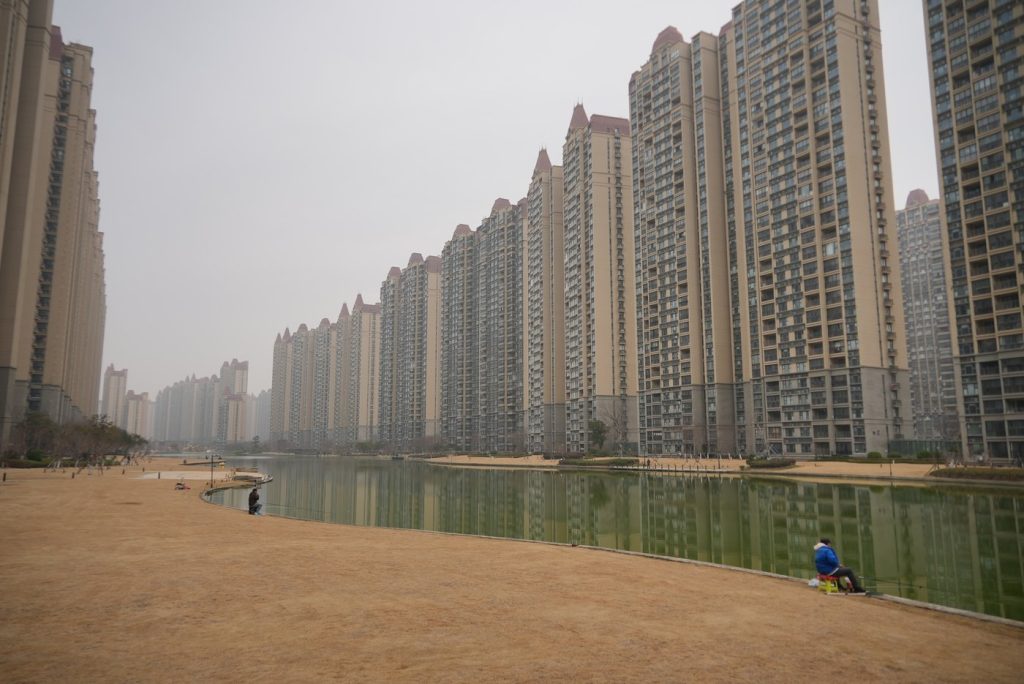
QIDONG, China (AP) – Following the collapse of China's debt-driven real estate bubble, numerous vast housing developments across the nation, including the extravagant "Life in Venice," remain partially abandoned. This sprawling residential complex, located on China's east coast, is situated just an hour and a half's drive from Shanghai, the country's bustling commercial hub.
Designed to evoke the charm of the famed Italian city, "Life in Venice" features European-style sculptures and buildings gracefully intertwined with canals and bridges. Once promised as the "garden of Shanghai," it offered a luxurious, resort-like lifestyle near the sea. However, property prices began to decline a few years ago, and in 2024, the developer, Evergrande, announced bankruptcy, leading to a drastic fall in the market.
Currently, "Life in Venice" resembles a ghost town with a picturesque sea view, housing many unsold units. Home prices have plummeted by more than half, with many villas abandoned, reduced to empty shells of concrete and alabaster. A three-bedroom apartment in the complex can now be rented for a mere 800 yuan (approximately $116) a month, an attractively low price that appeals to some seeking an affordable alternative to the high-pressure lifestyles of China's megacities.
In this semi-abandoned setting, a few grocery stores, restaurants, and package delivery services provide essential amenities for the residents who have chosen to call it home. During the winter months, the complex is largely tranquil, allowing residents to embrace a slower pace of life. Among the stark surroundings, a few men can be seen fishing beside a deflated rubber ducky, while children's clothes flutter in the breeze, hung out to dry in public spaces. On an empty beach, a lone man sways on a swing, gazing out toward an abandoned pier, reflecting the desolate yet serene atmosphere.
The images from "Life in Venice" paint a haunting yet intriguing portrait of a community caught between aspiration and reality. Residents interact with their environment, such as dining on hand-pulled noodle soup in local eateries or children playing in playgrounds. Photography captured by Dake Kang showcases vivid scenes: a shopkeeper slicing sugarcane for juice, delivery drivers idling on their scooters, and residents shopping for groceries while navigating the complex's empty ambiance.
The unsettling yet peaceful environment is accentuated by imagery of a waterless fountain beside a vast hotel, stone statues standing silently in the backdrop, and the sight of an empty beach dotted with watchtowers. Among the stark realities of this ghost town, it is evident that many apartments remain unlit and abandoned as dusk falls over the area, emphasizing the stark contrasts of life in this once-promising development.
As "Life in Venice" endures the consequences of a significant economic downturn, the juxtaposition of abandoned luxury against the backdrop of everyday life prompts reflections on the changing dynamics of real estate in China. The ongoing tale of this complex serves as a case study of ambition, failure, and the evolving preferences of urbanites searching for respite from the relentless pace of life in major cities.








