

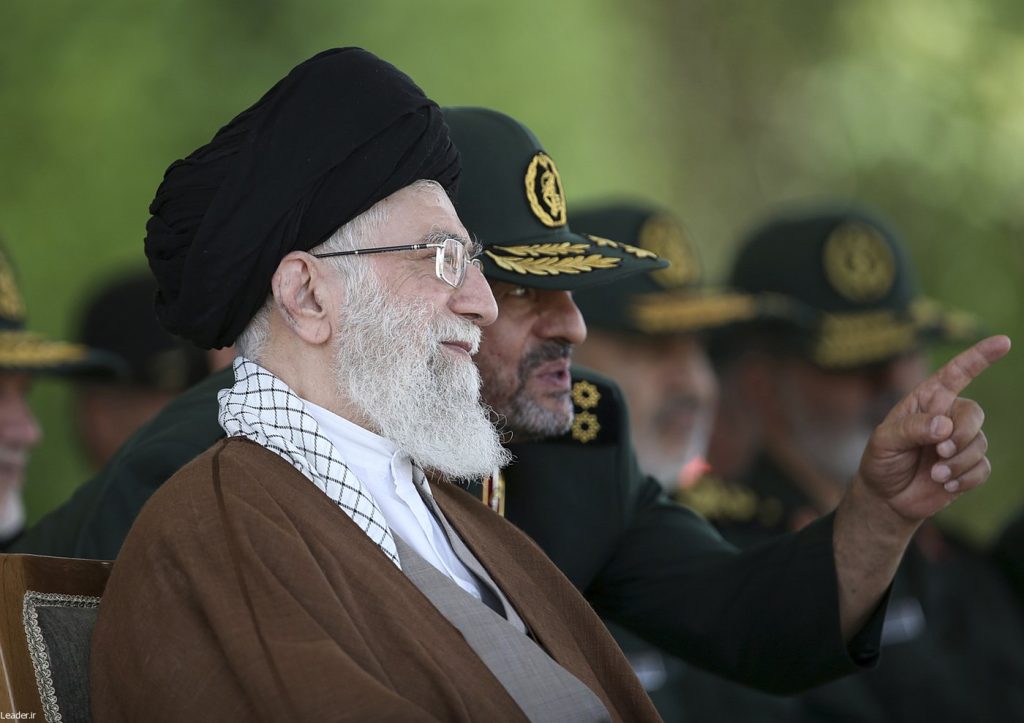
DUBAI, United Arab Emirates (AP) — Iran's paramilitary Revolutionary Guard has evolved into a dominant force within the country’s theocratic government, answering directly to the supreme leader. It oversees Iran's ballistic missile arsenal and has been instrumental in orchestrating attacks beyond its borders. Recently, the Guard has come into the spotlight as Iran amplifies its military operations in the Middle East, coinciding with a U.S.-Israeli airstrike campaign that has reportedly resulted in the death of the nation's Supreme Leader, Ayatollah Ali Khamenei.
The Revolutionary Guard was established following Iran's 1979 Islamic Revolution, originally to safeguard the Shiite clerical regime. Over time, it gained constitutional recognition and operated parallel to the regular army. Its influence expanded significantly during the prolonged Iran-Iraq War of the 1980s. Afterward, despite discussions about potential disbandment, Supreme Leader Khamenei authorized the Guard to delve into private enterprises, enabling it to flourish economically. The Guard runs several major enterprises, including a massive construction firm, Khatam al-Anbia, and various companies involved in infrastructure, telecommunications, and even healthcare.
The Guard’s acting arm, the Quds Force, has played a pivotal role in establishing what Iran terms its "Axis of Resistance" against Israel and U.S. influences. By supporting regional allies such as the Syrian government, Hezbollah in Lebanon, and the Houthi rebels in Yemen, the Quds Force has enhanced Iran's regional clout, especially following the U.S.-led invasion of Iraq in 2003. U.S. intelligence suggests that the Guard has trained Iraqi militants to create and deploy deadly roadside bombs against American forces. Furthermore, the Guard, along with Iranian intelligence, has allegedly employed criminal organizations and other groups to target dissidents and perceived enemies abroad.
The Revolutionary Guard’s intelligence section has been implicated in various arrests and convictions of foreign nationals and Western-affiliated dual citizens on espionage accusations, often held in secret trials. Critics argue that Iranian authorities utilize these detainees as leverage in negotiations, particularly concerning their nuclear agenda.
The recent escalation of conflict with Israel poses new challenges for the Guard. The "Axis of Resistance" has undergone intense scrutiny following the October 7, 2023, Hamas attack on Israel, which subsequently ignited the ongoing Gaza conflict. Iran is known to support Hamas, and the Israeli military's counteractions have targeted various Iranian-backed factions, diminishing their power and presence in the region.
Israel's retaliatory operations have severely affected the Guard, especially after a significant airstrike campaign commenced in June 2023, resulting in the deaths of several senior Guard generals and the destruction of critical military assets, including missile sites and air defense systems. This devastating blow has left the Guard grappling with internal and external pressures.
At the domestic level, the Guard’s Basij force plays a crucial role in suppressing protests and uprisings. Videos from recent protests illustrate Basij members brandishing firearms and tools of repression against demonstrators. Following these crackdowns, the European Union designated the Revolutionary Guard as a terrorist organization due to its violent suppression of dissent.
Iran’s foreign minister has recently indicated that military actions have been executed independently by its armed forces rather than under unified control, particularly following attacks on Gulf Arab nations that have historically facilitated negotiations between Tehran and foreign powers. These statements come after incidents in Oman and Qatar, both of which have previously engaged in dialogue with Iran over various issues, including nuclear capabilities.
Overall, the evolving dynamics surrounding the Revolutionary Guard indicate a growing complexity within Iran’s military and political landscape, raising questions regarding control and the willingness of its forces to act autonomously, even amid heightened scrutiny from international actors.








