

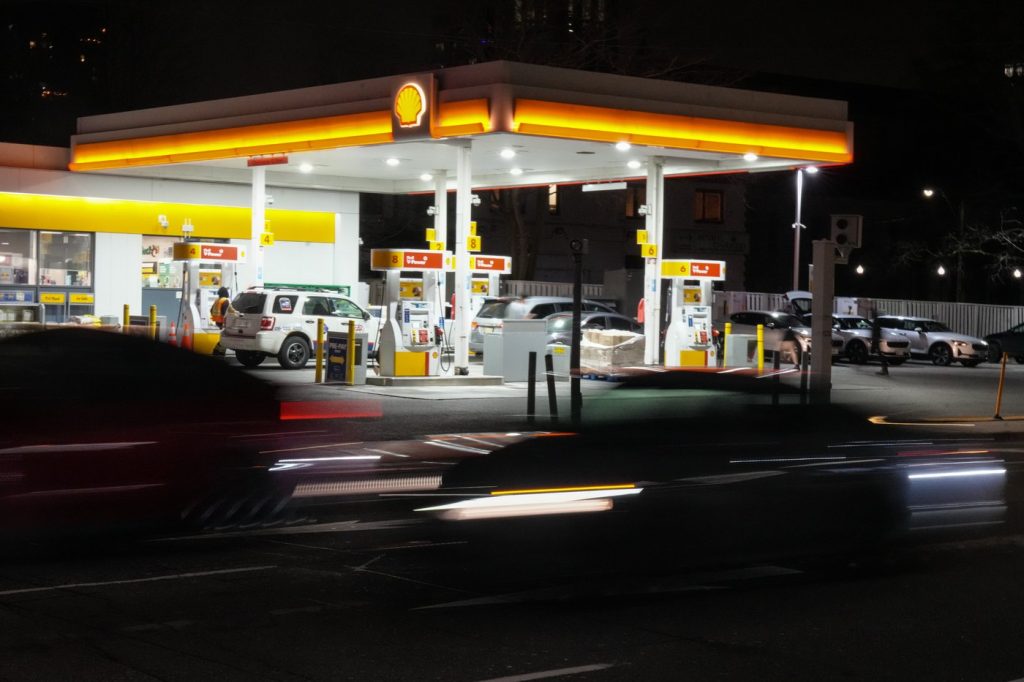
CALGARY — Gasoline prices are experiencing an upward trend in several Canadian cities due to heightened concerns surrounding the U.S.-Israeli attacks on Iran, which are influencing global oil prices. According to price-tracker Gasbuddy.com, the average price for regular unleaded gas in Canada reached 135.7 cents per litre around midday today. Notably, there is often a time lag in the data collection as it aggregates information from gas stations across both the U.S. and Canada.
This latest figure reflects an increase of 1.6 cents since Sunday and a rise of 4.1 cents compared to last week's average. In Toronto, the average price of gasoline surged to 134.9 cents per litre, marking a notable increase of 5.5 cents from Sunday. Vancouver also saw its gasoline prices rise by 3.7 cents, while prices in Montreal went up by 2.3 cents. Interestingly, Calgary's prices remained steady amidst these fluctuations.
In conjunction with the rise in gasoline prices, the crude oil market is experiencing significant movement. As of midday trading, the April crude oil contract was priced at over US$71 a barrel, reflecting a rise of more than six percent. Analysts have predicted that the oil price increase, which fell within the expected range of US$5 to US$10 per barrel, is primarily driven by fear related to potential outbreaks of war. In fact, prior to the conflict, some of these war-related concerns had already begun to be factored into the pricing.
The ongoing Mideast conflict is particularly focused on the Strait of Hormuz, a critical crude oil shipping route at the southern end of the Persian Gulf. Approximately 20 percent of the world's oil supply transits through this narrow passage, underscoring its strategic importance. A prolonged disruption of shipping traffic in this area could lead to further increases in oil prices, as could any damage to oil infrastructure in other countries within the Gulf region.
Conversely, if the conflict proves to be short-lived with disruptions that are manageable and easily reversible, the current spike in oil prices may not have lasting effects. The complexities of geopolitical tensions and their implications for global oil supply continue to create uncertainty in the market, impacting not only gasoline prices but also the broader energy landscape.
This report sheds light on the interconnections between geopolitical events and market fluctuations, especially in light of the current tensions in the Middle East. The situation remains dynamic, and stakeholders in both the energy sector and consumers will be keenly watching how developments unfold in the coming days and weeks.








