

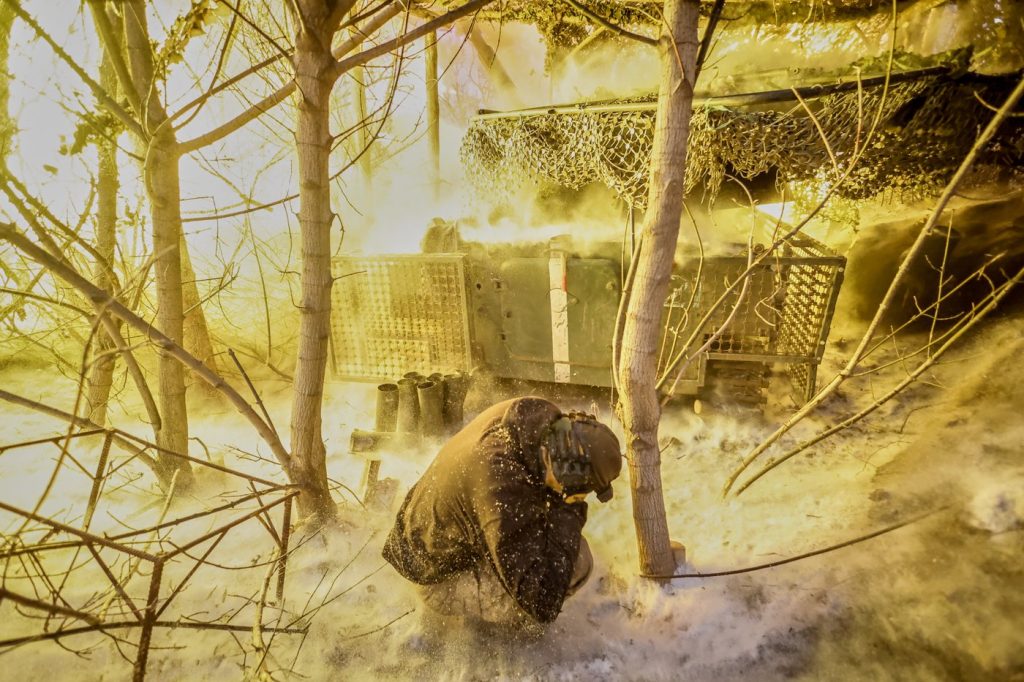
KYIV, Ukraine (AP) – In a significant escalation of hostilities, Russia has launched a barrage of over 300 drones, ballistic, and cruise missiles targeting Ukraine's infrastructure, particularly its power grid. This attack, which occurred during the nighttime hours, was highlighted by President Volodymyr Zelenskyy, indicating that there is currently no indication from Moscow of a willingness to conclude the ongoing conflict, which began with the full-scale invasion of Ukraine on February 24, 2022.
The recent assault has had dire consequences for the capital, with Kyiv Mayor Vitali Klitschko reporting that more than 5,600 apartment buildings lost their heating services. This latest strike follows closely on the heels of a major Russian bombardment on January 9, which had already plunged thousands into a prolonged blackout. Klitschko noted that nearly 80% of the affected buildings had only recently had their heating restored, underlining the precarious situation residents find themselves in as one of the coldest winters in years grips the country.
Temperatures in Kyiv have plummeted to -20 C (-4 F), compounding the hardships faced by civilians. As Russia escalates its aerial offenses, its strategy appears aimed at depriving Ukrainians of essential services such as heat and running water, a tactic viewed as an effort to weaken their resolve amidst the protracted conflict.
In response to the ongoing situation, Ukrainian officials are working diligently to keep diplomatic channels open, focusing on U.S.-led peace talks. A Ukrainian delegation arrived in the United States on Saturday with the goal of conveying how Russia's continuous strikes are hampering diplomatic efforts. President Zelenskyy indicated that among their tasks is to finalize proposals related to postwar security guarantees and economic recovery with U.S. officials. The expectation is that should these proposals gain approval, they could be signed at the upcoming World Economic Forum in Davos, Switzerland.
According to Ukraine's air force command, a significant portion of the offensive was successfully intercepted, with 27 missiles and 315 drones shot down or jammed, while five missiles and 24 drones managed to hit 11 locations. Despite these defensive efforts, the relentless pace of the attacks has strained Ukraine's air defense capabilities, with Zelenskyy noting some systems have exhausted their ammunition before receiving new supplies.
In a bid to enhance the efficacy of their air defense system, President Zelenskyy announced a strategic shift, appointing Pavlo Yelizarov as the new deputy air force commander. He emphasized that the air defense system will be transformed, although he did not elaborate on the specific changes to be implemented.
Ukraine continues to depend heavily on sophisticated air defense systems provided by Western nations, particularly the United States, as it strives to counteract the persistent threat posed by Russian missiles and drones. The ongoing conflict and recent escalation highlight the critical need for enhanced support and strategic planning moving forward.








