

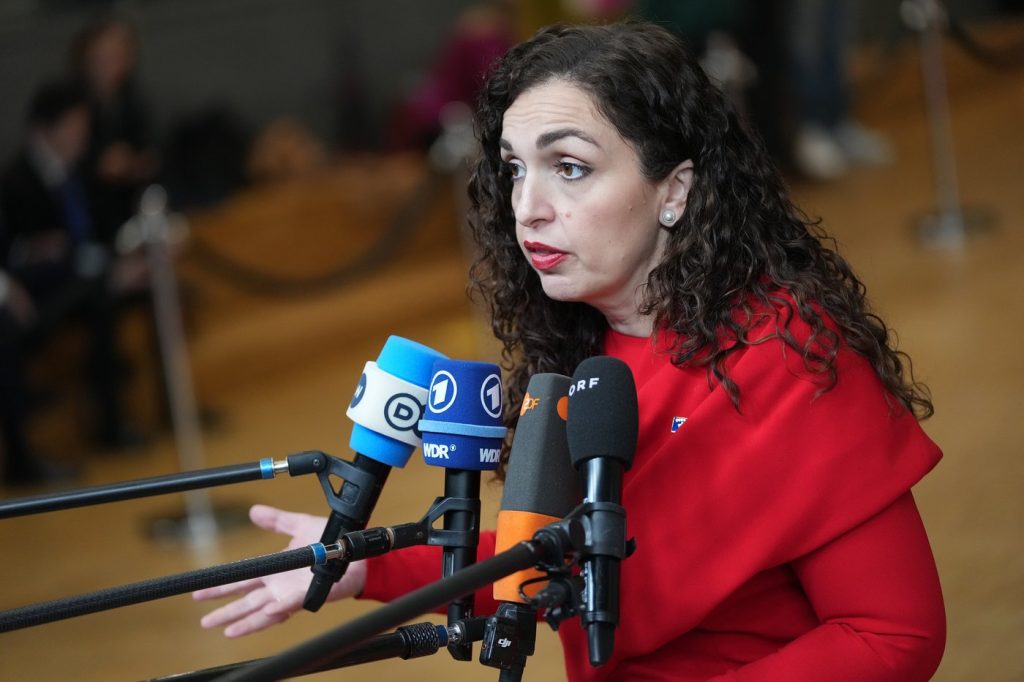
PRISTINA, Kosovo (AP) - Kosovo President Vjosa Osmani announced on Friday her decision to dissolve the Parliament, initiating the process for early elections after lawmakers failed to elect her successor. This development signals a new political crisis in the Balkan nation, which recently experienced a snap election in December following a prolonged political deadlock that lasted almost a year.
The Kosovo Assembly faced a midnight Thursday deadline to select a new president to replace Osmani, who has held the presidency since taking office in 2021. However, a vote conducted late Thursday was unsuccessful due to a lack of quorum among the 120 members of the assembly.
Prime Minister Albin Kurti attributed the voting failure to a boycott by the opposition during the assembly session. His party, Vetevendosje (meaning Self-Determination), has since requested the Constitutional Court to temporarily suspend the deadline for electing a new president, with hope of resuming the electoral process. The timeline for the court's ruling remains uncertain, and it is unclear whether it will influence Osmani's decision to dissolve the Parliament.
In her address on Friday, Osmani expressed that the situation was "completely avoidable" and criticized lawmakers for not acting in the best interests of the Republic of Kosovo. She stated, "I have issued the decree for the dissolution of the assembly, and through this decree, I am fulfilling the constitutional obligation that is clearly defined." Osmani emphasized that the lack of a president is detrimental to the state.
Vetevendosje had previously dominated the early elections in December, forming a coalition with ethnic minority groups to establish a new government in February 2025. Although the same party won the February election, it could not secure a parliamentary majority, leading to a stalemate, and consequently, the snap election in December.
A historically significant area, Kosovo declared its independence from Serbia in 2008, following a brutal conflict that took place from 1998 to 1999, ultimately ending with a NATO intervention led by the United States. Despite Kosovo's declaration of independence, Serbia does not recognize this separation, leading to ongoing tensions in the region.
Amidst the political turmoil, the ramifications of the dissolution and upcoming elections are yet to unfold. The political landscape remains uncertain as Kosovo navigates this challenging period in its governance and institutional framework.








