

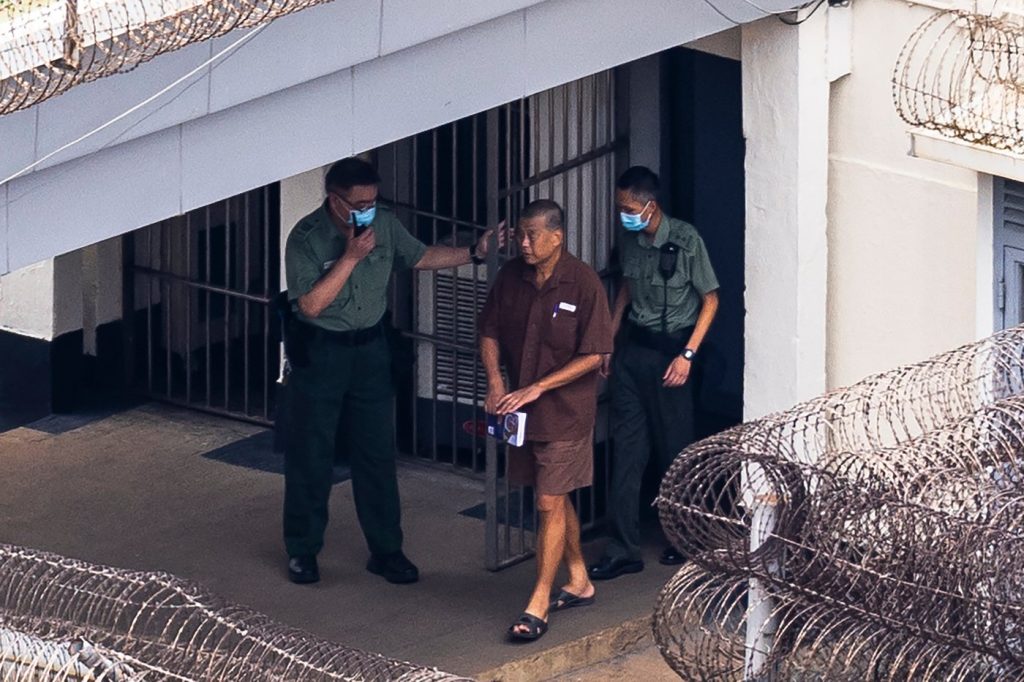
HONG KONG (AP) — Jimmy Lai, the pro-democracy ex-publisher of the now-defunct Apple Daily, has decided not to appeal his national security conviction, which resulted in a 20-year prison sentence. This announcement was made by his legal team on Friday, marking the end of a lengthy legal battle that has garnered significant attention.
Lai, a prominent critic of China's ruling Communist Party, was convicted in December for conspiracy to collude with foreign forces and for conspiring with others to publish seditious articles. His lawyers communicated the decision to refrain from appealing through a text message to The Associated Press but did not provide a reason behind this choice. They stated, “We can confirm we have clear and definitive instructions not to lodge an appeal against conviction or sentence.”
The conviction of Lai is seen by observers as indicative of the decline of press freedoms in Hong Kong, a former British colony that was handed back to China in 1997. The Hong Kong government maintains that the case is unrelated to press freedoms, arguing that those involved exploited journalism as a facade to engage in activities harmful to both China and Hong Kong.
Jimmy Lai was among the first high-profile figures to be arrested under the national security law introduced in 2020. Following his arrest, several senior journalists from Apple Daily were also detained, and the newspaper, known for its critical stance towards the Beijing and Hong Kong governments, was ultimately shut down in June 2021.
At 78 years old, Lai's lengthy sentence has raised concerns about the possibility of him spending the remainder of his life in prison. In the wake of his sentencing, Lai’s children suggested that a potential visit by U.S. President Donald Trump to Beijing in March could be pivotal in efforts to secure their father’s release. Trump is confirmed to travel to China from March 31 to April 2 to meet with Chinese leader Xi Jinping, although there has been no official confirmation from Beijing regarding this visit.
U.K. Foreign Secretary Yvette Cooper has openly criticized Lai’s sentencing, declaring that he was punished for exercising his right to freedom of expression. She has called upon Hong Kong authorities to release him on humanitarian grounds. In response, Chinese and Hong Kong officials have defended Lai's sentencing, asserting that it upholds the rule of law.
Recently, Lai achieved a victory by winning an appeal that quashed his convictions and sentence in an unrelated fraud case. This win could potentially shorten his overall prison time; however, the Hong Kong Department of Justice has indicated that it plans to thoroughly review the ruling and may consider filing an appeal against this recent decision.
As Lai's legal struggles continue, his case remains a focal point in the broader discourse surrounding press freedoms and human rights in Hong Kong amid an increasingly repressive political environment.








