

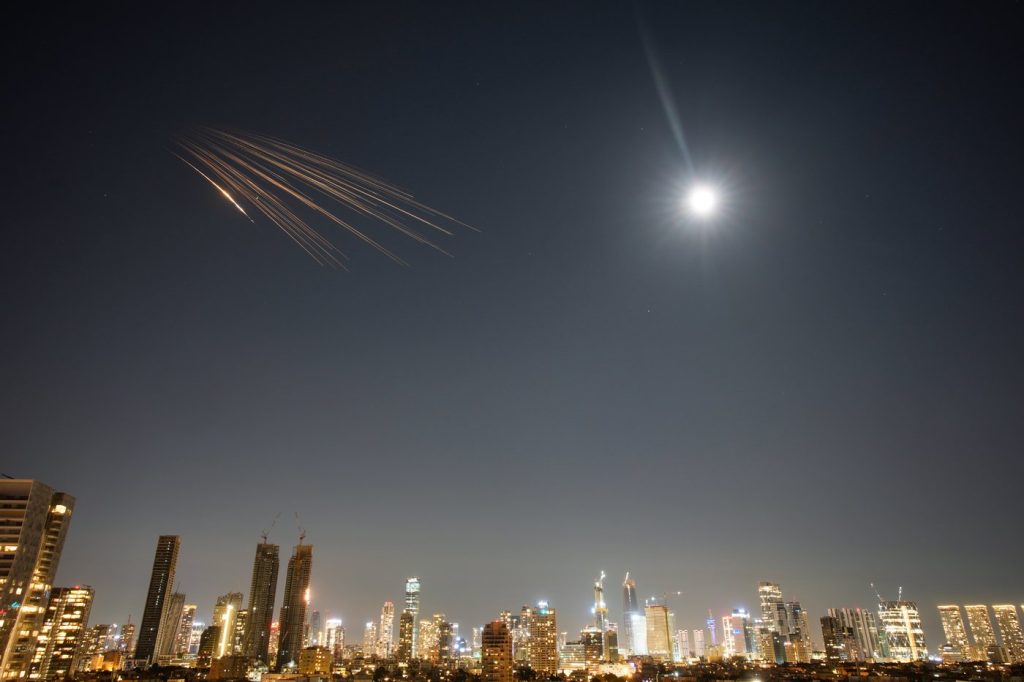
DUBAI, United Arab Emirates (AP) - Intense Israeli airstrikes targeted the capitals of Iran and Lebanon early Friday, amid a broader military campaign involving the United States against Iran's naval capabilities. Reports emerged that the U.S. had struck an Iranian drone carrier at sea, intensifying the ongoing conflict which has spanned over a week of bombardment.
Iran retaliated with missile and drone attacks across the region, notably targeting Kuwait, Qatar, Saudi Arabia, and Bahrain—nations that host U.S. military forces. Despite the escalation, there were no immediate reports of casualties from these strikes. The Israeli military announced a large-scale operation in Tehran, describing the airstrikes as heavy, with explosions reported in Kermanshah, home to various missile bases. A significant claim from Israel stated that these strikes had crippled most of Iran’s air defense systems and missile launchers.
The conflict's ramifications have extended across the Middle East, leading to at least 1,230 fatalities in Iran, over 120 in Lebanon, and approximately 12 in Israel, with six U.S. troops reported killed. As Israel ramped up its airstrikes in Lebanon, scenes of panic unfolded in the streets of Beirut, where residents attempted to flee or seek shelter from ongoing bombardments.
The U.S. military confirmed that it successfully targeted the IRIS Shahid Bagheri, a drone carrier converted from a container ship, utilizing B-2 stealth bombers to deliver precision strikes on buried ballistic missile sites within Iran. U.S. Central Command Chief Adm. Brad Cooper characterized the drone carrier as being approximately the size of a World War II aircraft carrier. Defense Secretary Pete Hegseth hinted at an impending surge of military capabilities, which would involve increased deployments and more frequent bomber sorties.
In Kuwait, air defenses intercepted an Iranian drone attack aimed at the Al Udeid Air Base, while Saudi Arabia successfully destroyed three ballistic missiles aimed at Prince Sultan Air Base. Iran’s military actions have now spread to multiple countries, with acknowledgements from U.S. officials that they are prepared to collaborate with nations affected by Iranian aggression.
U.S. President Donald Trump, addressing the situation at the White House, reiterated a message encouraging the Iranian populace to "help take back your country," proposing a safety guarantee for those willing to oppose their regime. However, U.S. officials warned against public protests amid ongoing military operations, urging civilians to remain cautious and safe.
Reacting to the conflict, Iran's diplomatic representatives signaled a lack of willingness to engage in negotiations with the U.S., citing a profound distrust stemming from past failed diplomatic efforts related to nuclear agreements. They claimed that there would be “no trust in Trump” as Iran’s ambassador to Egypt underscored the complexities of future talks.
As the situation unfolded in Lebanon, Israel launched a series of airstrikes in the southern suburbs of Beirut, escalating tensions with Hezbollah amidst renewed hostilities. Israeli forces issued warnings to civilians to evacuate their homes, leading to increased humanitarian concerns as evacuations commenced from local hospitals.
The airstrikes resulted in additional casualties, with the Lebanese health ministry reporting a total of 123 deaths since hostilities renewed between Israel and Hezbollah, indicating the severe impact of the conflict on the civilian population in Lebanon. The regional dynamics continue to evolve, reflecting the grave consequences of military actions and the urgent need for humanitarian considerations amidst ongoing violence.








