

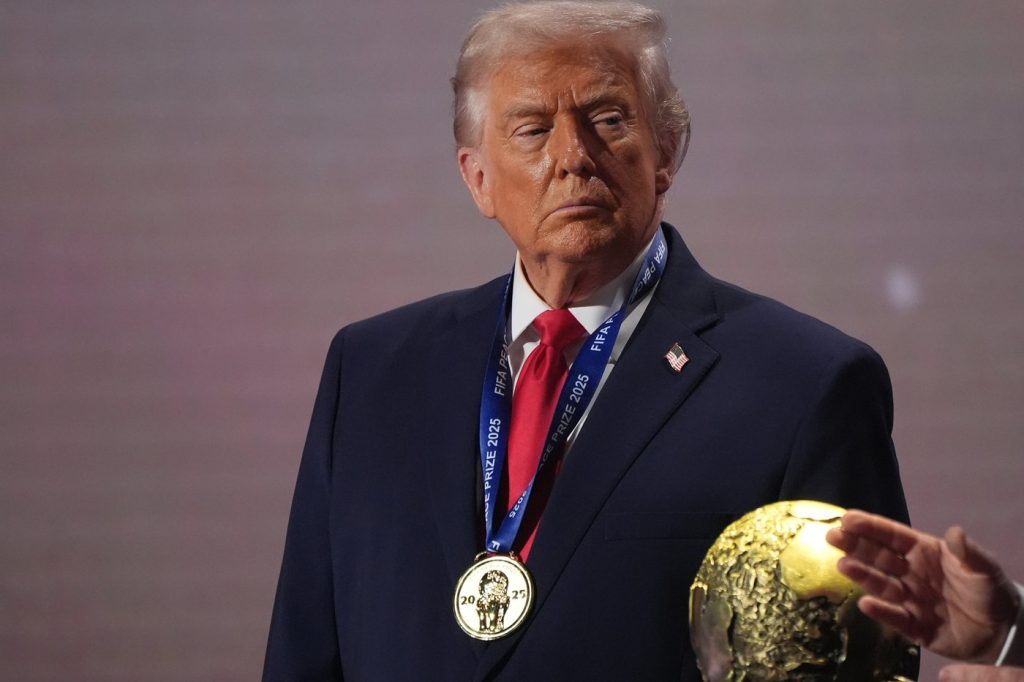
In a provocative statement, Oke Göttlich, a member of the executive committee of the German Soccer Federation and president of the Bundesliga club St. Pauli, has suggested that it may be time to seriously consider a boycott of the upcoming World Cup. His comments, made during an interview with the Hamburger Morgenpost, were influenced by the controversial actions of U.S. President Donald Trump.
Göttlich pointed to Trump's recent attempts to assert control over Greenland, a semi-autonomous territory of Denmark, as well as his threats to impose tariffs on several European countries that opposed his takeover bid. This situation has led to warnings from some of America's closest allies regarding a potential rupture in relations with Washington, which could have severe implications for NATO.
Reflecting on historical precedents, Göttlich drew parallels between the current climate and the justifications for boycotting the Olympic Games in the 1980s. He articulated the belief that "the potential threat is greater now than it was then," and that it is crucial for soccer bodies to engage in discussions regarding the moral implications of their participation in such an event.
The 2026 FIFA World Cup, co-hosted by the United States, Canada, and Mexico from June 11 to July 19, is already surrounded by controversy. Fans have raised concerns over high ticket prices, while some travel bans imposed by the Trump administration are preventing supporters from certain competing countries from attending the tournament.
Göttlich's advocacy for a boycott is likely to encounter resistance from key figures such as Bernd Neuendorf, president of the German federation, and FIFA president Gianni Infantino. He expressed frustration at the perceived inconsistency within the German federation, which previously opposed the political aspects of the World Cup held in Qatar, yet seems to be adopting an apolitical stance for the upcoming event.
“Qatar was too political for everyone and now we’re completely apolitical? That’s something that really, really, really bothers me,” Göttlich remarked. He criticized the apparent trend of organizations and societies neglecting the need to set boundaries and defend values, querying when such boundaries have been violated by current events.
St. Pauli, located in Hamburg and known for its left-wing activism and politically charged stance, has a rich tradition of blending sport with social values. Their emblem, a pirate skull-and-crossbones, was initially introduced by squatters in the surrounding area and later embraced by a culture of fans identifying as punks.
In his statements, Göttlich dismissed concerns that a boycott might adversely impact St. Pauli's national team players, including Australia’s Jackson Irvine and Connor Metcalfe, and Japan’s Joel Chima Fujita. He emphasized that the lives of professional players should not be valued more than the many individuals worldwide who are affected by the decisions made by the World Cup host nation.
The statements from Göttlich reflect a broader concern regarding the intersection of sports and politics, with calls for sports organizations to reassess their roles in light of political realities. As the World Cup approaches, these discussions surrounding ethical considerations and the potential for boycotts are likely to intensify.








