

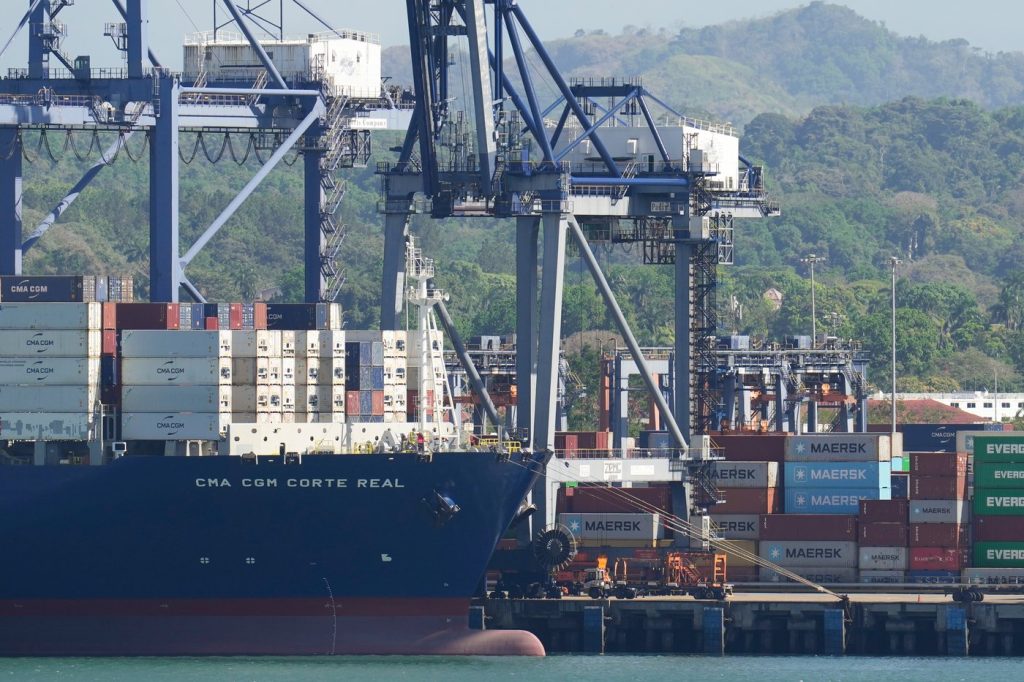
HONG KONG (AP) — CK Hutchison Holdings, a subsidiary of the company, has initiated arbitration proceedings against the government of Panama following a ruling by the country’s Supreme Court. This ruling declared that a concession allowing the subsidiary to operate ports in the Panama Canal was unconstitutional. Hutchison strongly disagreed with the ruling, which could have significant ramifications, particularly amid growing tensions between the U.S. and China over influence in the canal region.
The subsidiary in question, Panama Ports Company, announced that it commenced arbitration proceedings under the rules of the Paris-based International Chamber of Commerce. Despite this development, it remains uncertain what impact the arbitration process might have on the ongoing operations at the ports. The Panamanian government did not respond immediately to inquiries about the ruling or the arbitration.
This court ruling has provoked a fierce reaction from China, stating that Panama might face serious consequences if it continues down this path. The President of Panama sought to reassure the public, asserting that port operations would continue without disruption following the Supreme Court’s decision. The ruling aligns with the broader U.S. efforts to limit Chinese influence over the strategically vital Panama Canal, which connects the Atlantic and Pacific Oceans.
CK Hutchison's subsidiary has operated ports at both ends of the Panama Canal since 1997, putting the company in a precarious position as the U.S. and China navigate their fraught relationship. The family's ownership of CK Hutchison by Hong Kong's richest man, Li Ka-shing, highlights the complex dynamics that Hong Kong businesses must contend with, particularly concerning Beijing's expectations of loyalty amid rising geopolitical tensions.
The company’s planned divestiture of port assets to a consortium that includes U.S. investment firm BlackRock Inc. has further complicated matters. While this arrangement seemed beneficial, it has drawn scrutiny from both Washington and Beijing. U.S. President Donald Trump expressed initial support for Hutchison's sale plan, alleging that China was attempting to interfere with operations at the canal. This sentiment appears to have caused unrest among Chinese officials, resulting in a review from Chinese anti-monopoly authorities.
In response to the Supreme Court ruling, Beijing's office overseeing Hong Kong affairs criticized it as "legally groundless" and suggested that Panamanian authorities were yielding to foreign pressures. The office insisted that China would not capitulate to hegemonic forces and possessed ample resources to defend its interests in the international economic arena. They urged Panama to reassess its decisions, implying that failure to do so would lead to significant political and economic repercussions.
Amid these tensions, Panama’s government contends it retains full authority over the canal and that Hutchison’s operations do not signify Chinese control. However, U.S. officials, including Secretary of State Marco Rubio, have recognized the presence of Chinese-operated ports as a national security concern, which underscores the complexity of the geopolitical landscape surrounding the canal.
The Hutchison subsidiary’s situation illustrates the broader implications of U.S.-China relations for business entities operating within sensitive regions. As Hutchison navigates these challenges, it remains to be seen how the arbitration process will unfold and what consequences it may yield for both the company and Panama's operational agreements in the future.








