

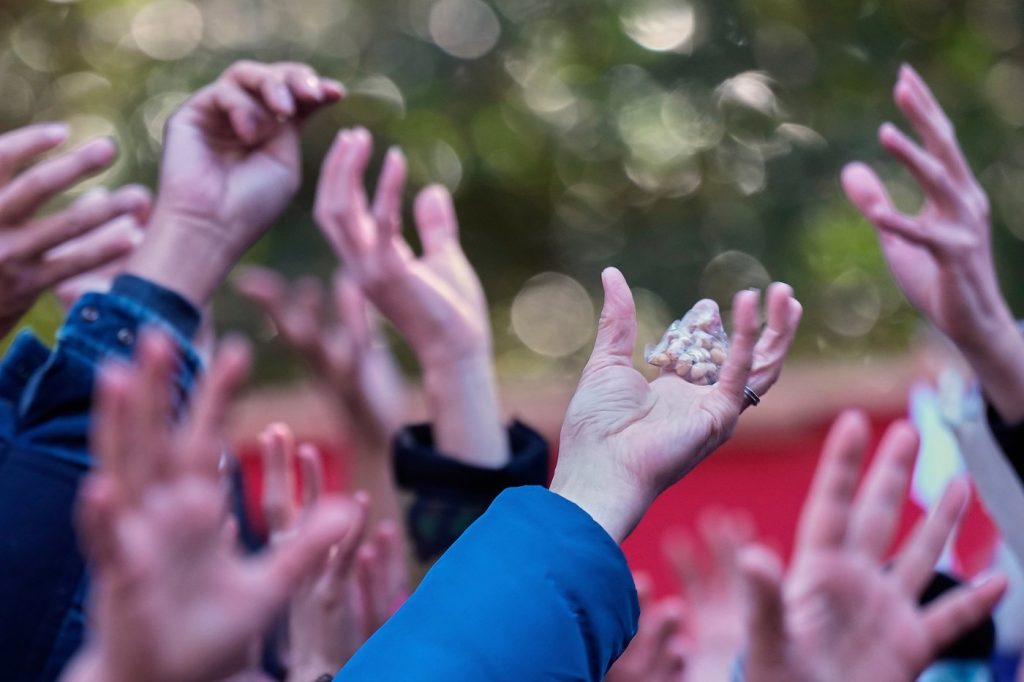
HAKONE, Japan (AP) - In Hakone, Japan, scores of participants gathered at a shrine on February 3, 2026, to partake in the traditional celebration of Setsubun, also known as "mame-maki" or bean-throwing. This event, held annually to mark the last day of winter according to the Japanese lunar calendar, invites people to catch “lucky beans” in a ritual aimed at warding off evil spirits and welcoming good fortune as spring approaches.
Setsubun takes place on the eve of Risshun, symbolizing the transition from winter to spring. Historically, this change of seasons has been seen as a vulnerable time during which illness and misfortune could invade lives. The practice of Setsubun originated to counteract this perceived instability, allowing individuals to throw roasted soybeans at representations of demons, thereby sending the unwelcome creatures away and inviting luck into their homes.
During the event, participants chant the phrase, "Oni wa soto, fuku wa uchi," which translates to "demons out, fortune in." While families often perform the custom at home, ceremonies at temples and shrines follow a more formal ritual. Despite its playful appearance, the roots of Setsubun lie in ancient purification practices.
Hakone Shrine, founded more than 1,200 years ago, is located beside Lake Ashi in the mountains of Kanagawa Prefecture, west of Tokyo. For centuries, it has served as a protective sanctuary for travelers navigating the difficult and unpredictable mountain routes. On this chilly winter day, visitors dressed warmly arrived at the shrine to commemorate Setsubun. Shinto priests led the ceremonies, reciting prayers with measured movements that emphasized the shrine’s commitment to continuity and tradition.
A unique aspect of the ceremony included a Shinto priest and a person dressed as a demon (oni) being pulled across the surface of Lake Ashi on water skis, symbolically removing misfortune from the community as they skimmed over the water before disappearing into the distance. Following this aquatic ritual, the ceremony shifted to land, where participants cheerfully threw roasted soybeans, their voices echoing the familiar chant. The beans scattered across the stone steps and earth, remaining where they landed as a sign of good fortune.
As part of the festivities, local students took on roles as oni, bringing the traditional folklore to life. This lively event attracted community members and visitors alike, all coming together at Hakone Shrine to ensure that the spirits of misfortune would remain at bay while blessings of fortune are welcomed with open arms.
Overall, the annual Bean Throwing Festival at Hakone Shrine exemplifies the cultural richness and historical significance of Setsubun in contemporary Japan, reinforcing community bonds and shared beliefs in good fortune as the seasons change.








