

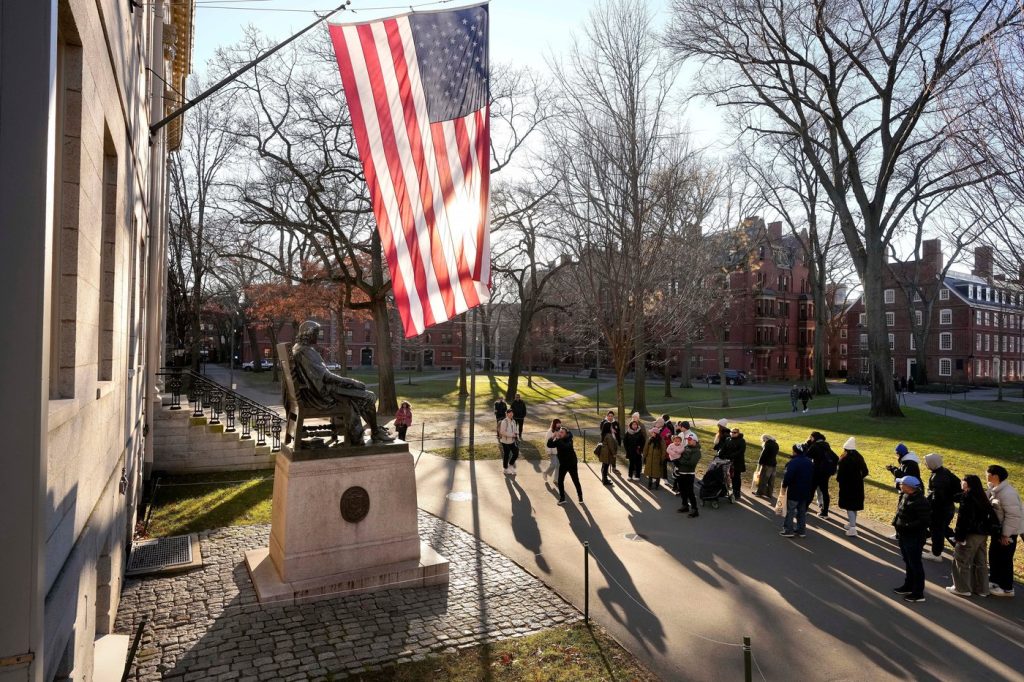
President Donald Trump is escalating his demands in an ongoing conflict with Harvard University, now requiring a $1 billion payment to resolve the standoff. This figure is double the amount he previously sought, marking a significant increase in pressure as negotiations appear to be deteriorating.
On social media, Trump expressed his dissatisfaction with Harvard, stating that the institution has been "behaving very badly." He emphasized that the university must pay the government directly as part of any agreement—something Harvard has consistently opposed. Furthermore, Trump declared that his administration intends to have "nothing further to do" with the university in the future.
The president's comments came in response to a report by the New York Times that suggested he had eased his stance on the financial demands, leading to confusion about his commitment to reaching a deal. However, Trump quickly refuted these claims and asserted that he had not backed down.
Harvard officials have not provided immediate comments about Trump’s latest demands. The situation represents a stark contrast to previous indications that negotiations were close to concluding. Last June, Trump claimed that a resolution was just days away and described Harvard's behavior during negotiations as “extremely appropriate.” He had even mentioned finalizing a deal that would involve Harvard contributing $500 million towards the establishment of a series of trade schools, rather than making a direct payment to the government.
However, that proposed agreement seems to have unraveled completely. Trump criticized the trade school initiative in his latest social media post, labeling it "convoluted" and "wholly inadequate." This change in stance positions both parties firmly entrenched in their conflict, which had previously shown signs of thawing.
Harvard has emerged as a primary target for Trump's administration, which has sought to bring elite institutions to account for what it perceives as liberal biases and anti-Jewish sentiments on campus. Trump’s officials have implemented drastic cuts to the university’s federal research funding and have attempted to block its enrollment of foreign students as retaliation for Harvard’s refusal to comply with various government demands made last April.
The White House has publicly cited its actions as an effort to counter the presence of anti-Jewish bias on campus, leading Harvard to file legal challenges against the administration's measures, claiming they are punitive for not conforming to the government's viewpoints. In a significant ruling, a federal judge sided with Harvard in December, reversing the funding cuts and dismissing the administration’s allegations of antisemitism as a mere "smokescreen."
Trump's latest threats come amidst broader challenges facing his administration's educational agenda. Last fall, the White House proposed a "compact" to nine universities, offering them funding priority in exchange for adopting Trump’s educational policies; however, none accepted this proposition. Additionally, in January, the administration abandoned its defense of an Education Department document that threatened funding cuts based on schools' diversity, equity, and inclusion policies.
Since taking office for his second term, Trump has prioritized targeting elite universities, claiming they have succumbed to liberal ideologies and have fostered environments hostile to Jewish students. This campaign has included freezing substantial amounts of research funding that colleges depend on for scientific and medical research initiatives.
While some universities have successfully negotiated agreements to restore their funding—such as Columbia University’s direct payment of $200 million and Brown University’s commitment to contribute $50 million to state workforce development initiatives—Harvard remains at an impasse with the Trump administration amidst the heightened demands.








