

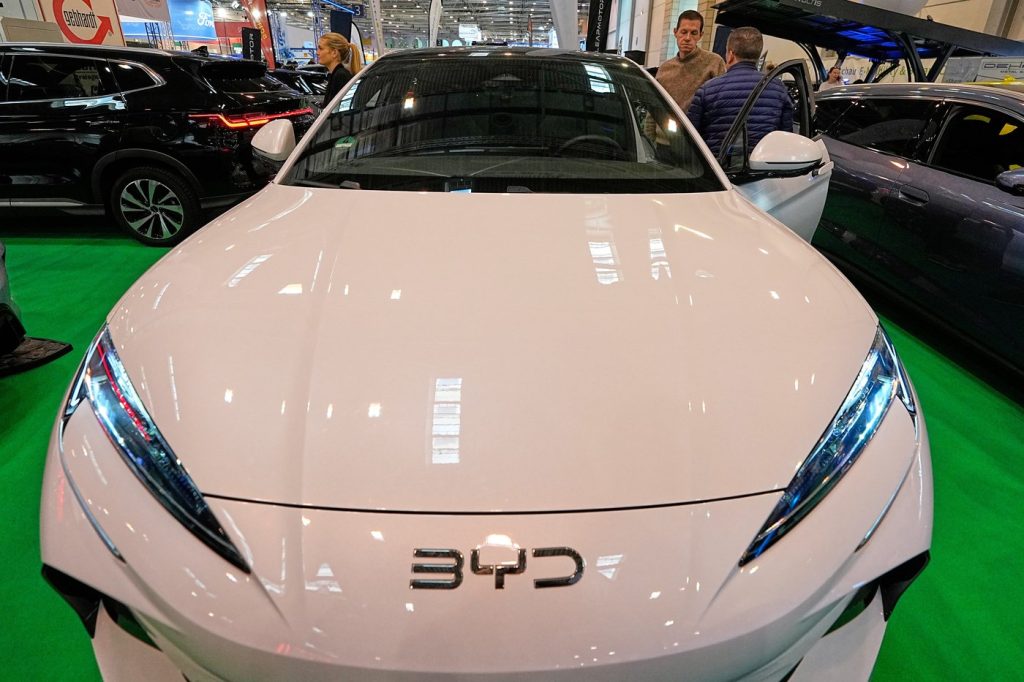
OTTAWA – A recent poll indicates that a majority of Canadians are in favor of allowing an increased number of Chinese electric vehicles (EVs) to enter the Canadian market, despite some lingering concerns regarding quality and security. The survey comes on the heels of Canada's decision to reduce its 100 percent tariff on Chinese-made electric vehicles to 6.1 percent, with an annual quota of 49,000 vehicles. In response, China is expected to decrease its retaliatory tariffs on Canadian agricultural products.
Conducted by Leger, the poll revealed that seven out of ten respondents were aware of the agreement between Ottawa and Beijing, with higher awareness levels noted among men and individuals aged 55 and over. In terms of support, 61 percent of those surveyed expressed approval for the importation of more Chinese EVs, with 24 percent strongly endorsing the initiative and 38 percent somewhat supporting it. This support was particularly pronounced in Quebec, where 72 percent of respondents favored the decision, alongside similar trends among men and older Canadians.
According to Steve Mossop, Leger's executive vice-president for Western Canada, Canadian attitudes toward their relationship with China have shifted significantly over the past year, exemplified by this poll's findings. The online survey, conducted between January 30 and February 2, included responses from 1,570 participants, although it cannot be assigned a margin of error due to its non-random sampling methodology.
Despite the overall positive response, three-quarters of respondents expressed at least one concern regarding the influx of Chinese EVs. The most prevalent worries revolved around vehicle quality and durability, along with potential impacts on the Canadian automotive industry. Additional concerns were raised about data security and privacy issues, vehicle safety, and broader geopolitical or national security risks associated with China.
Notably, Ontario Premier Doug Ford voiced apprehensions about the potential for Chinese EVs to spy on Canadian motorists when the agreement was announced. Philippe Dufresne, Canada's privacy commissioner, indicated that his office is conducting research into connected devices, aiming to better understand the types of data collected by cars and similar products.
Moreover, the poll revealed heightened fears regarding the potential repercussions of strengthening trade ties with China, particularly among Ontario residents, where many vehicle manufacturers reside. Approximately two-thirds of Canadians voiced concerns about possible retaliation from the United States. This concern increased to 71 percent among those who opposed allowing more Chinese EVs in Canada.
Mossop found it notable that 30 percent of respondents reported no worries about potential U.S. repercussions, suggesting a shift in sentiment over the past several months. He indicated that this figure might have been lower six to eight months prior when fears regarding American tariffs were more prevalent.
Interestingly, 57 percent of Canadians opposed the idea of limiting trade with China to prevent U.S. economic retaliation. This opposition was particularly strong among individuals who supported permitting a greater number of Chinese EVs in Canada and those who were less concerned about U.S. tariff threats.
It is important to note that the Canadian Research Insights Council, which oversees polling standards in the industry, has stated that online surveys like this one cannot be assigned a margin of error. The report was initially published on February 4, 2026, by The Canadian Press.
In summary, the findings reflect a complex and evolving public opinion landscape regarding trade relations with China, highlighting both support for increased imports of Chinese electric vehicles and significant concerns about implications for quality, safety, and geopolitical stability.








