

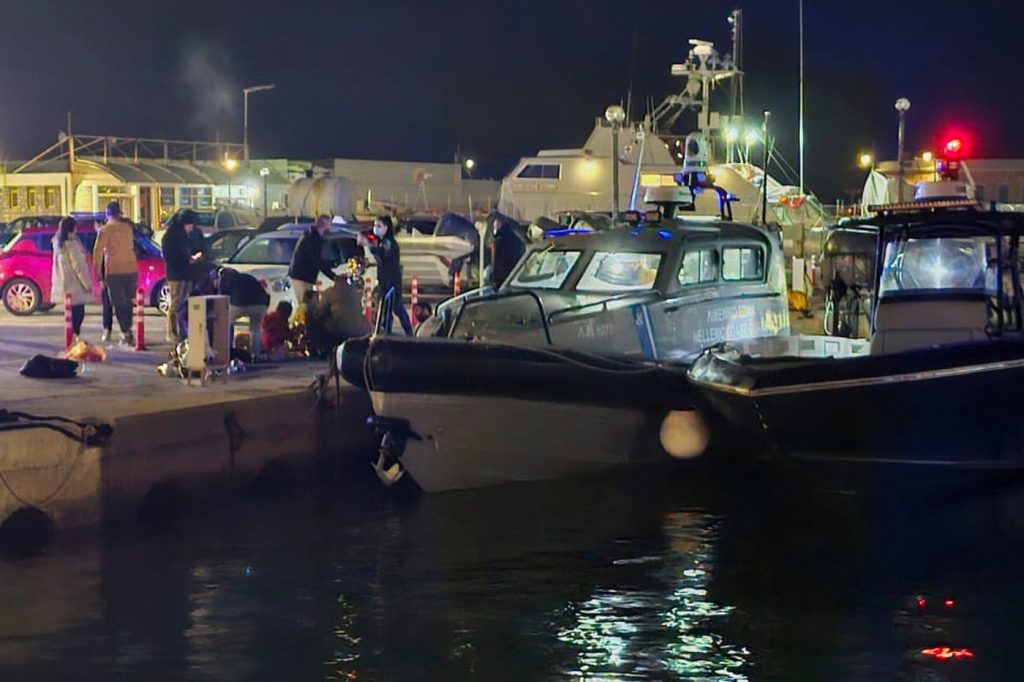
ATHENS, Greece (AP) - Emergency search operations were underway on Wednesday following a tragic incident in the eastern Aegean, where a Greek coast guard patrol vessel collided with a speedboat carrying migrants, resulting in at least 15 fatalities. The collision occurred on Tuesday night near the island of Chios, leading to an immediate response from the coast guard, which included multiple patrol boats and a helicopter.
In the aftermath of the collision, authorities reported that 24 migrants, among whom were 11 children, sustained injuries and were subsequently hospitalized on Chios. Additionally, two coast guard officers were injured in the incident, with one remaining hospitalized as of Wednesday. The bodies of 11 men and three women were recovered from the sea shortly after the collision, while another woman died later in the hospital.
The total number of individuals aboard the speedboat at the time of the incident remains uncertain. As rescue efforts progressed overnight, four patrol boats, two helicopters, and divers were deployed, continuing their search into Wednesday morning with additional resources, including a helicopter and five patrol vessels.
Investigative details surrounding the incident are still unclear. The coast guard reported that one of its patrol boats encountered a speedboat late Tuesday night that was heading towards Chios without any navigation lights illuminated. The speedboat allegedly refused to comply with the patrol boat's signals to stop, changing directions abruptly before colliding with the coast guard vessel, causing it to capsize.
Photographic evidence released by the coast guard displayed noticeable damage on the right side of the patrol boat. However, the coast guard's description of the events has not been independently verified, adding to the complexity of the situation.
In response to the influx of injured and deceased individuals, the staff at Chios hospital was placed on high alert to accommodate the emergency situation. Michalis Giannakos, head of Greece's public hospital workers' union, mentioned on a television channel that several injured patients required surgical intervention.
The ramifications of this incident highlight Greece's position as a principal entry point for migrants from conflict and poverty-stricken regions across the Middle East, Africa, and Asia seeking refuge in the European Union. Tragically, fatal accidents linked to maritime crossings are a persistent issue in this area. Many migrants attempt what is often a dangerous journey from the Turkish coast to nearby Greek islands using overcrowded inflatable dinghies or speedboats facilitated by smugglers, who typically return to Turkey after dropping off their passengers. However, increased surveillance and reports of pushbacks, which entail summary deportations denying asylum applications, have led to a noticeable decrease in crossing attempts.
In the context of growing concerns regarding migration, Greece and several other EU nations have been tightening regulations in this area. In December, new policies were introduced aimed at overhauling the European Union's migration system, which included hastening deportation processes and expanding detention provisions.
This ongoing crisis has continued to spur intense debates among EU member states about migration. Since the peak of migration to Europe a decade ago, public opinion surrounding the issue has evolved, allowing far-right political factions to gain traction. Consequently, EU migration policies have become more stringent, leading to a significant downturn in the number of recorded asylum-seekers.








