

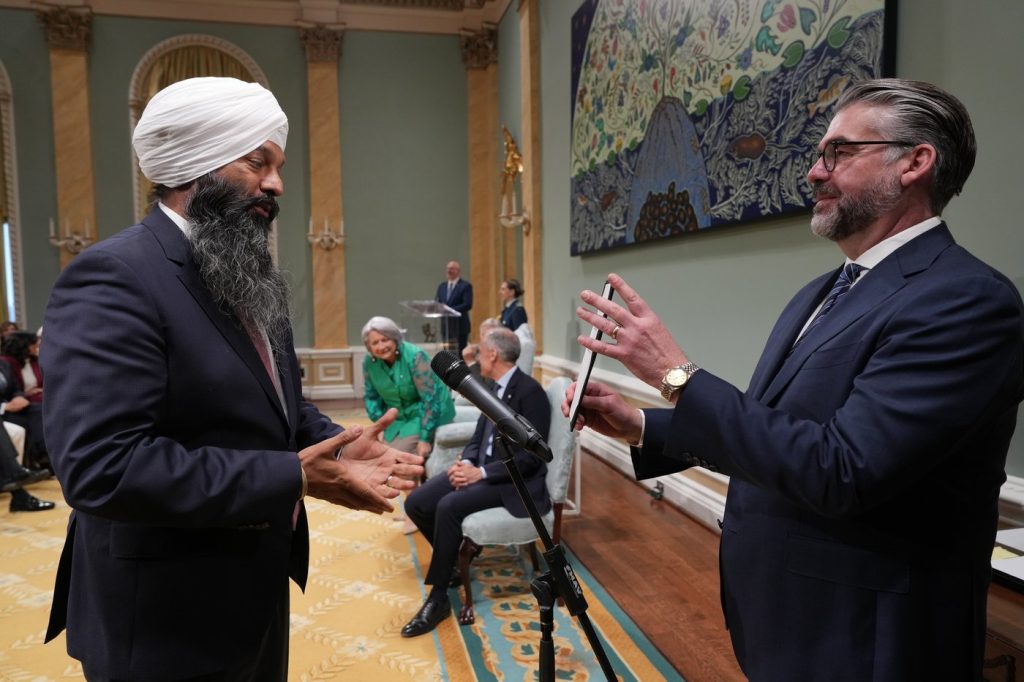
OTTAWA – The Canadian government, under the guidance of Randeep Sarai, Secretary of State for International Development, is refocusing its foreign aid strategy to prioritize countries that can generate economic benefits for Canadians. Sarai stated that the government aims to link development aid with trade, thus fostering mutual prosperity for both Canada and its partner nations.
The announcement of this policy shift coincides with the federal government's decision to cut $2.7 billion from the foreign aid budget over the next four years, which is intended to bring spending back to pre-pandemic levels. Critics within the aid sector are voicing concerns, claiming that these cuts contradict Prime Minister Mark Carney's pledges made during the previous election campaign to maintain aid funding.
The government’s reduction in foreign aid is happening amidst a backdrop of significant budget cuts to U.S. overseas development spending, which have had dire consequences such as eliminating food aid for refugee camps. Sarai emphasized the need for Canada to be more strategic in its aid distribution, aiming to concentrate resources instead of spreading them thinly across numerous countries. He highlighted the goal of making aid more efficient and effective by focusing on nations with which Canada wants to develop trade relations.
In light of potential layoffs within Global Affairs Canada, Sarai indicated that efficiency could be achieved through voluntary departures, improved funding application processes, and the implementation of artificial intelligence. Aimed at maximizing impact, he suggested utilizing innovative financing strategies, particularly "blended finance," which combines government funding with private sector investments.
One example Sarai provided was a cinnamon-processing facility in Vietnam supported by Canadian investment. This initiative is creating jobs and promoting gender equality, as it primarily employs women while also ensuring fair compensation for raw material suppliers. The example illustrates the potential of Canadian aid to promote sustainable development while benefiting Canadian markets.
Sarai also pointed to renewable energy projects in rural areas as another avenue where public investments can attract private financing, enhancing economic ties between Canada and developing countries. In a recent statement for International Development Week, he highlighted that Canadian aid can diversify trade opportunities for Canadian businesses and investors in emerging markets.
To strengthen the connection between aid and trade, the government assigned MP Yasir Naqvi to work with both Sarai and Minister of International Trade Maninder Sidhu, signaling a coordinated approach to linking development with economic growth. Proponents of this approach, like CUSO International, argue that nations receiving aid often become favorable trade partners in the long term.
However, the Conservative Party has questioned the efficacy of this strategy, demanding evidence that Canadian aid translates into tangible economic benefits for Canadians. At an Oxfam Canada event, Conservative MP Stephanie Kusie expressed a broader perspective, advocating that development aid plays a crucial role in fostering peace and stability globally, ultimately benefiting Canada as well.
With an objective to triple the amount of private capital generated for every dollar of aid spent, Sarai mentioned the potential involvement of FinDev Canada, the federal development financing institution. Critics of blended finance caution that it could lead to increased costs and corruption due to less transparency in commercial contracts.
Some charities propose that although blended finance can be effective, it must be carefully managed to ensure it benefits the most impoverished populations. Canada's current approach to foreign aid includes partnerships with wealthy Gulf nations known for their controversial human rights records. Despite this, Sarai insists that these collaborations focus on promoting women's empowerment and engagement, aligning with the long-term goals of alleviating poverty and improving gender equality.
Sarai concluded that the overarching development goals remain consistent: to alleviate poverty, foster prosperity in partner countries, and promote the welfare of women and girls. He also expressed a desire to engage a broader segment of the Canadian populace in aid initiatives, beyond the most frequently represented communities, indicating plans to increase federal support for programs in Latin America, Africa, the Caribbean, and the Pacific Islands.








