

In China, consumerism is increasingly dominating over nationalism, even amid heightened tensions with countries like Japan and the United States. Historically, the Communist Party has cultivated nationalist sentiments, employing propaganda against nations perceived to infringe on China's territorial claims regarding Taiwan and Tibet. Incidents of consumer boycotts, street protests, and vandalism against foreign establishments have occurred in the past, but modern Chinese consumers, particularly those in urban areas and younger demographics, are now prioritizing personal preferences over nationalist sentiments.
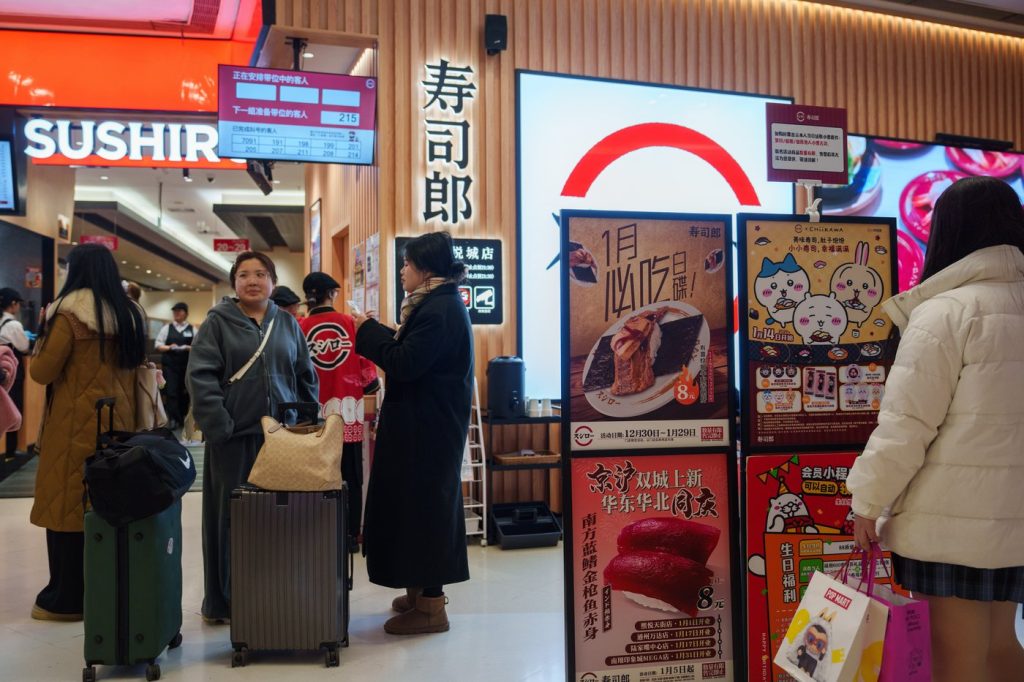
Jacob Cooke, CEO of WPIC Marketing + Technologies, notes that the younger generation is making purchasing decisions independent of nationalist considerations. For instance, despite Beijing's outrage over comments made by Japanese Prime Minister Sanae Takaichi regarding Taiwan's security, the Chinese public's affinity for Japanese brands remains strong. A recent example is the popular Japanese sushi chain Sushiro, which witnessed large crowds at its Shanghai outlet’s opening in December 2025, demonstrating the ongoing appeal of Japanese cuisine among Chinese consumers.
Edith Xiao, a 23-year-old university student, expressed her enthusiasm for Sushiro, emphasizing the quality of the ingredients and indicating that political statements do not influence her consumer choices. Similarly, cultural products like the Japanese manga series Chiikawa continue to be popular, showing that broader geopolitical issues have little impact on personal consumption of Japanese culture.
Moreover, the allure of American brands remains intact despite strained relations between Beijing and Washington. Disney's film "Zootopia 2" has achieved remarkable success in China, grossing over 4.4 billion yuan (approximately $634 million) and becoming the highest-grossing Hollywood film in the country’s history. Fans of the film often engage in cosplay, reflecting the movie's popularity among various demographics seeking relief from the pressures of the post-COVID economy.
Shaun Rein, managing director at China Market Research Group, suggests that stress and anxiety are motivating Chinese viewers to indulge in light-hearted entertainment like "Zootopia 2." The brand Ralph Lauren has effectively captured the market by emphasizing quality and a strong brand image, appealing primarily to urban middle-class consumers who prioritize value over national loyalty. Zhang Tianyu, a shopper at a Ralph Lauren outlet in Beijing, shared her appreciation for the brand's consistent quality and design.
As the trend of "guochao," or national tide, progresses, many Chinese consumers are increasingly comfortable with blending foreign and domestic brands in their purchasing decisions. Rein notes that a growing segment of the population is no longer choosing products solely based on their national origin but instead evaluates them according to personal value and lifestyle preferences. This marks a shift from past incidents, like the 2012 anti-Japan protests fueled by territorial disputes, where consumers aggressively boycotted Japanese products.
Despite governmental pushes for increased patriotism, many Chinese consumers continue to favor the best products, regardless of their origin. This sentiment extends to foreign brands, such as Nike, which has encountered boycotts over political issues in recent years, yet continues to find a market in China’s diverse consumer base. While tensions exist, the reality is that consumer behavior has diversified, and nationalist sentiment is no longer the driving force it once was.
In conclusion, the swift rise of competitive Chinese brands poses a significant challenge to foreign companies. Local brands are gaining traction across various categories, including electric vehicles, smartphones, and athletic clothing, and many Chinese consumers opt for these products due to perceived advantages in quality and pricing. Government advisories against traveling to Japan have also affected tourism—Chinese visitors to Japan decreased by 45% in December 2025 compared to the previous year. However, individual travelers continue to visit Japan while remaining discreet on social platforms. Overall, the landscape of consumer preferences in China is transforming, reflecting a desire for quality and lifestyle over strict adherence to nationalism.








