

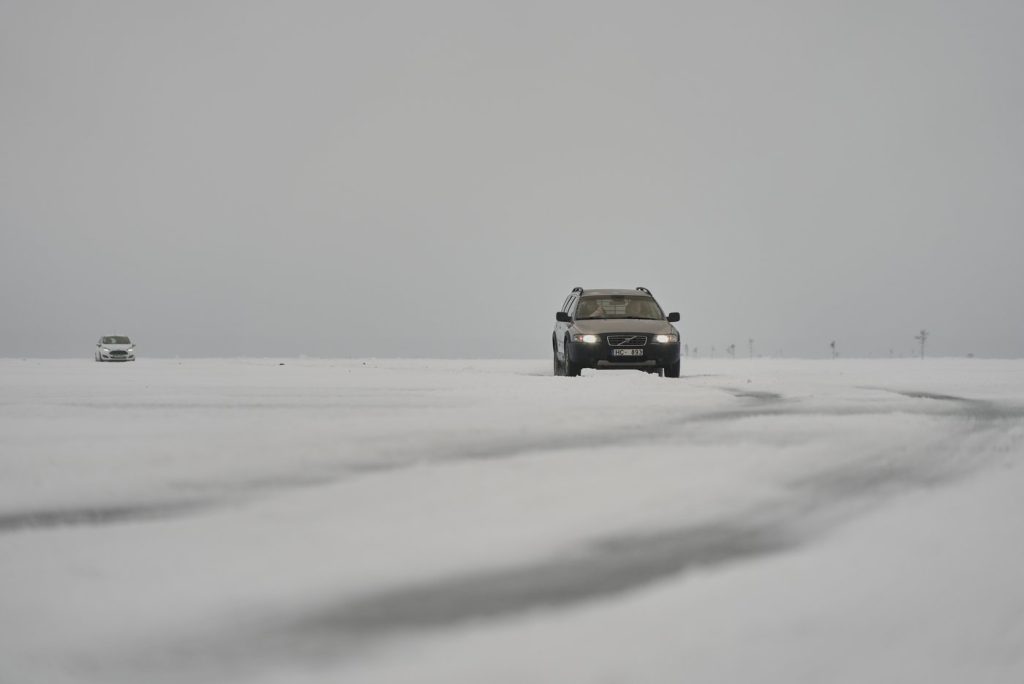
In HIIUMAA, Estonia, exceptionally low temperatures in northern Europe have enabled the establishment of a 20-kilometer (12.5-mile) ice road across the frozen sea, connecting Estonia's two main islands, Saaremaa and Hiiumaa. This ice road was officially opened on a recent Sunday, where a line of cars eagerly awaited to use the route. The decision to open the ice road came after locals began driving across the frozen sea out of necessity, risking their safety in the process. The regular ferry service had faced challenges due to the subzero temperatures, which had hovered around minus 10 degrees Celsius (14 degrees Fahrenheit) for several weeks.
Residents of Hiiumaa, which has a population of 9,000, often travel to Saaremaa, home to 31,000 people, for various activities such as shopping, enjoying coffee, or taking children to school. This connection also links them to mainland Estonia. Hergo Tasuja, the mayor of Hiiumaa, commented that using the ice road is a vital part of local culture and tradition. He noted, “For generations and generations, local people who live here, especially those who live near the sea, swim and use boats in the summertime. And in winter, it’s in their blood to go to the sea” and step out onto the ice.
The ice road is essentially a marked corridor carefully selected based on ice thickness, assessed by specialists to ensure it can safely support vehicles. Workers from Verston Eesti, the Estonian construction company responsible for the road, face significant challenges in preparing the route. They measure the ice thickness every 100 meters (328 feet) to identify areas with over 24 centimeters (9.5 inches) of ice, the minimum required for safe travel. Additionally, they work to smooth over ridged ice and repair cracks. Weather conditions and ice solidity are continuously monitored, prompting adjustments to the route as needed.
Vehicles are subject to strict regulations when using the ice road. No vehicle can exceed a weight of 2.5 tons (5,500 pounds), and speeds must either remain below 20 kph (12.4 mph) or fall within a range of 40 to 70 kph (25 to 43 mph). This regulation is in place to prevent vibrations that could damage the ice. Stopping vehicles is prohibited, and drivers must maintain a safe distance from each other. Furthermore, passengers are required to forgo seat belts, and doors must be easily operable to facilitate quick exits in case of emergencies.
Alexei Ulyvanov, a resident of Tallinn, shared his experience of traveling to the islands to show his children that “it’s possible to ride a car over the sea.” This icy connection is a rare occurrence, as the last ice road linking the islands was utilized around eight years ago, with warmer winters since preventing such formations. Following the successful opening of this ice road, Verston has been contracted by authorities to establish two additional ice routes this week, which will connect mainland Estonia to two smaller islands.








