

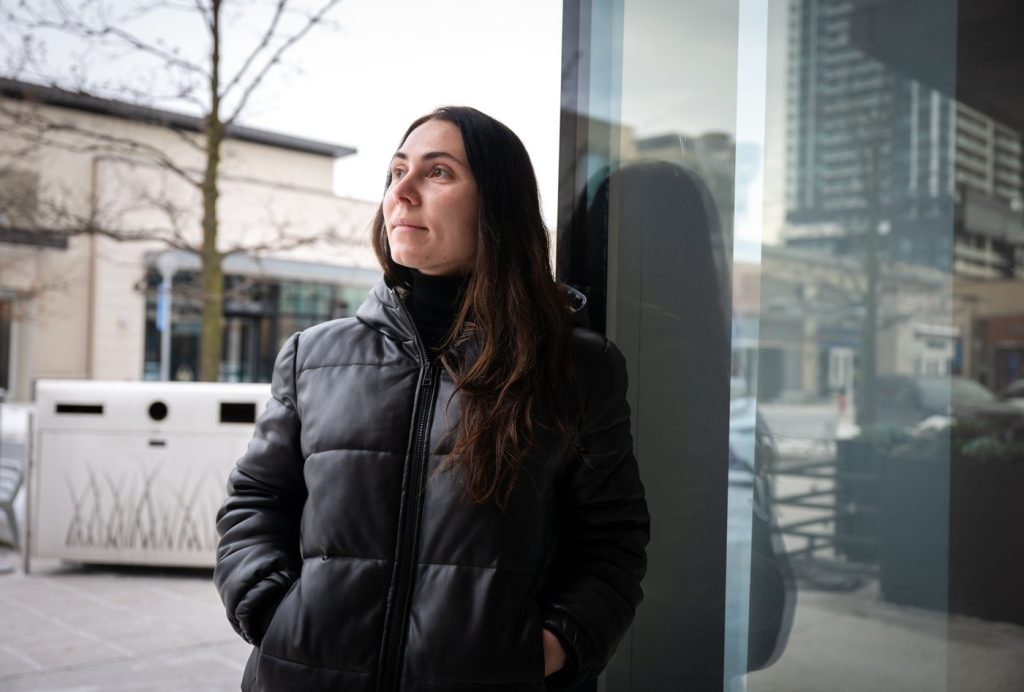
OTTAWA Roksolana Kryshtanovych, originally from Ukraine, found herself in Canada due to Russia's full-scale invasion of her homeland in 2022. Although she never envisioned relocating to Canada, the dire situation in Ukraine pushed her to seek refuge in a new country. Since her arrival, she has settled in Toronto, where she works at a financial services company and aspires to build a future that includes buying a home and starting a family.
Despite her efforts to build a life in Canada, Kryshtanovych faces uncertainty regarding her immigration status. She, along with thousands of other Ukrainians who came to Canada under the Canada-Ukraine Authorization for Emergency Travel (CUAET) program, lacks a clear path to permanent residency. Immigration Minister Lena Diab has recognized that many CUAET visa holders are no longer just temporary residents, yet the government has yet to establish a concrete solution for their prolonged stay.
As the fourth anniversary of Russia's full-scale invasion approaches, pressure is mounting on the Canadian government to create a permanent residency pathway for the nearly 300,000 Ukrainians who arrived in Canada through CUAET. Kryshtanovych is actively involved in advocating for change through a group called United Ukrainians for Canada Foundation. The organization has initiated a letter-writing campaign targeting Members of Parliament, calling for dedicated pathways to permanent residency for those on CUAET visas. More than 25,000 letters have been sent to MPs since the campaign's inception in September.
Kryshtanovych highlights the emotional turmoil faced by many Ukrainians in Canada who are unsure about their future. For individuals in their 40s or 50s, the inability to secure legal residency adds to their anxiety, even as they contribute to Canadian society by working and paying taxes. The existing immigration system, particularly the express entry program, poses additional challenges. It relies on a point-based system that evaluates applicants based on various factors such as age, education, marital status, and language proficiency. Kryshtanovych points out that many Ukrainians struggle with language tests and may lack the necessary documentation to apply for permanent residency, given their hasty departure from a conflict zone.
Others in similar circumstances, like Daria and Viktoria Vahina, express their confusion and despair over the lack of options. Daria has lived in Canada for almost four years and works at a restaurant in Ottawa, while her mother, Viktoria, joined her after the death of her husband. Viktoria, who has been learning English and working as a baker, remains uncertain about her future, stating, "You cannot settle up your life... you cannot build your life in a normal way." Their employer, Leanne Moussa, has also attempted to find a permanent residency pathway for her employees but has encountered obstacles.
In 2023, the Canadian government did open a route to permanent residency for some CUAET holders, specifically those with Canadian family members. However, the criteria for the Provincial Nominee Program, which many Ukrainians hoped would provide a solution, often leave them ineligible, as highlighted by Moussa's attempts to explore this avenue for her employees. The recent immigration levels plan aims to cut the overall number of permanent residents, emphasizing economic migrants, which leaves Ukrainians in a precarious situation.
Diab outlined that while CUAET visa holders can apply for permanent residency through standard channels, gaining clarity on their status and contributions will become more apparent only through their applications. Additionally, Ontario Liberal MP Yvan Baker is advocating for a parliamentary petition that aims to establish a temporary pathway to permanent residency for CUAET holders, garnering over 45,000 signatures.
As the crisis in Ukraine continues, Kryshtanovych reflects on her integration into Canadian life. "I have friends here. I have work here. I see my life here," she notes, encapsulating the struggle of many immigrants caught in an uncertain limbo.








