

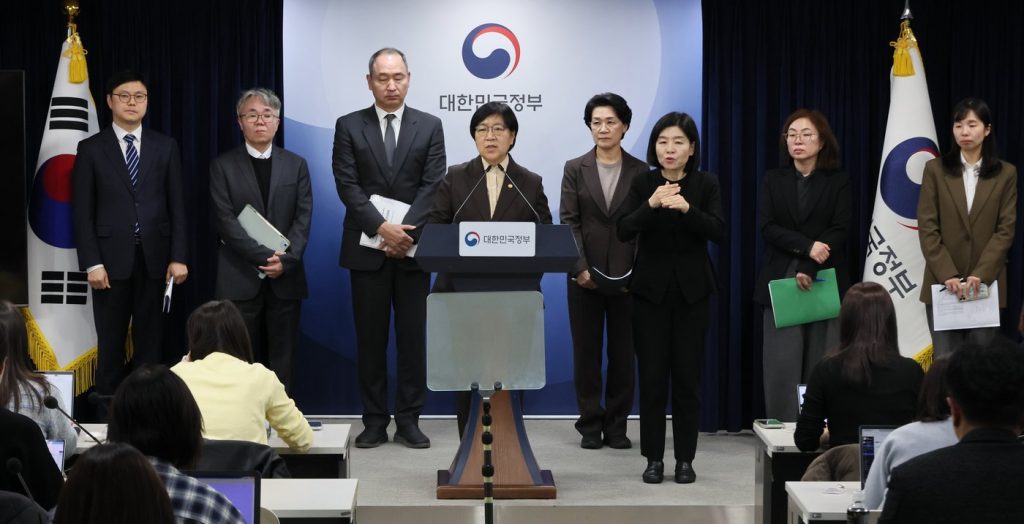
SEOUL, South Korea (AP) - South Korea has announced plans to increase medical school admissions by more than 3,340 students between 2027 and 2031 to address concerns regarding physician shortages in a nation experiencing rapid demographic aging. This initiative was revealed by the government on Tuesday following a prolonged doctors' strike that had previously delayed similar discussions.
The decision to incrementally raise admissions comes after the government of former conservative President Yoon Suk Yeol proposed a more ambitious plan that was met with widespread resistance from medical professionals, culminating in significant strikes. Health Minister Jeong Eun Kyeong stated that the annual cap for medical school admissions will rise from the current 3,058 to 3,548 in 2027, eventually reaching 3,871 by 2031. This represents an average annual increase of 668 students, which is considerably less than the earlier proposal of 2,000 additional admissions per year that had sparked major protests from doctors.
Jeong emphasized that the additional students would be trained in regional physician programs. These programs aim to bolster the number of healthcare providers in small towns and rural areas, which have been particularly affected by the country's demographic challenges. The specific admissions quotas for individual medical schools will be finalized in April, marking an important step in the implementation of this plan.
According to Jeong, the country faced considerable challenges during the earlier protests, which had led to service disruptions in hospitals as thousands of trainee doctors participated in walkouts against the government’s proposals. Doctors' groups had raised concerns that the existing medical schools were ill-equipped to cope with a rapid increase in student numbers, warning that the quality of medical education and healthcare services could decline as a result. Critics of the doctors' associations argued that the groups were focused on financial concerns rather than addressing urgent healthcare needs amid the impending shortages.
The strike action during the tenure of President Yoon prompted the government to pivot from the initial plan, allowing for a more manageable increase of 1,500 additional medical students to enroll in 2025. However, the conflicts surrounding this issue remained largely unresolved until late 2024 when Yoon faced impeachment due to a controversial declaration of martial law, eventually leading to his removal in April 2025.
Subsequently, the liberal government led by President Lee Jae Myung reinstated the annual admission cap at 3,058 for 2026, a move that aimed to address medical school grievances and incentivize remaining trainee doctors to return to the healthcare system.
In summary, the South Korean government is now taking steps to address physician shortages by gradually increasing medical school admissions in a structured manner. While the plan aims to enhance healthcare access, it also reflects the ongoing tensions between public health needs and the concerns of medical professionals regarding the capacity of medical education institutions.








