

WELLINGTON, New Zealand (AP) — Brenton Tarrant, the self-proclaimed white supremacist responsible for the deaths of 51 Muslims in New Zealand’s most deadly mass shooting, expressed satisfaction with being charged with terrorism and desired to be labeled a terrorist, according to his former lawyer during a court hearing. Tarrant, 35, received a life sentence without the possibility of parole after pleading guilty to numerous charges, including terrorism, murder, and attempted murder, stemming from his hate-fueled attack on worshippers at two Christchurch mosques in 2019.
Tarrant, an Australian national, is now attempting to withdraw his guilty pleas from 2020, arguing that the conditions of his solitary confinement led to irrational thinking and mental instability. The New Zealand Court of Appeal in Wellington is reviewing Tarrant's application in a five-day hearing. Should the three-judge panel grant his request, the case would be remanded back to the court for a trial.
Initially, Tarrant pleaded not guilty to the charges but switched to guilty pleas just before the trial was set to commence. During the appeals court proceedings on Monday, he claimed that "nervous exhaustion" due to continual solitary confinement, constant surveillance, limited access to reading materials, and minimal communication with the outside world coerced him into his admissions. His lawyers noted that they had filed complaints regarding his prison conditions early in his incarceration, but officials had dismissed these grievances.
Although Tarrant argued his conditions compromised his decision-making abilities, his former lawyers contended that restrictions eased over time and believed he was capable of making rational decisions. Tarrant also claimed he hid symptoms of serious mental illness to avoid appearing weak or to reflect poorly on others who shared his extremist views. Crown lawyers countered Tarrant's claims, asserting that he had numerous opportunities to voice concerns about his mental health and could have requested a delay for his trial.
A key point in the hearing is whether Tarrant intended to plead guilty from the start or had originally planned to contest the charges. He stated in court that he had wanted to mount a defense during a trial. However, his attorneys maintained that he was likely to plead guilty due to overwhelming evidence against him, which included a Facebook livestream of the massacre and a racist manifesto he published prior to the attack. Tarrant’s former lawyer Shane Tait recounted a conversation where he advised Tarrant that a defense claiming he was protecting New Zealand from immigrants was not viable under local law.
Tarrant had expressed a firm desire to be convicted on the terrorism charge and refused to allow his lawyers to negotiate a plea deal that would drop the terrorism charge in exchange for guilty pleas to the other charges. Tarrant's other former attorney, Jonathan Hudson, affirmed his client’s insistence on being labeled a terrorist, demonstrating Tarrant’s desire for notoriety linked to his actions.
The judges are expected to announce their decision on Tarrant’s appeal at a later date. In New Zealand, appeals against convictions or sentences must be filed within 20 working days, but Tarrant submitted his appeal two years late, claiming lack of access to the necessary information as the reason for the delay. If the appeal court denies his request to set aside his guilty pleas, another hearing will follow that will concentrate on Tarrant’s challenge to his sentence.
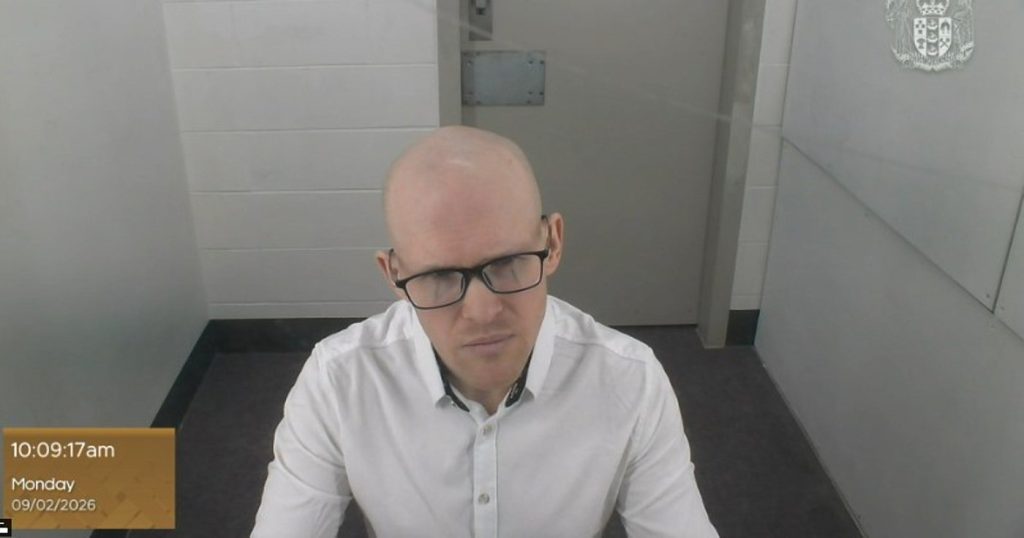
This hearing marked the first time in years that Tarrant has been seen or heard from in court, appearing via video from Auckland Prison, where he looked pale and thin, sporting a shaved head and black-framed glasses. Family members of victims watched the proceedings via a live feed and expressed their frustration and anger over Tarrant's attempts to revisit his case in court. Rashid Omar, whose son was one of the victims, criticized Tarrant's lack of remorse and characterized the proceedings as a game for Tarrant, stating, "We’re not going to be bullied by him."








