

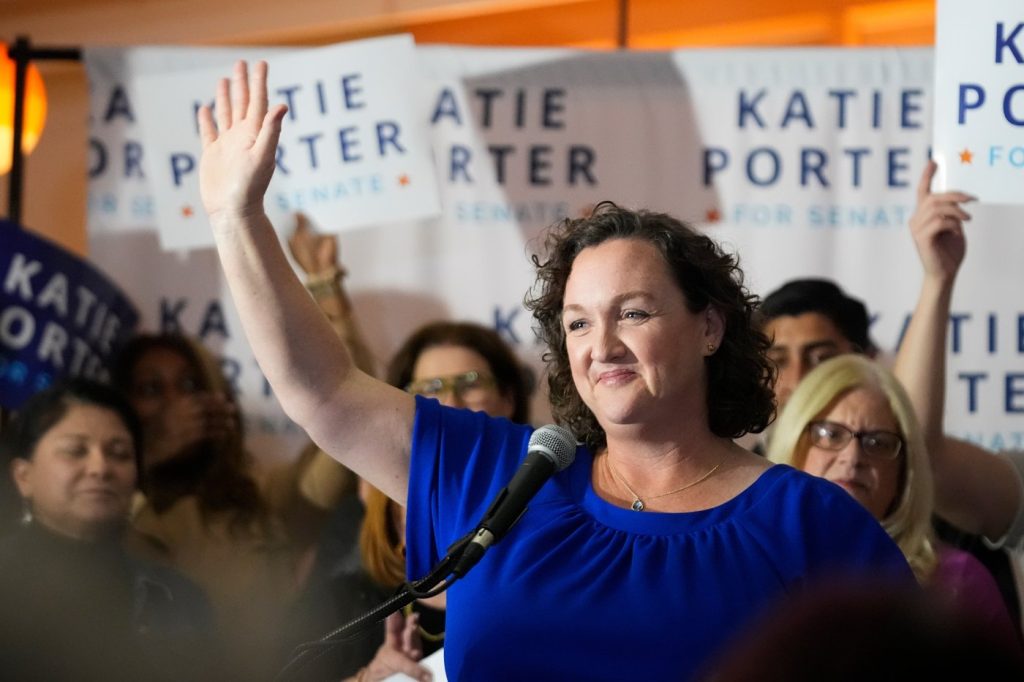
LOS ANGELES (AP) – The race for California governor has become a crowded affair, raising concerns among Democrats about potential electoral disaster. With a large number of candidates vying for the position, party insiders fear that the vote may be so divided that two Republican candidates could advance from the primary to the general election in November. This situation is fueled by the state’s “top two” primary system, which permits all candidates to appear on a single ballot, allowing the two leading candidates, regardless of their political affiliation, to move forward.
Experts note that this primary election marks the first time in over a decade that there is no clear frontrunner among Democrats, encouraging a “Why not me?” mentality that has attracted numerous candidates. Democratic gubernatorial candidate Katie Porter warned that there is a “very real chance” of facing an all-Republican ballot in November, highlighting the urgency of the situation for her party.
The implications of such an outcome could be significant; California is known as a Democratic stronghold, and a Republican sweep in the governor’s race would send shockwaves throughout state politics and potentially affect congressional races that could determine control of the U.S. House. As Democrats prepare for a highly competitive primary, questions arise regarding the large number of candidates, particularly in a state where registered Democrats outnumber Republicans by nearly two to one.
The allure of the California Governor’s seat is undeniable; it represents one of the most powerful political positions in the country. With a state budget nearing $350 billion and a diverse economy that ranks as the world’s fourth-largest, the office draws a wide range of individuals seeking to champion various issues. Following Democratic Governor Gavin Newsom's constitutional term limit, this election has opened opportunities for various aspiring candidates.
Currently, at least nine Democratic candidates are considered serious contenders, including notable figures such as former U.S. Representatives Katie Porter and Eric Swalwell, former state controller Betty Yee, and billionaire Tom Steyer. Their campaigns reflect differing focuses, as they attempt to distinguish themselves amidst a crowded field of ideologically similar candidates. For instance, Swalwell emphasizes his experience as a House manager during the impeachment trial of Donald Trump, while newcomer Mahan has critiqued Newsom on pressing issues like crime and homelessness.
Many in the Democratic party expect some lesser-known candidates to exit the race voluntarily, allowing for a more unified front. Democratic strategist Drexel Heard II argued that the best case would be for candidates who have minimal chances to withdraw, thereby consolidating the vote among more competitive participants.
However, there remains uncertainty surrounding the top-two primary system, with simulations indicating that a dual Republican advancement is possible but remains an unlikely event. Current leading Republican candidates include Riverside County Sheriff Chad Bianco and conservative commentator Steve Hilton, both of whom align with former President Trump. Republicans are also wary of vote-splitting, prompting Hilton to urge Bianco to consider withdrawal to unite their support.
This gubernatorial contest resembles the evolving Democratic race for the 2028 presidential election, showcasing a similar trend of multiple candidates emerging amidst party challenges. The current dynamics within the race reflect a combination of energy and frustration within the Democratic party, following setbacks in recent elections. As candidates on both sides work to sharpen their messages, they aim to engage voters amid a shifting political landscape.








